
Driving National Sugar Self-Sufficiency, GULA Emphasises Importance of Superior Seeds and Increased Sugarcane Rendement
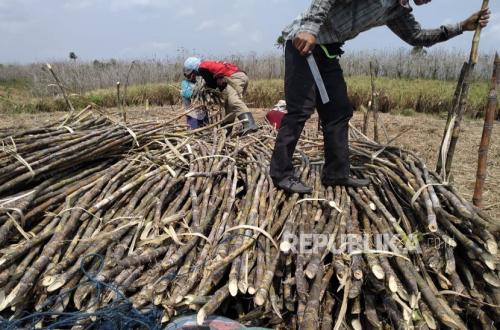
The government’s target to achieve national sugar self-sufficiency within two years serves as a critical momentum for the transformation of Indonesia’s sugar industry. For PT Aman Agrindo Tbk (GULA), reaching this target requires not only the expansion of sugarcane acreage but also an increase in crop productivity and raw material quality through improved seed quality and enhanced sugarcane rendement.
President Prabowo Subianto previously set a target for Indonesia to achieve sugar self-sufficiency within two years as part of efforts to strengthen national food independence. The government is also actively accelerating sugarcane rejuvenation programmes, the development of large-scale sugarcane areas, productivity increases, and the provision of seeds to support these objectives.
The Ministry of Agriculture aims for national White Crystal Sugar (GKP) production to reach approximately 3.04 million tonnes by 2026. Simultaneously, the government continues to push for increased sugarcane productivity by mandating sugar mills to maintain domestic plantations and fostering cooperation between private sugar mills, State-Owned Enterprises (SOEs), and local farmers.
As a company involved in sugarcane plantations, sugar trading, and the sugar industry, PT Aman Agrindo Tbk (GULA) views increasing upstream productivity as a key to the success of national sugar self-sufficiency. “Indonesia cannot simply add more sugarcane land. Productivity per hectare must also be increased. One of the most important foundations is seed quality. Plants derived from superior seeds that match the characteristics of the land will provide better opportunities for productivity and rendement,” said the President Director of PT Aman Agrindo Tbk, Andreas Utomo.
In the sugar industry, production increases are not solely determined by land area. Sugarcane productivity per hectare and rendement—the percentage of sugar content obtainable from processed sugarcane—are vital factors in determining final sugar output.
Consequently, Andreas revealed that improving rendement must be carried out comprehensively from the cultivation stage. The use of superior sugarcane varieties, guaranteed seed quality, the suitability of varieties with agro-climatic conditions, cultivation management, and factory processing must act as a unified approach to increasing national sugar industry productivity.
He noted that the government and industry players can strengthen the sugarcane seed ecosystem by providing standardised, healthy, and productive seeds that suit regional characteristics, while ensuring distribution reaches a wider range of farmers.
“Seed improvement is a long-term investment. If the quality of the plant is better from the start, then sugarcane productivity and potential rendement can also increase. Therefore, the national sugarcane rejuvenation programme should ideally not only focus on how many hectares are being rejuvenated, but also on the quality of the varieties and seeds used,” Andreas continued.
GULA believes that strengthening the seed system must be accompanied by the development of nursery centres and continuous seed quality monitoring. In this way, sugarcane expansion and rejuvenation programmes can result in measurable productivity increases, rather than merely focusing on increasing planting areas.