
Drawing on Eruption Experience, Klaten Prepares Merapi Slope Residents for Disasters
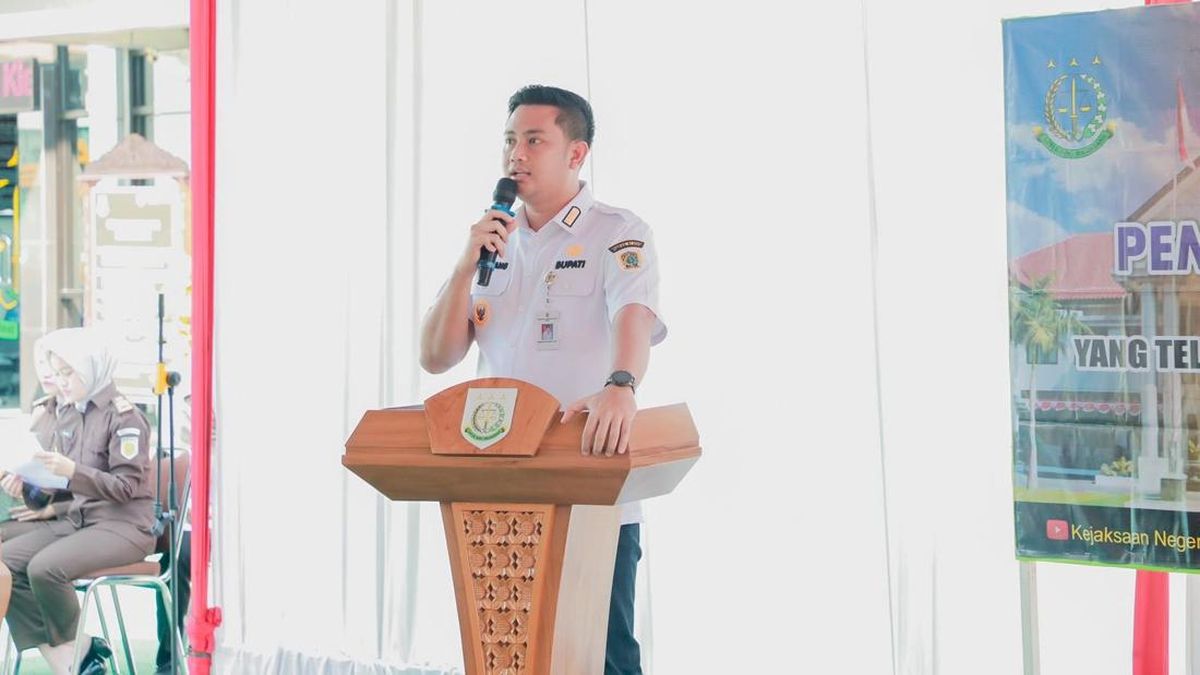
The Klaten Regency Government held an independent evacuation and rescue drill with the Klaten Regional Disaster Management Agency (BPBD) and the National Search and Rescue Agency (Basarnas) in Balerante Village and the Kalitalang Ecotourism area, Klaten, on Thursday (8 October).
The event was intended to strengthen the capabilities of residents and volunteers in emergencies and improve preparedness for potential eruptions and other emergencies in mountainous and forested areas, recalling the 2010 Mount Merapi eruption.
Klaten Regent Hamenang Wajar Ismoyo said the drill was important for improving public preparedness, particularly among people living in areas vulnerable to Mount Merapi hazards.
He said preparedness could not rely solely on the presence of disaster-response personnel and equipment. Residents also needed to understand what to do when an emergency occurred.
“Our hope is that this activity will make residents more alert and help our volunteers better understand how to respond to disasters. The third aim is to practise together what we should do if a disaster occurs,” Hamenang said.
He hoped the exercise would build a shared understanding of the division of responsibilities and rescue procedures, so that people would not be confused in emergencies requiring swift action.
Hamenang also stressed the importance of reducing panic during a disaster. People who know evacuation routes, assembly points and their respective roles will be better prepared to take action and save themselves.
“We hope there will be no more panic, and that everyone will know who should do what. Once people understand their roles and know where the assembly point is, the risk of casualties can be reduced,” he said.
Klaten BPBD Executive Head Syahruna said the disaster-management training for mountain and forest areas, followed by the independent evacuation drill, formed part of a series of events marking Disaster Risk Reduction Month.
The training was attended by 60 participants from various disaster-response organisations, including the Indonesian Red Cross (PMI), police, Basarnas, the Indonesian National Armed Forces (TNI), volunteers, BPBD and sub-district volunteer groups. Participants received training that they then put into practice in a field simulation.
The involvement of these organisations was intended to strengthen coordination in emergencies. Cooperation between agencies and communities is needed to ensure that rescue, security and evacuation operations are carried out according to each party’s role.
Syahruna said Balerante was selected because it was one of the areas that suffered the most severe damage in the wake of the 2010 Merapi eruption.
The village’s relative distance from the BPBD office was another important consideration in encouraging residents to evacuate independently.
“During the 2010 eruption, Balerante suffered the most damage, and it is far from the BPBD office, making independent evacuation necessary,” Syahruna said.
These circumstances highlight the importance of preparedness at village level. In a disaster, residents may have to wait for assistance to reach them, making knowledge of initial rescue procedures essential.
The drill is expected to help residents and volunteers better understand what to do from the moment a hazard warning is issued until they reach a safe location.
The programme also included the designation of three disaster-preparedness villages. Strengthening village capacity is important because local residents are closest to the source of the risk.
Meanwhile, the Geological Disaster Technology Research and Development Centre (BPPTKG), under the Ministry of Energy and Mineral Resources, handed Klaten’s regent an early-warning system (EWS), comprising a siren and hazard-monitoring equipment for the Mount Merapi area.
The early-warning system is expected to help communicate hazard information to the public. Residents were reminded that they need to understand what warnings mean and what action to take as soon as they receive them.
Evacuation drills are therefore an important complement to early-warning equipment. When a siren sounds, it must be followed by an appropriate response: assessing the situation, following officials’ instructions and using evacuation routes to reach safety.
Through training, drills, the designation of disaster-preparedness villages and support with warning equipment, the Klaten Regency Government aims to help residents understand rescue procedures and reduce the risk of panic and casualties.