
Drama in Japan: Imperial Throne Faces Succession Crisis
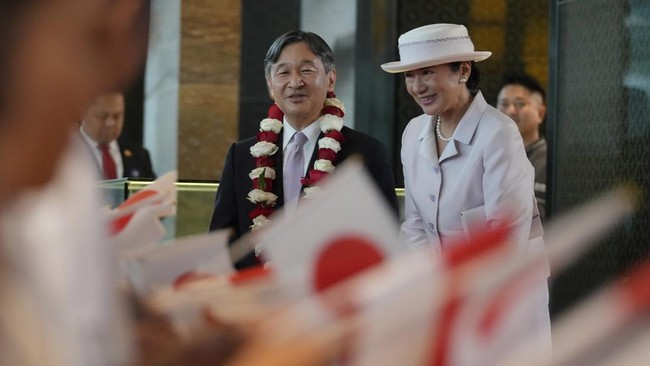
Japan is facing a succession crisis within its imperial family as the number of eligible heirs continues to shrink. Ironically, at a time when the country is led by its first female prime minister, the prospect of a woman ascending the Chrysanthemum Throne appears to be diminishing. Currently, the imperial family has only three eligible male heirs. Two of them are already over 60 years old, while the youngest, Prince Hisahito, is just 19. This situation has raised concerns over the continuity of the world’s oldest monarchy. To address the shortage of heirs, the government has proposed reviving old branches of the imperial family that were dissolved after World War II. This move would expand the pool of male heirs without altering the principle that only men can become emperor. The draft legislation is expected to gain parliamentary approval soon. Notably, the proposal does not open the door for women to ascend the throne. Emperor Naruhito’s only child, Princess Aiko, remains popular with the public but is barred from succession under the Imperial Household Law. Even if she were to have a son in the future, the child would not be entitled to the throne if born after she marries a commoner. Professor Makoto Okawa of Chuo University argues that there is no rational basis for excluding women. He noted that Japan had eight reigning empresses before the Meiji-era Imperial Household Law of 1889 restricted succession to males, and stressed that the constitution does not prohibit a female emperor. He described the view that women are inherently unfit to rule as misogynistic. The debate is further complicated by Prime Minister Sanae Takaichi, Japan’s first female premier, who is a staunch defender of male-only succession. In a parliamentary session earlier this year, she stated that heirs to the throne should remain limited to male descendants of the imperial line. This stance contradicts numerous public surveys showing that a majority of Japanese citizens are open to a female emperor, with some drawing comparisons to European monarchies like Britain. The succession crisis stems from post-World War II reforms in 1947, when the government stripped 51 members of 11 collateral branches of their noble status to reduce the state’s financial burden. Since then, the imperial family has shrunk from 67 members to just 16. Under the new draft law, males from former imperial branches would be allowed to be adopted back into the family to increase the number of potential heirs. However, many academics argue this is only a temporary fix. As long as women are excluded from the line of succession, guaranteeing the long-term continuity of the system will remain difficult.