
Draft Fourth Revision to DHE Rules Could Allow 100% Foreign-Currency Conversion into Rupiah
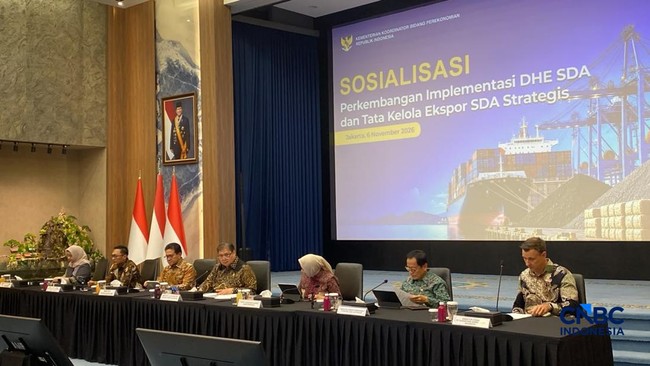
Jakarta, CNBC Indonesia — Coordinating Economic Affairs Minister Airlangga Hartarto has disclosed that the main feature of the fourth revision to the Government Regulation (PP) on the mandatory placement of export proceeds (DHE) will be a relaxation of the rules on converting foreign currency into rupiah.
Under the third revision, Government Regulation No. 21 of 2026, exporters may convert up to 50% of their proceeds into rupiah. The rules require 100% of natural-resource export proceeds (DHE SDA) to be repatriated into Indonesia’s financial system, with at least 30% retained for three months by the oil and gas sector and 100% retained for 12 months by the non-oil and gas sector, through foreign-exchange banks.
Airlangga said the permitted conversion of export proceeds into rupiah would now be increased to 100%, reflecting exporters’ substantial domestic need to manage cash flow in rupiah.
“What is being prepared in the fourth amendment to PP 36 concerns relaxing the conversion of foreign currency into rupiah. Under this relaxation, exporters may convert not just 50%, but up to 100%,” Airlangga said at a socialisation event on developments in the implementation of DHE SDA in Jakarta on Friday (6 November 2026).
The government says exporters’ need to convert funds has continued to decline, prompting the need to increase their liquidity flexibility while also supporting Indonesia’s financial markets.
The total DHE SDA entering the country also fell, to just US$30.1 million in January-August 2026, from US$31.4 million in June-August 2025.
In terms of use, the figure rose from US$5 million to US$5.5 million. The amount of DHE retained in foreign currency also increased, from US$2.6 million to US$9.7 million.
Meanwhile, realised conversions fell sharply, from US$23.8 million in June-August 2025 to US$14.9 million in June-August 2026.
Airlangga said the policy adjustment is expected to be issued soon, alongside adequate transitional provisions to ensure a smooth transition, certainty for exporters and continuity in the policy’s implementation.