
DPR Warns of Potential Hajj Cost Increase in 2027
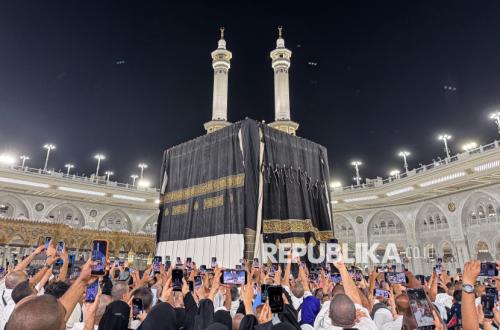
The Chairman of Commission VIII of the House of Representatives (DPR RI), Marwan Dasopang, stated during the opening of the National Working Meeting for the Evaluation of the 2026 Hajj Implementation by the Ministry of Hajj and Umrah that rising costs for several components in both Indonesia and Saudi Arabia could potentially drive up the cost of the Hajj pilgrimage.
“Based on calculations of the figures required to fulfil our obligations as Hajj organisers, it appears that the Hajj costs will increase,” Marwan said at the Pondok Gede Hajj Hostel, Jakarta, on Saturday.
He emphasised that Commission VIII of the DPR RI, together with the Ministry of Hajj and Umrah (Kemenhaj), will study various schemes to ensure that any cost increases can be suppressed. Marwan noted that the government needs to formulate which cost components can still be made more efficient.
According to him, flight costs have limitations as they are influenced by airline regulations, while accommodation services also need to be evaluated without compromising the quality of service.
In addition to costs, he also highlighted the need for long-term solutions regarding the limited capacity in Mina, which remains a challenge in the implementation of the Hajj pilgrimage. “A heavy challenge for us is that Mina never expands. We hope for an increase in quotas, but the area (Mina) never increases,” he said.
Marwan mentioned that the ‘Tanazul’ scheme for some pilgrims has been one of the efforts to reduce overcrowding in Mina. Moving forward, he suggested that the government needs to formulate the capacity for implementing Tanazul so that it can be managed optimally, ensuring that the issues in Mina do not recur every year.
Previously, the Minister of Hajj and Umrah, Mochamad Irfan Yusuf, requested that the National Working Meeting for the Evaluation of the 2026 Hajj Implementation serve as an open forum to identify various shortcomings in the Hajj administration as a basis for service improvement.
“This National Working Meeting for the Evaluation of the 2026 Hajj Implementation is certainly an opportunity for us to find various deficiencies that have been and are being implemented, to become part of the improvement of Hajj services in the future,” said Minister Irfan.
According to him, all shortcomings should be revealed openly with the aim of improving the quality of Hajj services, rather than seeking someone to blame. This way, future Hajj implementations will be more prepared and optimal.
Minister Irfan added that one aspect requiring serious attention is the health services for pilgrims. Although the number of pilgrim deaths this year was successfully reduced by approximately 25 per cent compared to the previous implementation, the figure is still considered high.