
DPR Urges Regular Evaluation of Dry Unhusked Rice Government Purchase Price to Protect Farmers' Profits
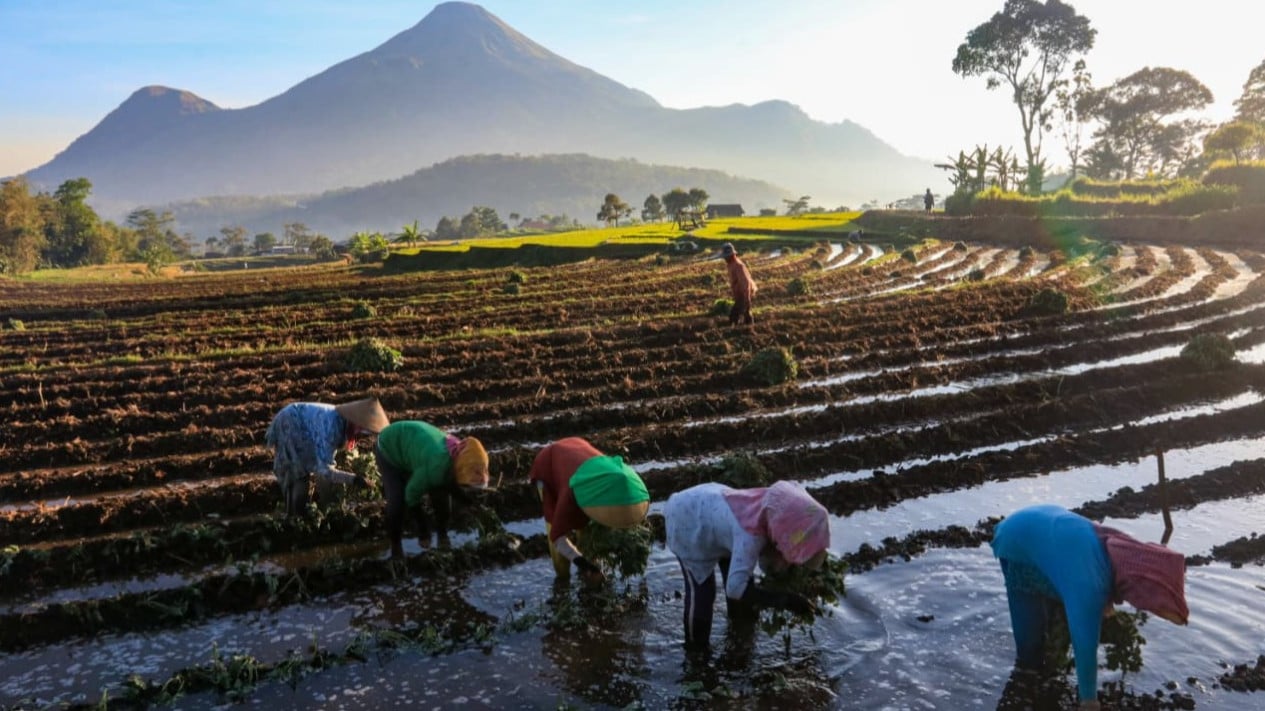
The Chairman of Commission XI of the Indonesian House of Representatives (DPR RI), Mukhamad Misbakhun, has stated that the government purchase price (HPP) for dry harvested unhusked rice (GKP) at the farmer level, set at Rp 6,500 per kilogramme, needs to be evaluated periodically so that farmers continue to benefit. According to him, this evaluation must open room for adjustment or increase, should the dynamics of production costs, unhusked rice prices, and farmers’ welfare conditions require a more favourable pricing policy.
‘When production costs rise and unhusked rice prices move, the HPP for GKP at the farmer level must be given the opportunity to be evaluated and increased,’ Misbakhun said in his statement on Monday, 13 July 2026. ‘The goal is for government intervention to truly safeguard farmers’ terms of trade and ensure farmers obtain a decent economic value,’ he stated.
He encouraged the Ministry of National Development Planning/Bappenas to ensure that food development planning does not only pursue increased production but also protects the terms of trade of farmers as the main actors in national food supply. According to him, national food policy must not be viewed solely from the perspective of stock availability and consumer price stability. Farmers, as the primary producers, must also receive adequate incentives so that national food security can be sustainable.
‘Farmers must not only be part of production targets. They are the main actors in national food supply. If our farmers are not prosperous, the foundation of our food security will also not be strong,’ said Misbakhun.
On the other hand, Misbakhun also asked Bappenas to strengthen the evaluation of the implementation of various presidential instructions (inpres) related to development, including the food sector and strengthening regional economies. He emphasised that the evaluation of presidential instructions must not stop at a narrative of achievements. Instead, the evaluation must include the technical implementers, programme distribution, targets, realisation, impact, and recommendations for improvement so that policy effectiveness can be clearly measured.
‘The evaluation must be concrete. Who is the implementer, where is the programme distribution, what are the targets and realisation, what is the impact on the community, and what are the recommendations for improvement,’ said Misbakhun. ‘That way, Bappenas can ensure that development planning truly answers the needs of the people on the ground,’ he stated.
Source: jawawa.id (https://jawawa.id/newsitem/dpr-urges-regular-evaluation-of-dry-unhusked-rice-government-purchase-price-to-protect-farmers-profits-1783918353)
Originally published by VIVA.co.id (https://www.viva.co.id/bisnis/1913068-jaga-keuntungan-petani-dpr-dorong-evaluasi-berkala-terhadap-hpp-gabah-kering), translated from Indonesian