
DPR Urges Government to Study Decline in State School Enrolment Across Regions
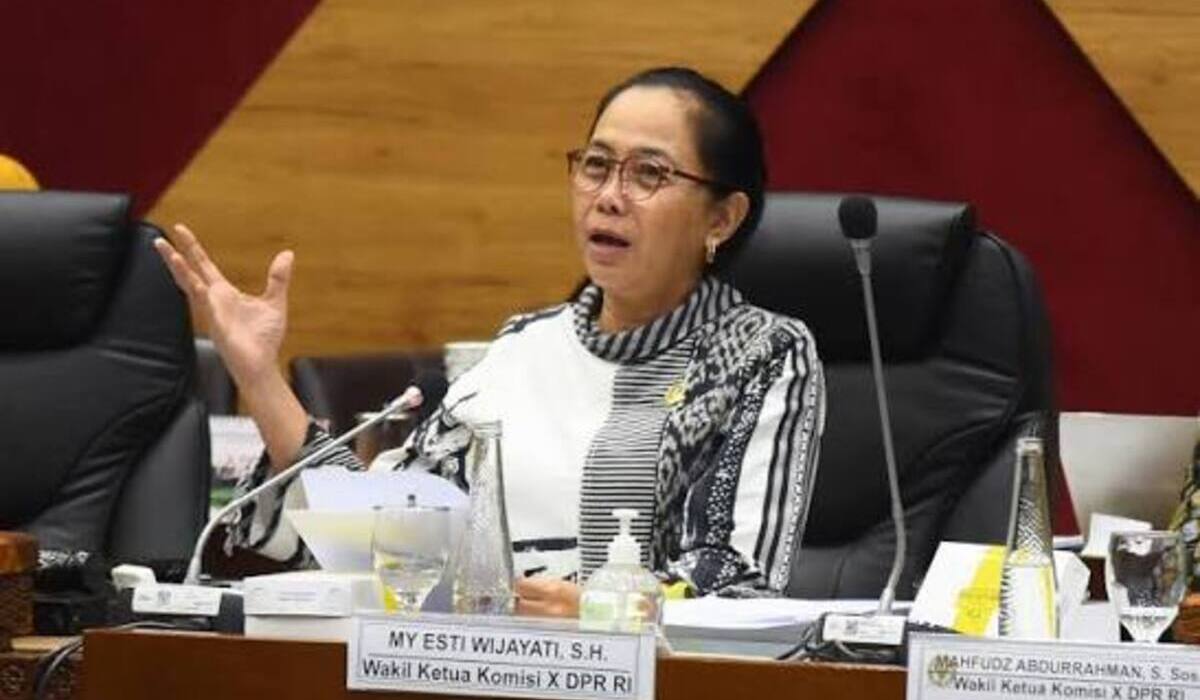
House of Representatives (DPR) Deputy Speaker of Commission X My Esti Wijayati has urged the government to conduct an in-depth and comprehensive study into the phenomenon of an alleged decline in the number of students at state schools across various regions. She argued that this trend cannot be viewed from a single perspective but must be analysed using comprehensive data.
Esti explained that one factor likely influencing the situation is demographic trends. She highlighted a decline in Indonesia’s birth rate due to changing lifestyles among the younger generation. “Of course, we cannot conclude that there is a single main cause. If we look at it, firstly, our population growth, the increase in the birth rate, is likely somewhat declining. Young people today may choose to have only two children, or delay having children,” Esti said on Tuesday (14/7).
Beyond demographic factors, the legislator from the Special Region of Yogyakarta noted a growing public interest in faith-based schools. At the same time, the government has launched various new school programmes, such as Sekolah Rakyat, Sekolah Terintegrasi, and Sekolah Unggul Garuda, which also affect student distribution.
Esti stressed that any policy to establish new schools must be preceded by thorough regional mapping to avoid killing off existing schools. She cited issues that arose in Kulonprogo regarding the distribution of teaching staff. “When we create a new policy, there must be a deep study first. We must map out which points are likely to see students transfer. Then we must carefully calculate the need for teachers. In Kulonprogo, there were state school teachers asked to teach at a Sekolah Rakyat due to a teacher shortage. This must be calculated carefully,” she asserted.
As a rational solution to improve educational effectiveness, Commission X of the DPR is considering a regrouping or school merger policy, particularly for primary schools lacking students. Although sometimes difficult for the community to accept, this step is deemed necessary for efficiency in education delivery. However, Esti provided a special note for underdeveloped, frontier, and outermost (3T) regions. She argued that schools in 3T areas, which demographically have a limited number of students, cannot be treated the same as schools in urban areas. “For 3T regions with few students, it needs to be considered whether the school should be maintained or given space through another scheme. All of this must be decided based on comprehensive mapping and studies,” she concluded.