
DPR urges decile data fix to protect public education rights
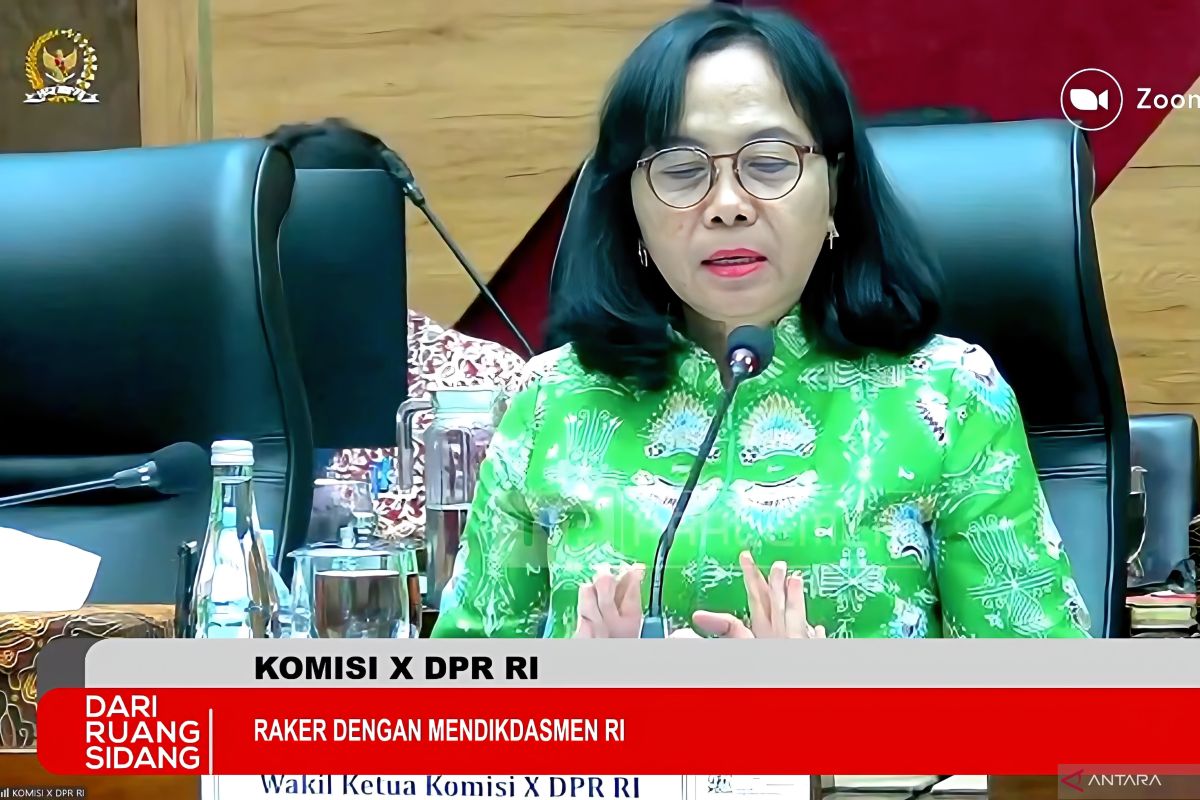
Jakarta (ANTARA) - Deputy Chair of Commission X of the Indonesian House of Representatives (DPR RI), MY Esti Wijayati, has urged the government to immediately correct decile data following the discovery of anomalies that could potentially threaten the public’s right to education.
“Currently, there are widespread public complaints regarding inaccurate decile determinations. In fact, there is a becak driver whose decile is the same as a DPR RI member, namely decile 9,” said Esti, as quoted in Jakarta on Wednesday.
According to her, the data correction must be completed before students lose their right to education services.
As a result of the status change, Luki experienced difficulty obtaining tuition fee relief and accessing the Kartu Indonesia Pintar (KIP) Kuliah programme, because his family was recorded in a group considered financially capable.
Although Yogyakarta State University (UNY) stated that Luki could continue attending lectures while the verification and data correction process was underway, Esti asked the government to provide certainty so that students do not lose their right to education merely due to administrative issues.
“The state must not allow a child to stop attending university just because the system changes deciles faster than it corrects the disputed data,” said the legislator from the Yogyakarta Special Region electoral district.
It is known that decile refers to the division of population groups based on welfare levels using the National Socio-Economic Single Data (DTSEN). The ranking considers a number of social and economic indicators, including occupation, education, housing conditions, electricity capacity, and asset ownership.
Decile 1 indicates the group with the lowest welfare level, while decile 10 represents the group with the highest welfare level.
Esti assessed that the accuracy of decile determination is important because the data can affect public access to a number of assistance programmes, including the Indonesia Smart Programme (PIP), KIP Kuliah, the Family Hope Programme (PKH), and Non-Cash Food Assistance (BPNT) or the Sembako Programme.