
DPR to Soon Ratify One Data Bill, New Agency to be Formed
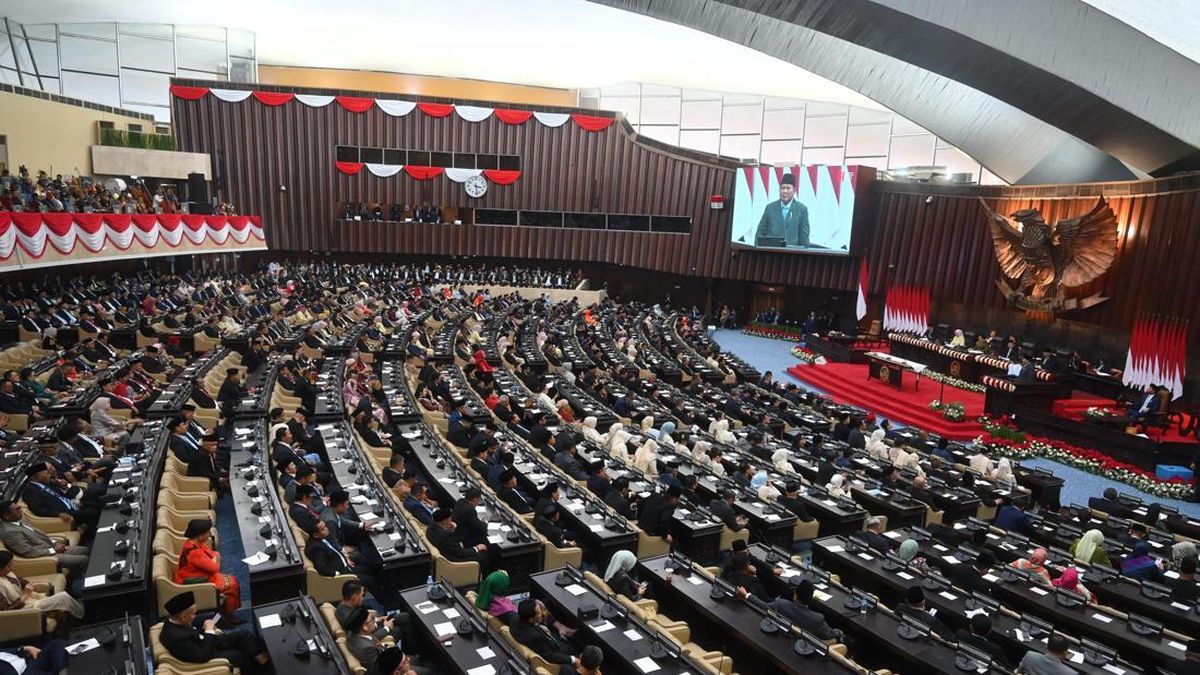
The Indonesian House of Representatives (DPR RI) plans to ratify the One Data Indonesia Bill during the upcoming plenary session on Tuesday (6/10). The Bill proposes the establishment of the Indonesia One Data Agency (BSDI).
Daniel Johan, a member of the DPR RI Legislative Body (Baleg), stated that the plan is to have all data from various institutions and ministries unified by the BSDI. “One of the major issues in the current data context is the excessive amount of data and sectoral ego. Each ministry possesses its own data,” Daniel said when met at the Parliament Complex, Senerm, Jakarta, on Friday (2/10).
“Now, this will be regulated, orchestrated, coordinated, and collected by the Indonesia One Data Agency. Currently, there is no specific law for this; it is only covered by a Presidential Regulation, so this is intended to strengthen the framework,” he added.
Furthermore, Daniel highlighted the urgency of forming the Indonesia One Data Agency to prevent data manipulation and ensure that national development is more targeted. “A nation without data cannot plan. Planning becomes chaotic, full of manipulation, and uncertain. Standard criteria also become unclear. Therefore, we hope that following this, development will be more certain and directed,” said the Chairman of the PKB Central Executive Board.
He noted that the formation of the Indonesia One Data Agency (BSDI) will be entrusted to the President, in coordination with the National Development Planning Agency (Bappenas). He explained that the public will be able to access data openly from all ministries and agencies, though he excluded limited access to data concerning national defence and security.
“What cannot be accessed is data pertaining to defence and security that is classified as secret,” Daniel said.
The One Data Indonesia Bill has reached Level I Discussion this Friday and is targeted for ratification into Law during the Plenary Session next Tuesday.
Composition of the One Data Indonesia Bill
The Bill regarding One Data Indonesia consists of 17 chapters and 138 articles. Overall, the Bill regulates:
The principles of SDI implementation. One Data Indonesia (SDI) is implemented based on the principles of sovereignty, compliance, resilience, integration, interoperability, accountability, security and confidentiality, reliability, real-time access, recognition, social justice, and legal certainty.
A complete One Data Indonesia ecosystem, including national basic data, governance of national basic data, data standards, metadata, system architecture, technical infrastructure, SDI implementation, supervision of SDI implementation, and the resolution of SDI disputes.
National basic data that is clustered, classified, and categorised based on the needs of national development, public services, disaster management, and other strategic interests.
The establishment of clear division of authority between the central government, regional governments, and village/sub-district governments in producing, managing, updating, providing, and utilising data according to their respective authorities without removing the authority of the data producers.
Strong institutionalisation through the Indonesia One Data Agency (BSDI), which acts as a coordinative, normative, and facilitative body, serving as an orchestrator for data supervisors, data producers, data stewards, and data users.
Interoperability without centralisation. Data interoperability will be implemented without transferring ownership, control, mastery, or management responsibility from the data producer agencies, ensuring that integration and data availability do not result in data centralisation.
System architecture, technical infrastructure, and risk mitigation to guarantee the security, integrity, availability, authenticity, and interoperability of data, accompanied by the obligation to implement risk mitigation and regular audits.
Obligations of data users. To maintain the security, confidentiality, and integrity of data, specific measures such as blockchain and artificial intelligence will be utilised to ensure accuracy and prevent misdirection.