
DPR Supports Initial Hajj Deposit Adjustment to Maintain BPKH Fiscal Sustainability
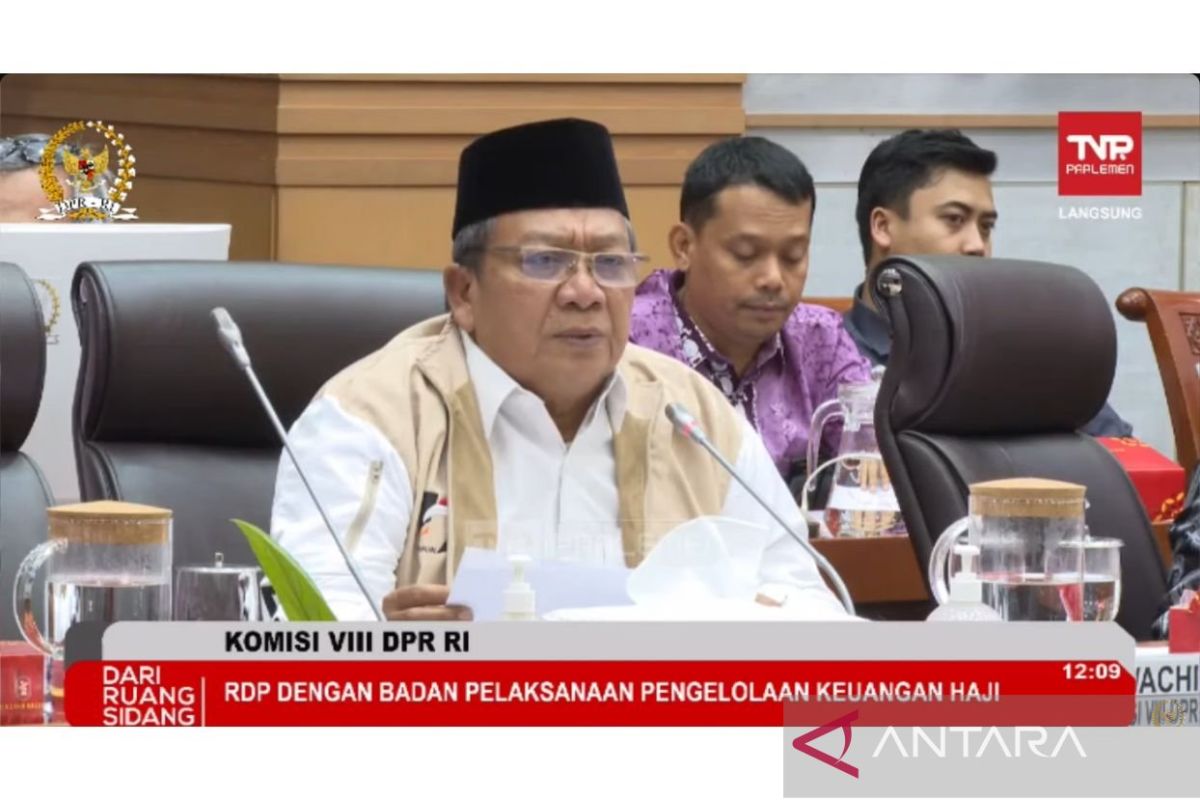
Jakarta (ANTARA) - Member of Commission VIII of the Indonesian House of Representatives (DPR) Abdul Wachid has expressed support for a plan to adjust the initial deposit value for Hajj pilgrims to maintain the long-term cash flow health of the Hajj Fund Management Agency (BPKH).
During a Hearing Meeting (RDP) with BPKH and its Supervisory Board at the Parliament Complex on Tuesday, Abdul Wachid stressed that the current Hajj financial formula must be carefully calculated to anticipate a surge in future financing burdens.
“From a business calculation perspective, we cannot be complacent with the current managed funds of Rp182 trillion. Assuming 500,000 new registrants per year, this figure will not be sufficient to cover BPKH’s future cash flow,” he said.
He therefore affirmed his approval of the government’s initial plan to increase the regular Hajj initial deposit from Rp25 million to Rp35 million, and the special Hajj initial deposit from US$4,000 to US$6,000.
For this year’s Hajj operations, BPKH must disburse a substantial total functional budget of approximately Rp18.21 trillion from its accumulated managed funds.
He also highlighted Saudi Arabia’s Hajj Transformation Vision 2030, which targets accommodating up to five million pilgrims, more than double the current global quota absorption of 1.7 million people.
“If Saudi Arabia’s global target is realised, based on current exchange rates, by 2030 we will need to allocate a minimum of Rp40 trillion in Hajj operational funds. We must fortify ourselves against this enormous challenge from now,” he stated.
Head of the BPKH Executing Agency Fadlul Imansyah revealed that the unimplemented policy to raise the initial deposit for prospective pilgrims has resulted in a potential loss of Rp5.65 trillion in additional managed funds this year.
“The policy to increase the regular Hajj initial deposit from Rp25 million to Rp35 million, and the special Hajj initial deposit from US$4,000 to US$6,000, has yet to be implemented,” he said.
In addition to the delayed deposit policy, he noted that a planned instalment scheme for full settlement deposits, which was to be directly managed by BPKH, also remains non-operational.
The agency’s macro-financial challenges have become more dynamic following the withdrawal of previous years’ Hajj Travel Costs (BPIH) funds, or the T+1 mechanism, such as the transfer of Rp7.8 trillion in 2025 which has the potential to recur.