
DPR Supports East Java in Boosting Creative Economy Through Talent and AI
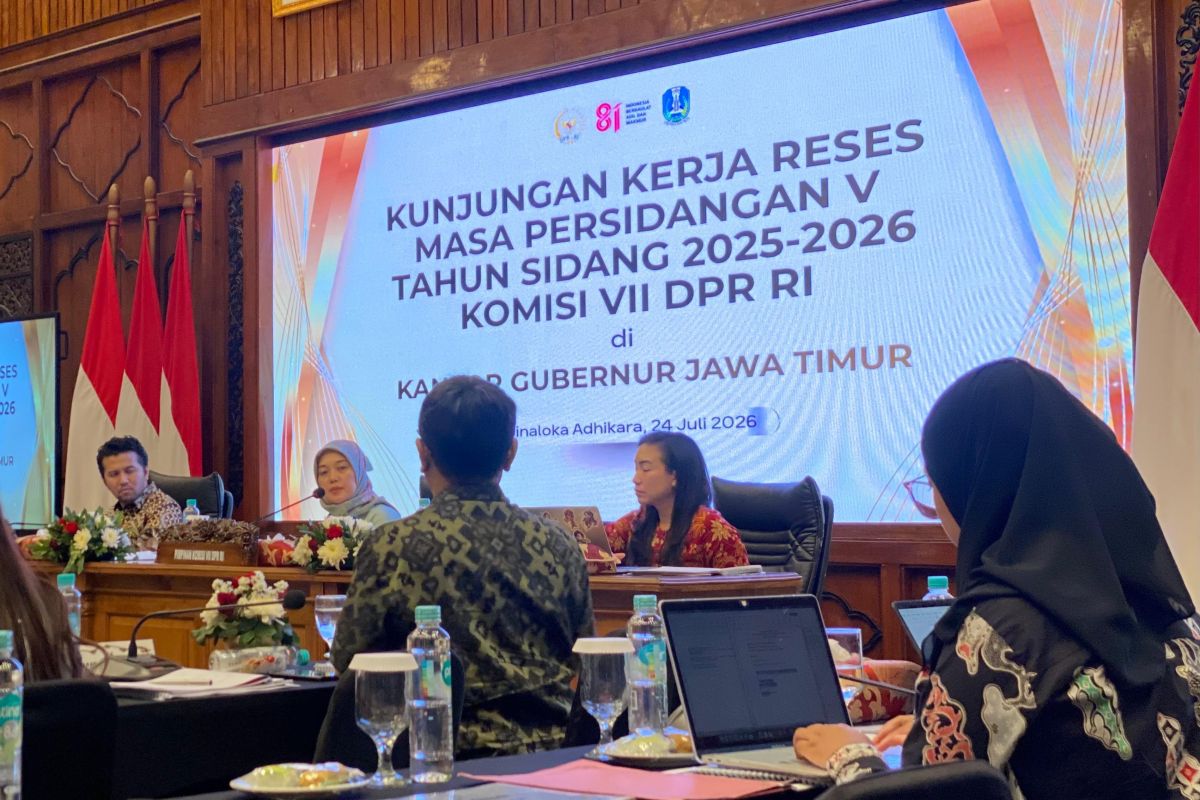
The Indonesian House of Representatives (DPR) supports the East Java Provincial Government in strengthening creative economy development through improving talent quality, providing creative spaces, and utilising artificial intelligence (AI) technology responsibly to enhance regional competitiveness.
Deputy Chairperson of Commission VII DPR RI, Chusnunia Chalim, stated that the use of AI has grown across various creative economy sub-sectors, from short film and music production to other creative works.
“This is positive for introducing technology to the younger generation. However, its use must remain within a responsible context. AI should be a tool, not replace all human work,” she said while providing input to the East Java Provincial Government during a Commission VII DPR RI recess in Surabaya, East Java, on Friday.
Chusnunia emphasised that AI needs to be utilised to simplify work processes and increase productivity, not to hand over the entire creative process to technology.
In addition to technology utilisation, Commission VII DPR also encourages local governments to strengthen the creative economy ecosystem through talent development. According to her, the government needs to provide facilitation for creative actors so they have the opportunity to showcase their work and develop their potential.
One of the challenges still faced by creative economy actors, particularly in the music and performing arts fields, is the limitation of facilities and infrastructure.
“When talking about talent development, local governments must be present to provide facilities. Besides improving human resource quality through education and training, they also need to provide spaces for expression and creativity,” she said.
She cited the Prambanan Jazz festival, which now attracts around 85,000 visitors, as evidence that developing a creative economy ecosystem requires a sustainable process. She explained that the economic turnover, which now reaches trillions of rupiah per year from the event, is the result of ecosystem development over approximately 12 years.
“If similar activities could be held more frequently in East Java, with its very large population, regional economic growth could certainly improve further,” she said.
Moreover, East Java plays a strategic role in national creative economy development, as its contribution to the national creative economy sector reaches around 20 to 21 per cent, while its contribution to the tourism sector is almost 28 per cent.
She highlighted the potential of East Java’s premier destinations such as Bromo and Kawah Ijen, which are still considered to have significant opportunities for development while upholding the principles of environmental conservation and sustainability. She stressed that the development of tourist destinations and the creative economy need not be concentrated in just one area but can be expanded to various other regions with similar potential.
“The existing potential must continue to be explored maximally so that its contribution to the regional economy continues to increase, not just relying on current achievements,” she said.