
DPR Supports Akmil Cadet Involvement in 'Sekolah Rakyat', Urges Humanistic Approach
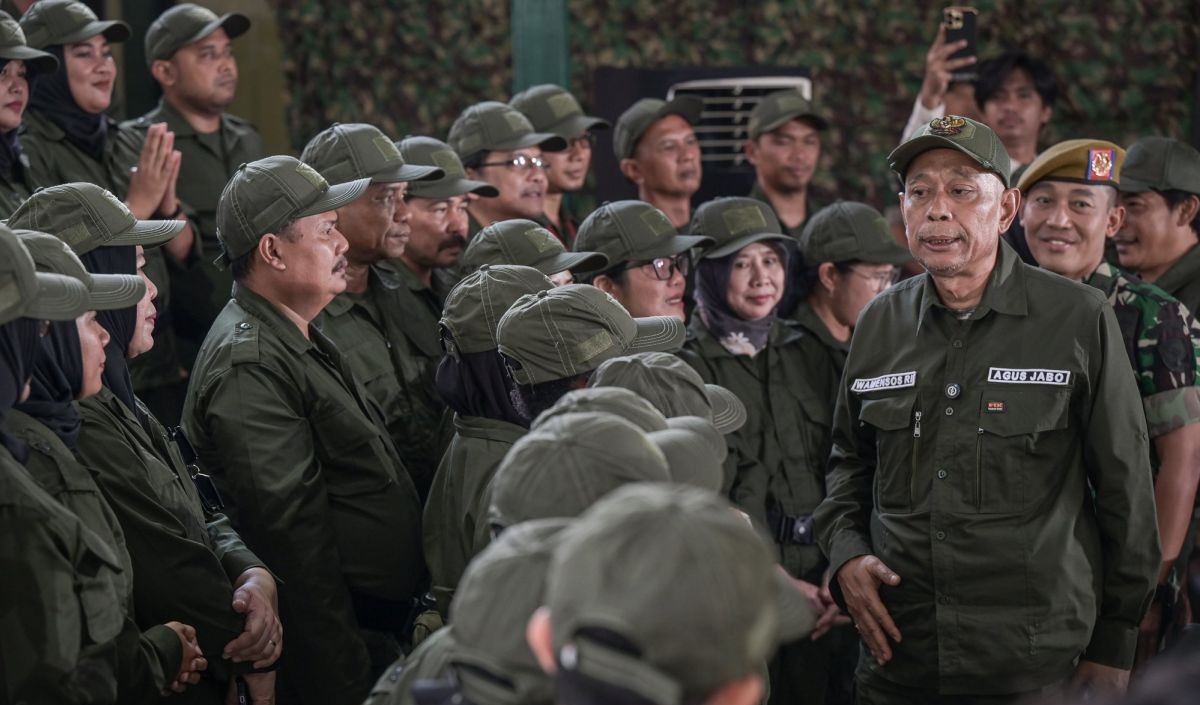
The plan by the Ministry of Social Affairs to involve graduates of the Military Academy (Akmil) in the coaching of students at ‘Sekolah Rakyat’ (People’s Schools) has received support from the House of Representatives (DPR). However, the implementation is urged to prioritise a humanistic educational approach and not lead to the militarisation of schools.
Member of Commission VIII of the DPR from the Golkar Party faction, Sandi Fitrian Noor, assessed that the involvement of Akmil cadets could be a positive step to instil discipline, leadership, nationalism, and a spirit of patriotism in students as preparation for future challenges. ‘I see the government’s intention as very good. We all want to produce a young generation that is disciplined, has integrity, possesses a national spirit, and is responsible. However, character education must remain within a humanistic pedagogical corridor. Do not let the public get the impression that schools are becoming spaces for militarisation. What must be transformed are the positive values, not the military culture,’ Sandi stated in a written release on Thursday.
Citing international research such as the Programme for International Student Assessment (PISA) and the Organisation for Economic Co-operation and Development (OECD), Sandi noted that character building is more effective through role models, habituation, a positive school culture, and good teacher-student relationships. He emphasised that character education cannot be built solely through short-term disciplinary training. ‘Discipline is indeed important, but discipline is not merely obedience to rules. Discipline must be born from awareness, responsibility, and the ability to control oneself. These values must be the spirit of coaching in Sekolah Rakyat,’ he asserted.
Sandi acknowledged that Akmil cadets possess many positive values that can serve as examples, such as integrity, leadership, teamwork, a spirit of service, mental toughness, and discipline. However, he suggested their role should be focused as character mentors and leadership role models, rather than implementing typical military education training patterns. He also reminded that Law Number 35 of 2014 on Child Protection guarantees every child’s right to education free from physical and psychological violence. Therefore, the entire coaching process must prioritise educational and persuasive approaches while respecting the development of students.
Furthermore, he encouraged the Ministry of Social Affairs and the Ministry of Primary and Secondary Education to develop a character education module based on educational science, child developmental psychology, and Pancasila values as a guide for all parties involved in the programme. Sandi also believes that student character building needs to be carried out collaboratively by involving teachers, principals, psychologists, social workers, counsellors, community leaders, and parents. He stated that the success of the programme should not only be measured by the level of discipline but also by increased self-confidence, cooperation skills, social awareness, integrity, learning motivation, and a reduction in deviant behaviour.
‘Sekolah Rakyat is a major state investment in breaking the chain of poverty through education. Therefore, the quality of character education within it must be carefully designed. We do not only want to produce disciplined children, but also a generation that is moral, empathetic, has critical thinking skills, integrity, and is capable of becoming the nation’s leaders in the future,’ Sandi explained. He added that Commission VIII of the DPR will continue to oversee the implementation of the Sekolah Rakyat programme to ensure it remains oriented towards providing quality education for underprivileged communities while building superior human resources towards the Golden Indonesia 2045 vision. ‘We believe the synergy between the Ministry of Social Affairs and the Military Academy can be a good innovation if designed proportionally. What we are building is not the militarisation of education, but the strengthening of national character based on human values, Pancasila, and the best interests of every Indonesian child,’ he concluded.