
DPR Suddenly Takes Up Strategic Commodities Bill: Here Are the Key Provisions
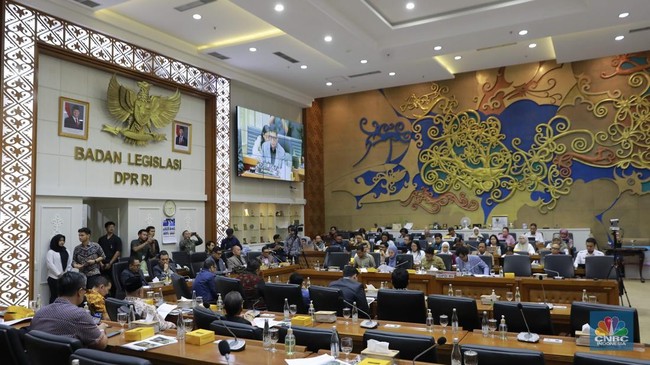
Jakarta, CNBC Indonesia — The Legislative Body of Indonesia’s House of Representatives (DPR) is discussing a bill on Strategic Commodities that would regulate the management of natural resources, from planning and downstream processing to the establishment of an exchange and the management of exports and export proceeds.
At a working committee meeting of the DPR’s Legislative Body on 26 November 2026, lawmakers agreed on draft Articles 1 to 8 of the bill.
“This is one chapter on determining the categories and criteria, how they are determined and who determines them, the institution responsible, and the relevant provisions. I think that is all,” said Legislative Body chairman Bob Hasan at the committee meeting on the bill, which was streamed online on Thursday (26 November 2026).
Under the draft approved by the committee, strategic commodities include goods and natural-resource products in raw, semi-processed, finished or derivative form that have a competitive advantage and strategic economic value.
Article 5(1) specifies two main categories: strategic commodities intended to meet domestic needs, and strategic commodities oriented towards exports.
“Strategic commodities as referred to in paragraph (1) include, among others, natural resources from agriculture, plantations, fisheries, forestry, mining, minerals and energy, as well as other natural resources with strategic value for increasing the country’s foreign-exchange earnings,” Article 5(2) states.
Article 4 of the draft sets out 17 main areas of regulation. These include the designation of strategic commodities; planning; production and downstream-processing policies; producers and businesses; the establishment of a Mineral and Strategic Commodities Exchange; export governance; pricing and stabilisation; increasing state revenue and export proceeds; a Strategic Commodities Fund; and the establishment of a National Strategic Commodities Council (DKSN).
To qualify for designation as a strategic commodity, a commodity must meet at least one of the criteria in Article 6(1). These include being part of a production sector important to the state and/or essential to the public; making a significant contribution to foreign-exchange earnings or state revenue; having potential for downstream processing and high added value; or generating substantial employment.
Article 7 sets out the designation process. The DKSN will recommend commodities that meet the criteria to the President after consulting the DPR.
Before making a recommendation, the DKSN may seek input from regional governments and relevant ministries or agencies. The designation will then be formalised through a presidential regulation.
Under Article 8, the list of strategic commodities set out in the presidential regulation must be reviewed periodically and, where necessary, on an ad hoc basis.
“Strategic commodities designated under Article 7(3) shall be reviewed at least once every five years,” Article 8(1) states.
In addition to the five-year review, reassessment may take place at any time if there are significant changes in production or market conditions. Based on the review, the central government may change, add or remove commodities from the list.
Source: jawawa.id (https://jawawa.id/newsitem/dpr-suddenly-takes-up-strategic-commodities-bill-here-are-the-key-provisions-1795697435)
Originally published by CNBC Indonesia (https://www.cnbcindonesia.com/news/20261126184527-4-788876/dpr-tiba-tiba-bahas-ruu-komoditas-strategis-ini-kisi-kisinya), translated from Indonesian