
DPR Strongly Criticises Toll Road Service Standard Audits, Could Concessions Be Terminated?
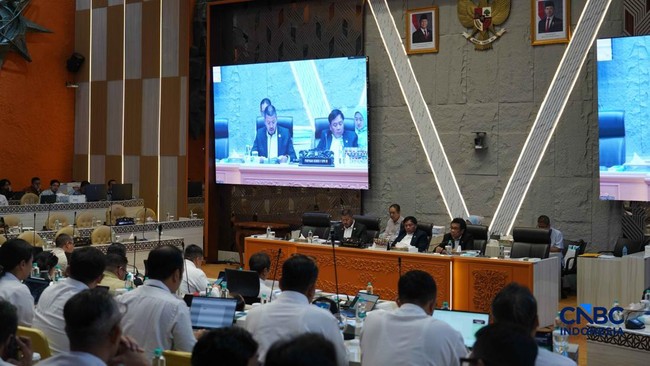
The enforcement of Minimum Service Standards (SPM) for toll roads in Indonesia has come under intense scrutiny. The Chairman of Commission V of the Indonesian House of Representatives (DPR RI), Lasarus, noted that while regulations regarding SPM actually include sanctions up to the termination of concession periods, these provisions have never been applied to toll road business entities (BUJT).
This issue has become a primary focus for the Toll Road Working Committee (Panja) of Commission V DPR RI. Based on discussions with various stakeholders, many toll road sections are deemed to have failed to meet the SPM when subjected to objective audits. This situation indicates a problem not only with standard compliance but also with law enforcement.
“The working committee is investigating this because the current legislation stipulates that failure to meet the minimum service standards for toll roads could result in the termination of the concession period. This is a very serious matter that we are currently deepening at the committee level. We are looking into whether there has ever been a toll road whose concession was terminated due to failing to meet the minimum service standards. To this day, it has never happened,” said Lasarus during a meeting with Echelon I officials from the Ministry of Public Works on Tuesday (29/09/26).
This condition requires evaluation because regulations should not stop at administrative obligations. If inspections show that the SPM is met, it must be declared as such. Conversely, if it is not met, the regulated sanctions must be strictly enforced.
“And there has been no action to this day. This proves that on one hand, the SPM is not being met, but on the other hand, law enforcement is not being carried out as it should be. It is the duty of the Director General of Bina Marga and the Head of the Toll Road Regulatory Agency (BPJT) to look more objectively moving forward. We are not looking for who is at fault,” he added.
Lasarus also highlighted the current SPM monitoring mechanism, which relies on self-assessments by BUJT and government verification. He requested that, in the future, SPM audits should not be conducted by a single party but should involve an independent comparative institution so that inspection results are more objective and do not trigger conflicts of interest.
“If the SPM is met, we declare it met; but if it is not met, I believe the rules are clear, and we request that they be enforced. Throughout the work of this committee, we have summoned dozens of stakeholders, and regarding the toll road SPM, if I may conclude, almost all toll roads in Indonesia fail to meet the minimum service standards when an objective audit is conducted,” he asserted.
During the meeting, the BPJT reported that the follow-up on BUJT self-assessments regarding the SPM as of 31 August 2026 had reached 99.99%. However, field verifications by regional offices have only reached 91.11%. The government is also preparing independent consultants to strengthen SPM supervision on several toll road sections.
Lasarus subsequently questioned the procurement mechanism for these consultants, as the appointment and funding are currently handled by the BUJTs. He argued that this situation could lead to a conflict of interest if the party being supervised is the one choosing and paying the consultant tasked with supervising them.
“If the consultant is meant to supervise the BUJT, why should the BUJT appoint them? If I appoint my own consultant, there is a conflict of interest. This creates a problem in my view. Why can’t the state fund it? We can use the State Budget (APBN), Sir. We don’t need to rely on funds from the BUJT partners,” said Lasarus.
He proposed that supervisory consultants should be funded through the State Budget and appointed by the government. This would ensure that the supervision of both BUJTs and consultants is conducted through a more hierarchical and independent process.
This matter is increasingly important as toll tariffs are subject to adjustments; therefore, any tariff increases must be accompanied by improvements in service quality. Similar concerns regarding SPM and toll road safety have been previously raised by Lasarus.
“The question I repeat once more: has there ever been action taken up to the termination of a concession? Never. The question is, can it be done? The regulations require it; it is not a matter of ‘maybe’ or ‘but’, it is a requirement,” concluded Lasarus.