
DPR Speeds Up Deliberation of International Financial Center Bill Amid Incentive Debates
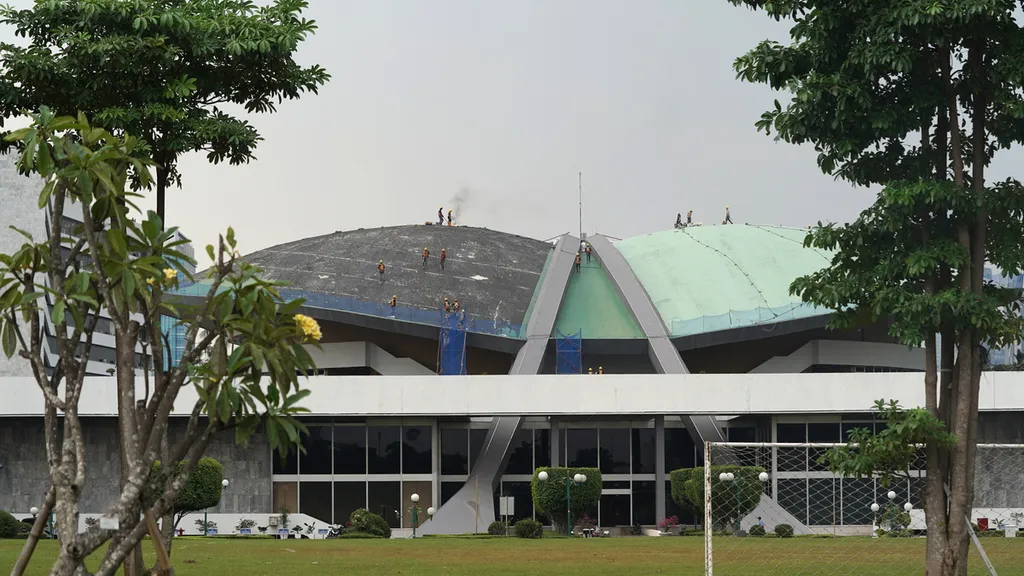
In an effort to secure its passage, the House of Representatives (DPR) deliberated the PFII Bill until the weekend. The debate over incentives and oversight intensified.
KOMPAS/AGUS SUSANTO
By Dimas Waraditya Nugraha, Nina Susilo
20 Jul 2026 06:00 WIB · Ekonomi & Bisnis
JAKARTA, KOMPAS — The Working Committee on the Draft Law concerning the Indonesian International Financial Center continues to expedite discussions on hundreds of inventory issues until the end of the weekend. The legal framework for the establishment of the international financial center with various special treatments is targeted to be completed by Tuesday (21/7/2026), although several crucial substances, including the design of tax incentives, are still being refined.
Discussions even continued to take place behind closed doors on Sunday (19/7/2026) at the Parliament Complex in Jakarta, in order to pursue a Level I decision on Monday (20/7/2026), before being brought to the plenary meeting of the DPR the following day.
A marathon meeting was held in the Commission XI room of the DPR since the afternoon. Unlike typical parliamentary activities, access to the DPR complex on holidays is restricted. Only the Pancasila Gate on the west side of the Commission XI building was opened for vehicles with interests related to the meeting agenda.
The Chairman of the Drafting Team for the Indonesian International Financial Center (PFII) and also the Deputy Chairman of Commission XI of the DPR from the Gerindra Party faction, Mohamad Haekal, stated that discussions over the weekend were conducted to ensure that the target for completing the first-level discussions could be achieved according to schedule.
“We hope that a level I decision can be made tomorrow,” said Haekal when contacted by Kompas, Sunday.
According to the agenda, Commission XI will hold a working meeting with the government on Monday afternoon. Scheduled to attend this occasion are the Minister of Finance, the Minister of Law, the Minister of State Secretary, as well as the Minister of Investment and Downstream/Head of BKPM.
The agenda of the meeting is to listen to the report from the working committee, the reading of the draft bill, the presentation of the final opinions from the factions and the government, the signing of the document, and the decision-making to bring the draft bill to the second level discussion in the plenary session of the DPR on Tuesday.
The PFII Bill is a mandate of Law Number 4 of 2026 concerning the Development and Strengthening of the Financial Sector (P2SK). This regulation is prepared as a legal foundation for the establishment of an international financial center, which is expected to attract global investment and strengthen national economic financing.
The total DIM exceeds 400. The discussions have indeed been arduous. We have only reached the initial articles, starting from definitions to authorities. (Harris Turino)
Although the discussions have been expedited, the substance of the PFII Bill is still progressing quite slowly. A member of the PFII Bill Working Committee from the PDI Perjuangan faction, Harris Turino, stated that as of last week, only about 157 permanent problem inventory lists (DIM) had been successfully resolved. In addition to the substantive DIM, discussions are also ongoing to refine the editorial aspects through the Drafting Team and the Synchronization Team.
“Total DIM is more than 400. The discussions have indeed been lengthy. We have only reached the initial articles, starting from definitions to authorities,” said Harris, last Tuesday.
According to Harris, discussions on various technical aspects were conducted intensively because the PFII Bill was designed as a lex specialis regulation. These special regulations will address several aspects that differ from the general provisions, ranging from taxation and institutions to dispute resolution mechanisms.
One of the substances still under discussion is the design of fiscal incentives for business actors in the PFII area. Previously, the Chairman of Commission XI of the DPR, Mukhamad Misbakhun, stated that the government proposed a tax rate of 0 percent for up to 50 years as one of the attractions for investors.
According to him, the incentive is expected to attract investment funds that have been placed through special purpose vehicles (SPVs) in various overseas jurisdictions before returning to Indonesia.
The government has also proposed various other facilities. For example, incentives for corporate income tax, exemptions from value-added tax and luxury goods tax, facilities for foreign experts, as well as immigration conveniences such as golden visas, residence permits, and various licensing easements.
This strategy is not new at the global level. Several international financial centers, such as Dubai International Financial Centre (DIFC), Abu Dhabi Global Market, and Labuan International Business and Financial Centre, have developed through a combination of fiscal incentives, flexible regulations, and a special legal system for financial service providers.
However, the international tax landscape has changed. More than 140 countries, including Indonesia, have agreed to implement a global minimum tax (GMT) of 15 percent through the Global Anti-Base Erosion (GloBE) Rules framework initiated by the Organisation for Economic Co-operation and Development (OECD). Indonesia has adopted this provision through Minister of Finance Regulation Number 136 of 2024.
Herman Saheruddin, Director General of Financial Sector Stability and Development at the Ministry of Finance, stated that the government is still designing the PFII incentives to ensure they remain competitive without conflicting with global tax standards. “In principle, we must also comply with international standards. We must still adhere to the GMT,” Herman said.
Details of the incentives are still being discussed with the DPR to ensure they can continue to increase PFII’s competitiveness while complying wi