
DPR RI Special Committee Urges Industrial Design to Become Economic Asset in NTT
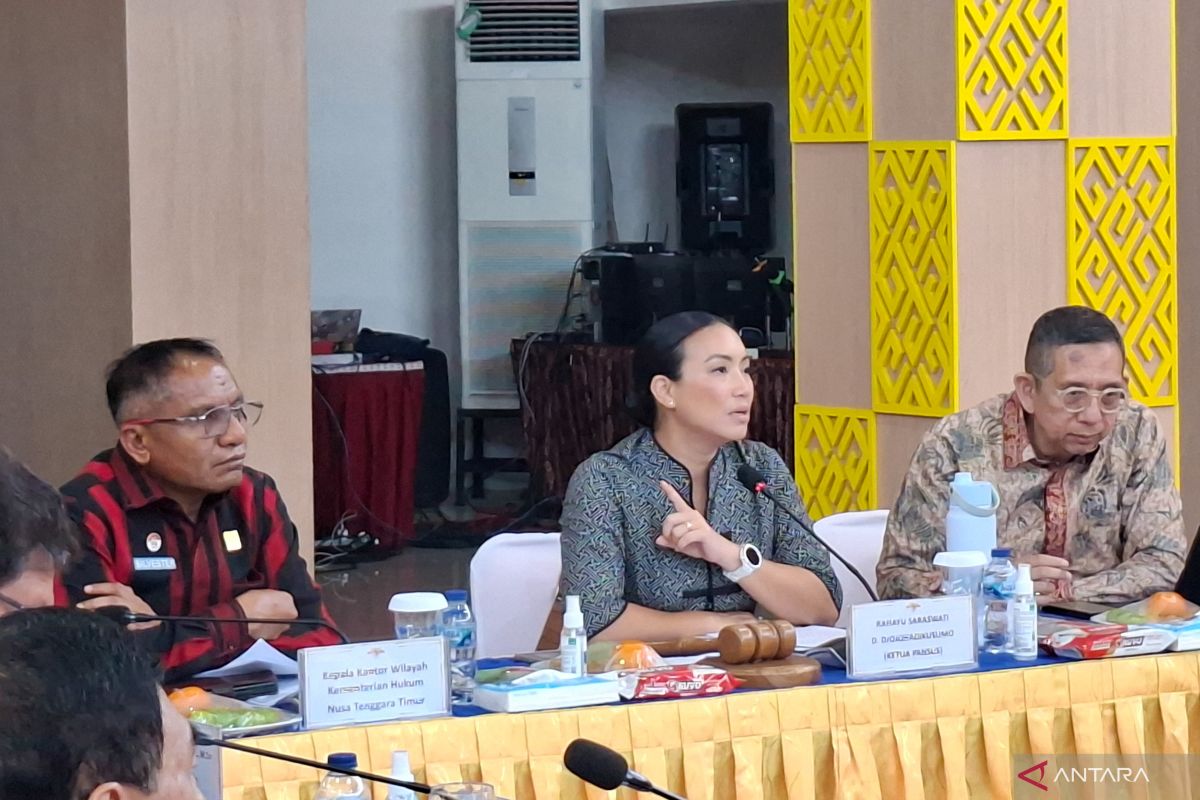
Kupang, NTT (ANTARA) - The Special Committee (Pansus) of the Indonesian House of Representatives (DPR RI) is encouraging the protection of industrial designs in East Nusa Tenggara (NTT) so that creative products from the community can gain added value and be developed as economic assets.
The Chairperson of the DPR RI Industrial Design Bill Special Committee, Rahayu Saraswati Djojohadikusumo, stated in Kupang, NTT, on Monday, that design protection needs to be directed so that the results of community creativity do not merely remain as products, but can provide sustainable economic benefits.
“If we want to protect the rights of designers, registration is more logical because we must ensure there is no overlap with the rights of others,” said Rahymu.
According to her, industrial design protection is essential to provide certainty for designs developed by business actors, while simultaneously preventing imitation or the unauthorised use of designs.
The Head of the Regional Office of the Ministry of Law in NTT, Silvester Sili Laba, noted that NTT possesses great potential in industrial design development through various woven fabrics, crafts, artisanal products, SME products, packaging designs, and community creative economy products.
However, he stated that this potential has not been matched by a high level of utilisation of the industrial design protection system. Based on data from the NTT Regional Office of the Ministry of Law, only seven industrial design applications were recorded between 2022 and 2026.
According to Silvester, the low number of applications does not indicate a lack of creativity in NTT, but rather reflects the existing gap between the community’s design potential and the use of the intellectual property protection system. “Many community members and business actors do not yet understand that the designs they produce can become intellectual property assets with economic value that need protection,” he said.
He added that the limited capacity of individuals and SMEs to conduct registrations independently is one of the obstacles to utilising industrial design protection. Therefore, his office is encouraging local government facilitation for industrial design registration, particularly for SMEs, artisans, local designers, and creative economy actors.
Meanwhile, the Director General of Intellectual Property at the Indonesian Ministry of Law, Hermansyah Siregar, stated that the government has provided tariff affirmations for Non-Tax State Revenue (PNBP) for SMEs to make it easier for them to obtain intellectual property protection.
In addition to cost-related ease, the government is also encouraging the establishment of intellectual property centres in universities and research institutions to strengthen communication, education, and assistance. He mentioned that by the end of 2025, there are 426 intellectual property centres in universities and research institutions, while through various collaborations, the number has reached 1,304 centres.
“All universities must have intellectual property centres. It is important as a means of communication,” he said.
Hermansyah added that the government is also preparing intellectual property coordination forums in the regions to strengthen communication between stakeholders and the Regional Offices of the Ministry of Law. “The government is currently very active in promoting intellectual property as a driver of future economic development,” he concluded.
Source: jawawa.id (https://jawawa.id/newsitem/dpr-ri-special-committee-urges-industrial-design-to-become-economic-asset-in-ntt-1789373272)
Originally published by Antara (Indonesian) (https://www.antaranews.com/berita/5739740/pansus-dpr-ri-dorong-desain-industri-jadi-aset-ekonomi-ntt), translated from Indonesian