
DPR Pushes for Optimisation of Indonesian Food Products for Hajj and Umrah Consumption Worth Rp60 Trillion
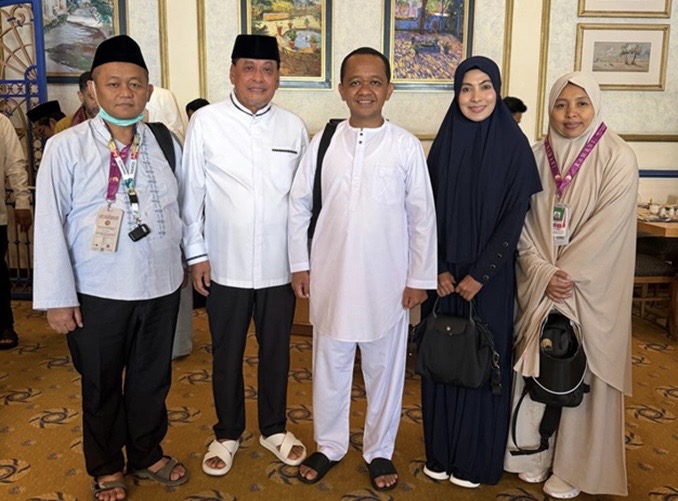
Indonesian Members of Parliament (DPR) are urging the optimisation of Indonesian food products for Hajj and Umrah consumption in Mecca and Medina, Saudi Arabia. The economic value of food for Hajj and Umrah reaches Rp60 trillion annually.
“Given 221,000 Hajj pilgrims in 2026, food expenditure alone amounts to Rp18.2 trillion. Combined with 1.7 million Umrah pilgrims, the total exceeds Rp60 trillion per year. This significant potential must be harnessed to boost the people’s and national economy,” said Nurdin Halid, a DPR Hajj Oversight Team member, in a written statement from Mecca, reported on Tuesday (26 May).
Nurdin noted that the Rp60 trillion annual circulation of funds for Hajj and Umrah consumption should directly impact the national economy. For the 221,000 Indonesian Hajj pilgrims in 2026, the economic turnover could reach Rp18.2 trillion.
This figure is calculated from 2.78 million meal boxes (catering) for 111 meals per person over 40 days, managed by 75 kitchens across Mecca and Medina. The 2026 Hajj catering cost is set at 40 Saudi riyals per day, approximately Rp180,000 (at an exchange rate of around Rp4,500 per riyal).
Nurdin highlighted that this economic potential is not optimally utilised. Currently, Indonesia’s Hajj catering supplies heavily rely on products from Thailand, Vietnam, Brazil, and Middle Eastern countries. Fresh food suppliers in Saudi Arabia typically source staple commodities like rice, chicken, and fish through importers collaborating with various supplier nations.
Therefore, he believes the Hajj and Umrah logistics and catering sector should be managed with economic strategies favouring domestic products and national food industries.
“The Hajj season should create a multiplier effect for national businesses. Indonesia has abundant products from farmers, livestock breeders, fishermen, MSMEs, and cooperatives capable of supplying catering needs—from rice, vegetables, side dishes, to spices,” he stressed.
Previously, on Saturday (23 May), Nurdin participated in a discussion with national figures during the 2026 Hajj in Mecca. Several national leaders held a nation-building discussion during the Hajj period.
Attendees at the lunchtime discussion included Golkar Party Chairman Bahlil Lahadalia, Agriculture Minister Andi Amran Sulaiman, Presidential Special Envoy for Youth and Arts Development Raffi Ahmad, Golkar Secretary-General Muhammad Sarmuji, and Nurdin himself as a member of the 2026 Hajj Oversight Team and Deputy Chairman of DPR Commission VI from the Golkar faction.
Discussions covered national conditions, improvements in 2026 Hajj services under the Ministry of Hajj and Umrah, and President Prabowo’s major policies for Constitutional Economy Article 33, such as establishing Village/Urban Red and White Cooperatives (KDKMP), Danantara as a BUMN superholding, and natural resource downstreaming.
“The core of the discussion was the importance of state support for the people, particularly ensuring natural resource management leads to public welfare,” Nurdin said.
Agriculture was a key subtopic due to its strategic role in ensuring food security and boosting people’s economy. He emphasised the need for cross-sectoral collaboration led by the Agriculture Ministry under Andi Amran Sulaiman to strengthen food policies focused on food sovereignty and social equity.
Besides the Free Nutritious Meals (MBG) programme, Nurdin highlighted Hajj and Umrah as a significant market for final products of rural economic downstreaming by farmers, livestock breeders, fish farmers, and fishermen. Like MBG, Hajj and Umrah represent a large, captive market with an annual turnover of Rp60 trillion.
“Therefore, we must push for food commodity exports to capitalise on the Hajj economic momentum. The state must lead through relevant ministries, agencies, and state-owned enterprises to ensure this vast market opportunity benefits the national economy and people,” he added.
Nurdin highlighted the low utilisation of Indonesian local products in the logistics and catering chain for Indonesian Hajj pilgrims in Mecca and Medina. According to the Ministry of Hajj and Umrah data, there are around 180 types of ready-to-eat Indonesian meals that exporters and importers can select for health needs, while highlighting Indonesian culinary flavours to keep pilgrims comfortable and healthy in the Holy Land.
The 75 Indonesian Hajj kitchens prepare three meals a day with Nusantara menus such as nasi uduk, rendang, chicken curry, ayam woku, beef steak, capcay, and tempe. During the Hajj peak at Armuzna (Arafah, Muzdalifah, and Mina), pilgrims receive 15 ready-to-eat meal packages with Nusantara flavours.
“This massive economic scale requires special attention as Indonesia is one of the world’s largest Hajj and Umrah sending countries. Currently, food supplies for Indonesian pilgrims in Mecca are still dominated by other countries. This means the vast economic potential is flowing abroad. It is regrettable that such potential is not utilised for national economic interests,” he said.
He also cited President Prabowo Subianto’s guidance on the high economic value of Hajj and Umrah consumption…