
DPR Passes P2SK Law Revision, Institutionalising Online Gambling Task Force
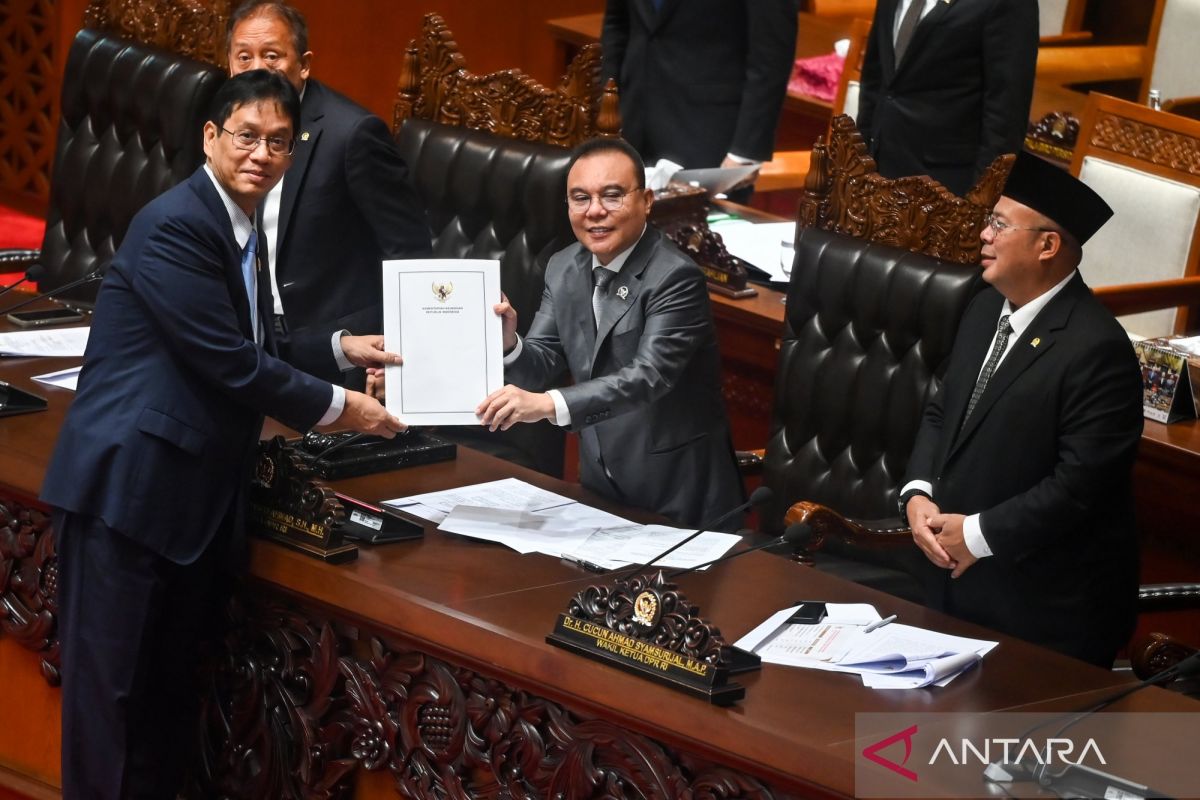
The House of Representatives (DPR) plenary session has officially ratified the Bill on the Amendment to Law Number 4 of 2023 concerning the Development and Strengthening of the Financial Sector (P2SK) into law. This ratification is not merely a technical regulatory change in the financial sector, but also reflects the state’s effort to address various new challenges arising alongside the development of digital technology and economic transformation.
The revision of the P2SK Law contains 17 main regulatory subjects. Some of these include strengthening the institutions of the Deposit Insurance Corporation (LPS), the Financial Services Authority (OJK), and Bank Indonesia; expanding banking and Islamic banking businesses; regulating crypto assets; strengthening law enforcement mechanisms in the financial services sector; as well as regulating Danantara debt securities, Indonesia’s international financial centre, handling non-performing MSME loans, and strategic mineral and commodity exchanges.
Among these various substances, one point deserves special attention: the formation of a Task Force for the Prevention and Handling of Online Lending and Online Gambling. This step demonstrates the government and DPR’s awareness that threats to financial sector stability no longer originate solely from conventional banking risks, but also from illegal economic activities exploiting the digital space.
Over the past few years, illegal online lending and online gambling have developed into increasingly complex socio-economic problems. Both not only harm individuals and families but also create systemic impacts on the economic stability of society. Many households are trapped in debt cycles, lose productivity, and even experience economic ruin due to involvement in these practices.
The formation of a task force through the revision of the P2SK Law is an important step as it provides a stronger legal basis compared to previous approaches. During President Joko Widodo’s administration, an Online Gambling Eradication Task Force was established through Presidential Decree Number 21 of 2024. From the perspective of State Administrative Law, as an instrument born from an administrative decision, the effectiveness of such a task force was often limited, both in terms of authority, inter-agency coordination, and policy sustainability, not to mention the persistent issue of sectoral egos in field implementation.
This experience shows that eradicating online gambling cannot be sufficiently addressed through an ad hoc approach. This phenomenon has evolved into a digital economic crime involving cross-regional networks, complex financial transactions, and the utilisation of constantly changing technology. Therefore, an institution with stronger legal legitimacy and more structured coordination support is required.
Crime in the digital era is no longer always present in the form of visible physical violence, but moves more silently, infiltrating virtual spaces with no less destructive power. One example is the rise of online gambling, a phenomenon often perceived as a shortcut to quick profits, when in reality it harbours hidden criminality that erodes the moral, social, and economic fabric of society. This situation becomes increasingly ironic because the public is no longer merely in the position of victims, but is also dragged into becoming an active part of the digital crime chain.
Online gambling, familiarly known as ‘judol’, has now become one of the clearest examples of how crime can be packaged and marketed like a money-making opportunity. Many people are tempted by promises of quick profits and the ease of playing just via a mobile phone. Yet, behind that seemingly ordinary appearance, online gambling is not just a game or entertainment. It is part of a criminal network that profits from people’s hopes and economic difficulties. The impact not only causes someone to lose money but can also destroy family relationships, ruin futures, and create broader social problems.
According to the Digital Commission (Komidigi), nearly 200,000 children have been recorded as exposed to online gambling practices. Even more concerning, around 80,000 of them are children under the age of 10. These figures are not just statistics, but a strong signal that children’s digital spaces are increasingly vulnerable to infiltration by illegal practices that threaten the future of the younger generation. This phenomenon shows that online gambling has moved far beyond an ordinary problem, developing into a social threat targeting the most vulnerable groups, namely children who psychologically do not yet have the adequate ability to understand the risks of digital manipulation.
On various social media platforms, promotions for online gambling are still very easily found. From direct observation, such content is often accompanied by elements of pornography and even child exploitation. It is not uncommon for minors to be involved in advertising certain sites or applications to attract other users’ attention. This situation shows that online gambling does not exist in isolation, but goes hand in hand with various other forms of digital crime that slowly drag children into the cycle without them realising it. What is more concerning is that social media, which was originally a space for entertainment and public interaction, is slowly turning into a space filled with deviant practices. Online gambling content continues to appear, repeatedly, and seems to be normalised in the daily digital lives of the public. As a result, some people begin to view shortcuts as a quick way to earn money, without considering the legal and moral risks.