
DPR Passes Indonesia One Data Bill into Law
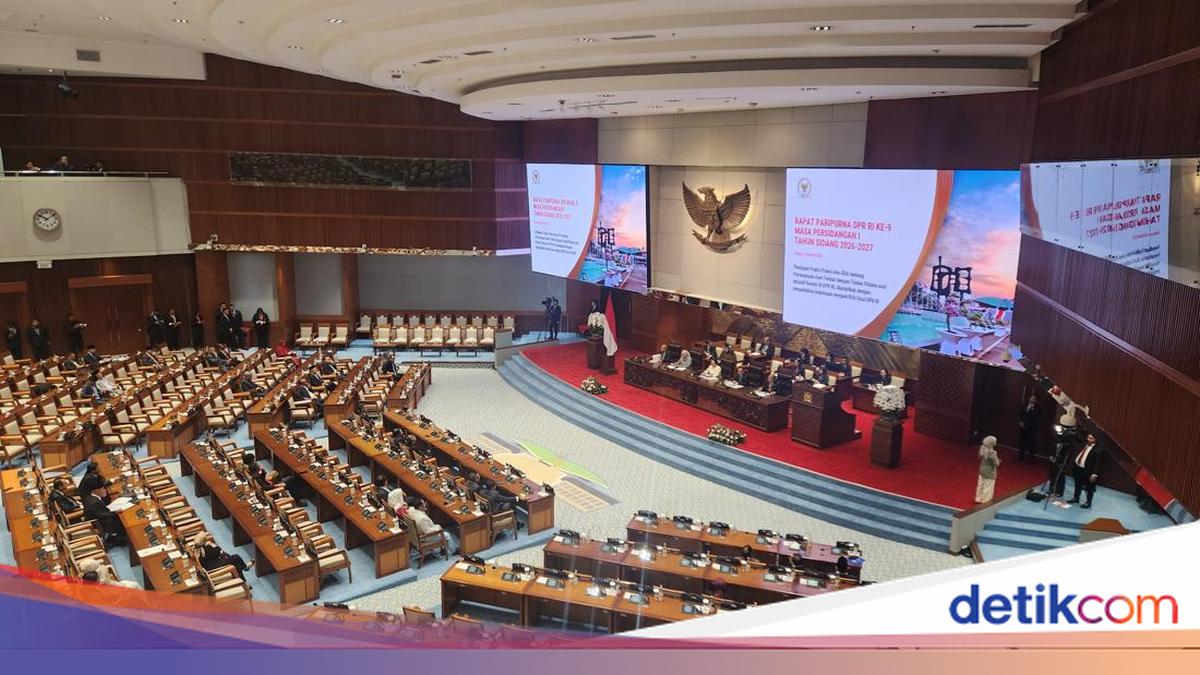
The Indonesian House of Representatives (DPR RI) has passed the Draft Law on Indonesia One Data (SDI) into law. This decision was reached during a plenary session of the DPR.
The 9th Plenary Session of the first session of the 2026-2027 period was held at the DPR building in Senayan, Jakarta, on Tuesday (6/10/2026), presided over by the Speaker of the House, Puan Maharani.
Initially, the Chairman of the Working Group (Panja) for the Indonesia One Data Bill, Sturman Panjaitan, presented his report on the bill’s deliberations. Sturman stated that the bill will encompass all government agencies, both at the central and regional levels.
“One data embodies the spirit of Bhinneka Tunggal Ika (Unity in Diversity) in the language of governance; data producers range from ministries to village governments, yet the standards, metadata, reference codes, and master data are unified,” said Sturman.
Sturman noted that numerous parties were involved throughout the drafting process. The bill consists of 20 chapters and 141 articles.
Following the report, the session chair sought approval from the participants. The attending members of the DPR agreed to ratify the Indonesia One Data Bill as law.
Prior to the plenary, the Legislative Body (Baleg) of the DPR RI, in collaboration with the government, had agreed on the Draft Law to be brought to the plenary session. The decision-making meeting took place in the Baleg room at the DPR RI building in Senayan, Jakarta, on Monday (5/10/2026).
Sturman Panjaitan highlighted that the SDI Bill was an initiative of the DPR RI. During the first-level discussions, the government submitted a List of Problems (DIM) consisting of 1,338 substantive items and 829 explanatory items.
The key points of the Indonesia One Data Bill presented by Sturman Panjaitan include:
A. Regulation of National Basic Data (DDN) controlled by the state as the primary reference for development planning, fiscal policy, budgeting, social assistance distribution, and other national strategic needs, including criteria for six clusters and the classification of open, limited, and closed data.
B. Regulation of SDI governance through the SDI Master Plan, SDI Architecture, SDI Management, and SDI Cycle, coordinated by a Minister, including the determination of national priority data.
C. Institutional strengthening through the formation of SDI organisers accountable to the President, replacing the Indonesia One Data Agency with a coordinative, normative, and facilitative role in coordinating data supervisors, producers, and data custodians.
D. Regulation of authority distribution between central, regional, and village/sub-district governments in producing and managing data, including village data deliberations as a participatory forum.
E. Regulation of data supervisors, producers, and custodians across levels from national to village/sub-district and corporations, as well as data users and their obligations.
F. Regulation of data standards, metadata, reference codes, and/or master data, and a national data catalogue system mandatory for all data producers and custodians, without centralising data control in a single agency.
G. Regulation of SDI infrastructure and risk management, including the use of digital technology, blockchain, and artificial intelligence to ensure national data sovereignty, traceability, and human oversight.
H. Regulation of data interoperability implemented without centralising physical databases or transferring ownership, control, or management responsibility from the original data producers.
I. Regulation of data usage and access control, including the imposition of fees for access to limited data as non-tax state revenue, and the requirement for parliamentary approval for the access and transfer of closed data outside Indonesian jurisdiction.
J. Strengthening of data security and protection through standards implemented by cyber and cryptography agencies, cryptographic infrastructure, digital certificate management systems, security and data sovereignty audits, and incident reporting within 24 hours.
K. Regulation of funding, incentives, guidance, supervision, evaluation, and accountability, including the submission of oversight reports by organisers to the President and the DPR.
L. Strengthening community participation in SDI implementation, including providing input, reporting suspected data misuse, participatory oversight, and voluntary data contributions.
M. Regulation of dispute resolution mechanisms prioritising non-litigation methods, with mediation lasting a maximum of 14 working days, extendable by another 14 working days.
N. Regulation of administrative sanctions, criminal provisions, and transitional provisions to ensure compliance and sustainability, including the removal of certain prohibited chapters by incorporating their substance into criminal provisions.
O. The formation of organisers within a maximum of one year and the adjustment of SDI systems and infrastructure based on Presidential Regulation Number 39 of 2019 concerning Indonesia One Data.