
DPR Oversight Team Says Hajj Health Staff and Medical Facilities Not Ideal
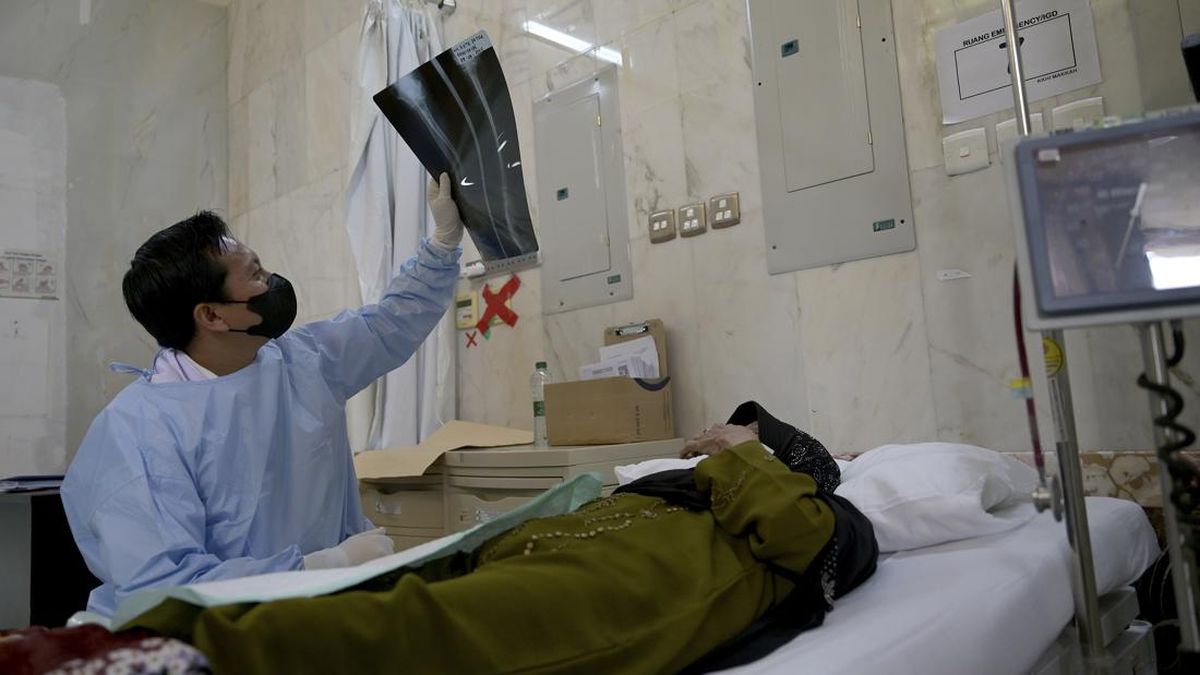
Netty Prasetiyani Aher, a member of the DPR’s 2026 Hajj Oversight Team, said the current number of health staff and medical facilities for Hajj pilgrims is not ideal to handle the complexities of service in the Holy Land.
After conducting monitoring in Saudi Arabia, Netty identified several fundamental issues, including insufficient health staff, a high number of high-risk pilgrims, and ambulance fleets that are no longer operational.
‘Proposals for next year must increase the Hajj health personnel quota both in the kloter and at the PPIH in Saudi Arabia,’ Netty said on Monday (25 May).
She stated that the current total Hajj health personnel stands at 1,249, comprising 1,050 Hajj Kloter Health Personnel (TKHK) and 199 non-kloter health staff. They must serve over 221,000 Indonesian pilgrims spread across various accommodation sectors.
Netty noted that this ratio is inadequate as the majority of pilgrims have health vulnerabilities. Besides advanced age, many suffer from chronic conditions such as hypertension, diabetes, heart issues, and cancer.
‘The figure of 199 PPIH health personnel and 1,050 TKHK is not an ideal ratio to handle pilgrims facing health challenges, accommodation locations, socio-cultural aspects, scorching weather, overcrowding, and other issues,’ said the PKS faction politician.
Another serious issue is the condition of ambulances owned by the Indonesian Hajj Health Clinic (KKHI). Of the nine KKHI ambulances, most are old and suboptimal for use.
‘The existing nine ambulances owned by KKHI are old, with non-functioning air conditioning and unfit for use. Consequently, only 15 rented ambulances are operational,’ said the DPR Health Commission member.
However, ambulance demand surges during Armuzna for evacuating sick pilgrims from accommodations to hospitals and key worship sites.
‘The need for ambulances is extremely high for evacuating, referring, and transporting patients/pilgrims to hospitals, accommodations, and the Armuzna Hajj peak,’ she added.
Netty proposed rejuvenating the ambulance fleet acquired in 2010 with new units to prevent disruptions in pilgrim healthcare. She also called for updating medical equipment and constructing a more patient-friendly KKHI building.
She noted that KKHI Makkah’s current 17-storey building complicates the handling of referred patients and observation. ‘A new building doesn’t need to be tall (17 storeys) but should accommodate pilgrims needing referral before Saudi hospitals and serve as a temporary observation site for at least 24 hours,’ Netty suggested.