
DPR Members Urge Industrial Estate Bill to Measure Real Economic Impact
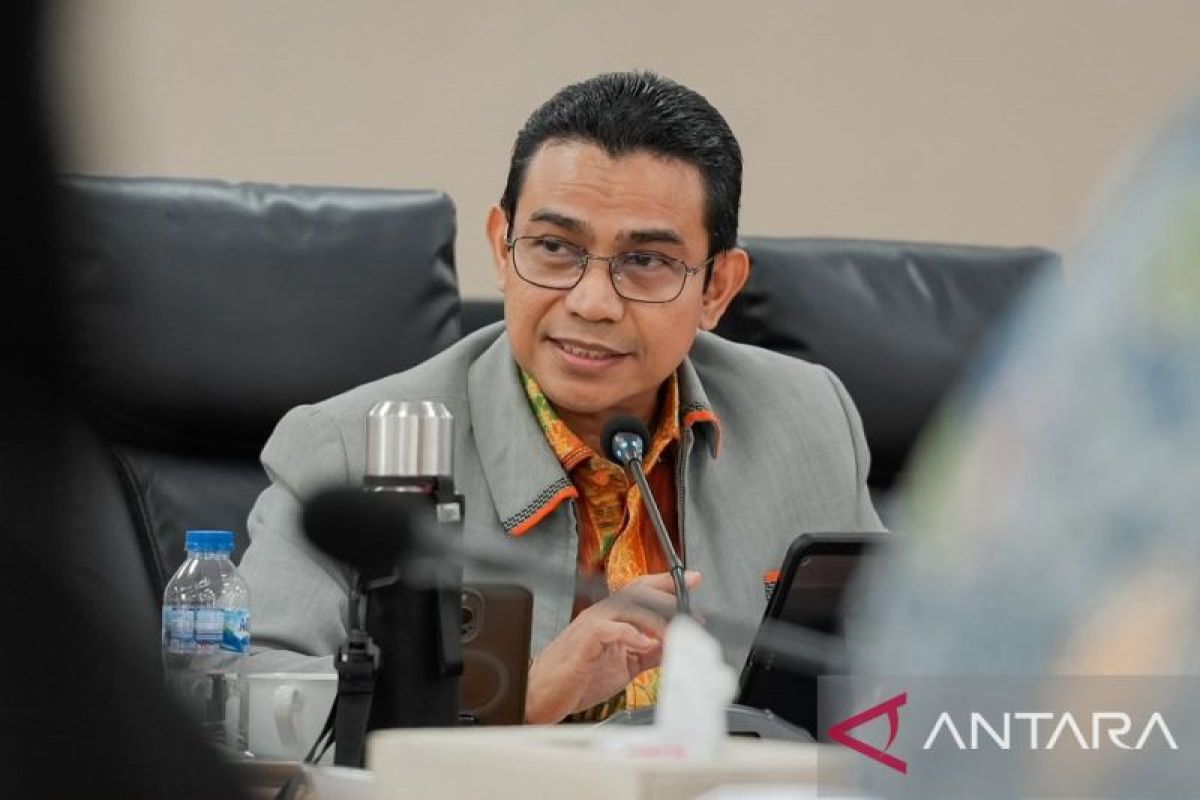
Jakarta (ANTARA) - Hendry Munief, a member of Commission VII of the Indonesian House of Representatives (DPR RI), emphasised that the Draft Law on Industrial Estates must not only regulate the development of estates but also ensure their existence generates productivity and real economic impact for the community.
Hendry stated that industrial estates should be viewed as economic ecosystems whose success is measured by performance after operation, rather than solely by land area, the number of buildings, or the number of companies within them.
“The Industrial Estate Bill should not only address how to build estates, but must comprehensively address how these estates produce efficient industries, productive investment, resilient domestic supply chains, and real economic justice for the State Budget (APBN) and the surrounding people,” Hendry said in a statement in Jakarta on Friday.
During a visit by the Working Committee (Panja) for the Industrial Estate Bill to the Wilmar Integrated Industrial Estate (KITW) in Serang Regency, Banten, on Wednesday (23/9), Hendry noted that the bill’s discussions need to produce performance metrics that can concretely demonstrate the economic benefits of the estates.
To this end, the Working Committee highlighted several indicators, including the percentage of productive land occupancy, realised investment value, local labour ratios, logistics cost efficiency, and transaction values within local supply chains.
These five indicators are considered capable of providing an overview of whether industrial estates are truly creating economic activity or are merely oriented towards land utilisation.
Hendry also emphasised the need to strengthen the involvement of small and medium industries (IKM) and local business actors within the estate’s supply chain.
“Industrial estates must generate added value, not just serve as a place where industries are established,” he said.
In addition to supply chains, the Working Committee highlighted the efficiency and competitiveness of the estates, which include the quality of infrastructure, utilities, connectivity to ports and distribution centres, logistics costs, and the certainty of services for investors.
Hendry stated that these aspects need to be strengthened in the regulation so that industrial estates can support business activities efficiently.
“Future regulations need to provide clear service standards so that issues such as licensing, infrastructure, utilities, spatial planning, and connectivity do not become obstacles to industrial activities,” said Hendry.
He added that the Working Committee’s visit to KITW is part of an effort to obtain data and factual field conditions to refine the material of the Industrial Estate Bill.
According to Hendry, field data is necessary so that the regulation of industrial estates is not based solely on administrative aspects, but also possesses performance metrics and accountability that can be evaluated.
With this approach, industrial estates are expected to not only serve as investment locations but also to strengthen domestic supply chains, create jobs, increase industrial efficiency, and provide economic impacts for the surrounding community.
Source: jawawa.id (https://jawawa.id/newsitem/dpr-members-urge-industrial-estate-bill-to-measure-real-economic-impact-1790334673)
Originally published by Antara (Indonesian) (https://www.antaranews.com/berita/5758549/anggota-dpr-dorong-ruu-kawasan-industri-ukur-dampak-ekonomi-nyata), translated from Indonesian