
DPR Members Grill Bank Indonesia Over Dollar Surging to Rp 17,600
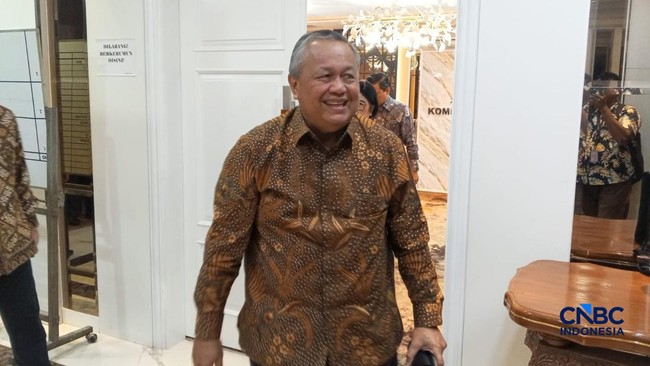
Jakarta, CNBC Indonesia - Members of Commission XI of the House of Representatives (DPR) RI interrogated the Deputy Governor of Bank Indonesia (BI) regarding the current weakening of the rupiah, which has touched the level of Rp 17,600 per US dollar during a hearing on Monday (18/5/2026).
According to Refinitiv data, the rupiah weakened by 1.15% to the level of Rp 17,660/US$ at 10:20 WIB. This pressure was deeper than the morning opening position, where the rupiah opened 0.97% weaker at Rp 17,630/US$.
The current rupiah position has also drifted further from the last trading close of the previous week, Wednesday (13/5/2026), before the long holiday, when the rupiah closed 0.17% stronger at Rp 17,460/US$.
In light of these conditions, Commission XI member Charles Honoris noted that Bank Indonesia consistently claims the rupiah’s stability is maintained, even though the depreciation has reached Rp 17,000 per US dollar. He questioned the indicators BI uses to assess stability.
“Our question is simple: how does BI define the indicator ‘maintained’?” he stated. He further asked whether BI views the depreciation to the Rp 17,000 level as a normal occurrence or if it has entered the category of fundamental pressure.
Charles also questioned how much foreign exchange reserves could be utilised for rupiah intervention. “Foreign exchange reserves are indeed high at US$ 146.2 billion, but how fast will they decline if the rupiah pressure continues?” he said. Charles noted a downward trend in reserves over the last three months, which causes him concern, expressing hope that reserves are not eroded by continuous intervention.
“What are BI’s steps, and does BI have a worst-case scenario? How much capital outflow is currently occurring and what are BI’s measures?” Charles asked.
Meanwhile, Commission XI member from the Golkar Party, Muhidin M. Said, requested an explanation regarding the steps BI will take to analyse rupiah movements and prepare assumptions for the 2026 Macroeconomic Framework and Fiscal Policy Principles (KEMPPKF) report on 20 May 2026. The KEMPPKF serves as a vital blueprint for the 2026 State Budget Draft (RAPBN).
“What steps can be taken by BI? Given that the current geopolitical situation is unpredictable, as there is no conclusion stating the Iran war will end quickly. What are the steps regarding the exchange rate?” Muhidin asked.
He also inquired whether BI would raise the benchmark interest rate (BI Rate), noting that the yield on Bank Indonesia Rupiah Securities (SRBI) has reached 6%. Muhidin suggested that raising the BI Rate could serve as a natural hedge and provide liquidity to the market.
In a sharp critique, Commission XI member Primus Yustisio from the National Mandate Party (PAN) argued that the relationship between BI’s duties and the current economic reality is anomalous. He noted that while the Indonesian economy grew by 5.61%, the rupiah has plummeted to record lows against the dollar.
“Economic growth is 5.61%, yet the rupiah exchange rate has collapsed, even reaching its lowest record against the dollar. Our indices have also plummeted; while global indices have rebounded since the war, ours is still down 20%,” he said.
He further criticised the rupiah’s performance against other currencies, such as the Singapore Dollar, Australian Dollar, Ringgit, Riyal, Hong Kong Dollar, and Euro. He recalled that the Euro was at the Rp 7,000 level in early 2006, whereas it has now weakened against the rupiah to reach Rp 20,000, signifying a significant depreciation of the rupiah against many currencies.
Consequently, he stated that BI cannot remain idle. He called for Bank Indonesia Governor Perry Warjiyo to resign honourably, judging him to have failed in containing the rupiah’s depreciation.
“In my opinion, BI has lost trust; BI has sidelined its credibility. As the leader of BI, you must be a gentleman. A gentlemanly action is not an insult; I am suggesting that now might be the time to resign. You will be respected as a statesman if you do not perform your duties well,” he concluded.