
DPR Member Warns State Has Lost Control of Millions of Hectares of Forest for Years
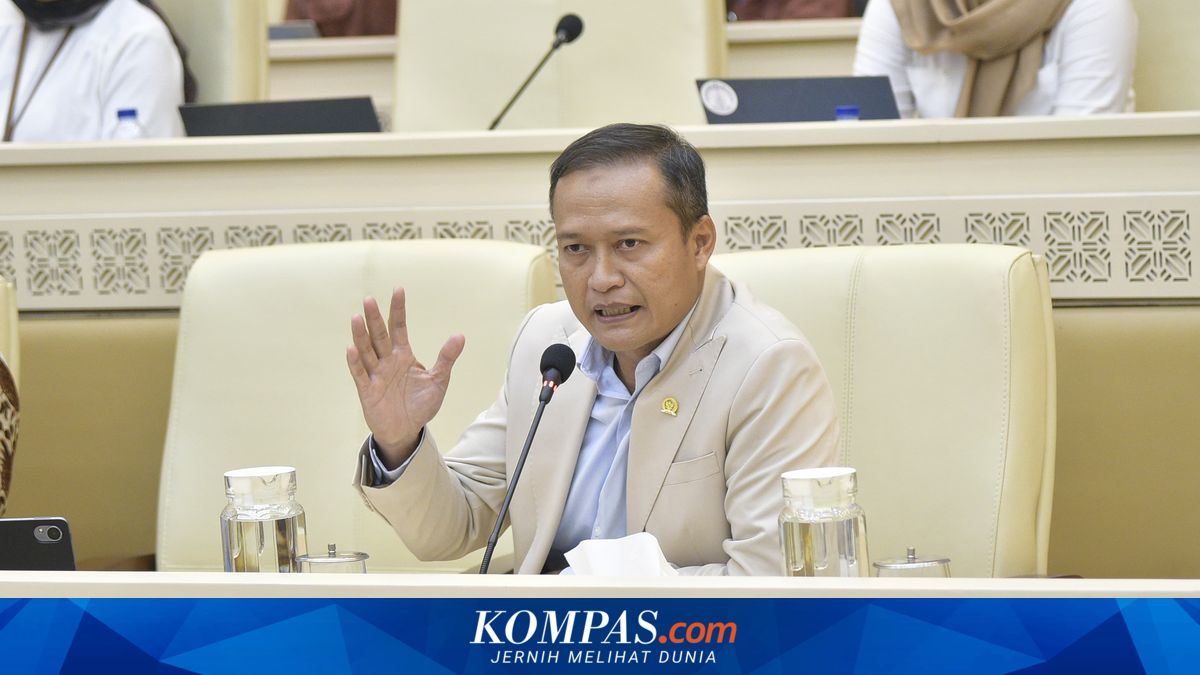
JAKARTA, KOMPAS.com - A member of the DPR’s Special Committee on the Resolution of Agrarian Conflict, Azis Subekti, said that when the Forest Area Enforcement Task Force (Satgas Penertiban Kawasan Hutan, PKH) handed over money and reasserted state control of forest land, it showed that the government had, at times, lost control over territory it should have governed. By May 2026 alone, the PKH handed around Rp 10.27 trillion to the state treasury, sourced from administrative fines and tax receipts from forest area enforcement. In a relatively short period, the state also claimed to have regained control over around 5.88 million hectares of forest land from the palm oil sector, and more than 12,000 hectares from the mining sector.
“Those figures are not merely fiscal or administrative statistics. They indicate something far more serious, for years the state had effectively lost control over portions of territory that are constitutionally under its sovereignty,” Azis said in a statement on Tuesday (19/5/2026).
Some observers view PKH as a fiscal operation to reclaim state revenue. But he said that read more deeply, PKH is in fact the state’s effort to reclaim its authority over the national living space that for decades has moved in a grey area between legality, the power of capital, and governance weaknesses.
“Therefore, PKH cannot be read simply as a forestry programme. It is a reflection of how a modern state seeks to restore its capacity to control land, natural resources, and the direction of its own economic justice,” he added.
Azis argued that from a geopolitics of resources perspective, this is an important alarm. He contended that not many countries can endure strongly when the control of the national living space moves faster than the state’s ability to regulate and monitor it. He noted that many resource-rich countries crumble socially because the state is slow to recognise the accumulation of land ownership inequality.
“This is where the world’s greatest lesson emerges: a country that fails to deliver agrarian justice will ultimately face social instability far more expensive than the cost of reform itself,” he continued. Azis stressed that the state should not fail to distinguish between the main actors of large-scale illegal ownership and the communities swept up by the state’s past absence. Because, if all issues are read in black and white, the state risks losing its own ethical legitimacy.