
DPR member urges strengthening cognitive resilience in the AI era
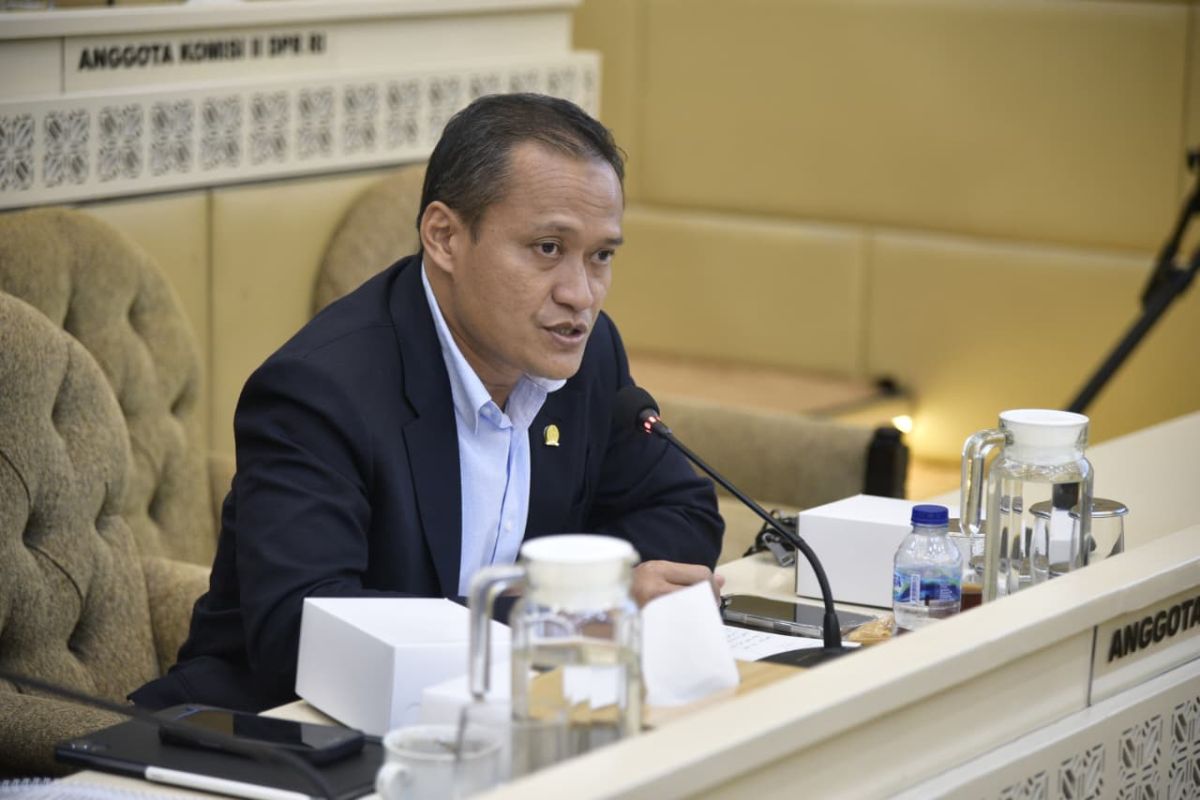
Jakarta (ANTARA) - House of Representatives (DPR RI) member Azis Subekti is urging that strengthening the public’s cognitive resilience be made part of the national artificial intelligence (AI) transformation. The aim is to ensure that technological development does not diminish people’s ability to think independently and critically.
Azis, in a statement in Jakarta on Thursday, assessed that the development of generative AI has brought changes that differ from previous digital technologies because AI no longer merely helps people search for information, but can also help compose answers and arguments.
He explained that such capabilities include the habit of forming questions before requesting answers, withholding conclusions when evidence is insufficient, distinguishing between knowledge and conjecture, and seeking arguments that can test one’s own beliefs.
According to him, the use of AI need not be pitted against human thinking ability because technology can help reduce the burden of routine cognitive work. However, he argued that a distinction must be made between the use of AI that frees up human thinking capacity and the use of technology that actually replaces the thinking process.
“The important line of this era is not between using AI and not using AI. The line lies between offloading that frees the mind and offloading that replaces the mind,” he said.
Azis said critical thinking skills are increasingly necessary because answers generated by AI can be delivered in fluent and systematic language, potentially causing users to place excessive trust in the results produced by machines. Therefore, the public must continue to examine the sources, assumptions, evidence and arguments that form the basis of a conclusion.
He assessed that these challenges need to be given special attention by the education sector. According to Azis, schools and universities in the future will not be enough if they only teach skills in using artificial intelligence; they must also ensure that students continue to undergo the process of developing their thinking abilities.
AI, he continued, can be used as a tutor or learning aid, but students still need opportunities to read independently, construct arguments, face difficulties, make mistakes and improve their understanding.
Azis also linked AI development to Indonesia’s need to strengthen its ability to produce knowledge about the conditions and experiences of its own society. According to him, AI is built on available data, language and knowledge, so it is not always able to capture the full social complexity and experience of Indonesia.
“AI can help us understand Indonesia, but AI has never lived as Indonesia,” said Azis.
He said Indonesia needs to build epistemic sovereignty, namely the nation’s ability not only to access world knowledge, but also to produce knowledge about itself. For that reason, he argued, the success of the national AI transformation cannot be measured solely by the level of technology usage.
He said the measure of success needs to be seen from the impact of AI on the quality of education, health services, bureaucratic decision-making, farmer productivity, research activities, and the public’s ability to distinguish fact from persuasion.
“If the answer is no, we may be undergoing digitalisation without experiencing an intelligence transformation,” he said.