
DPR Member Urges Safety Evaluation Following Train Collision in Bekasi
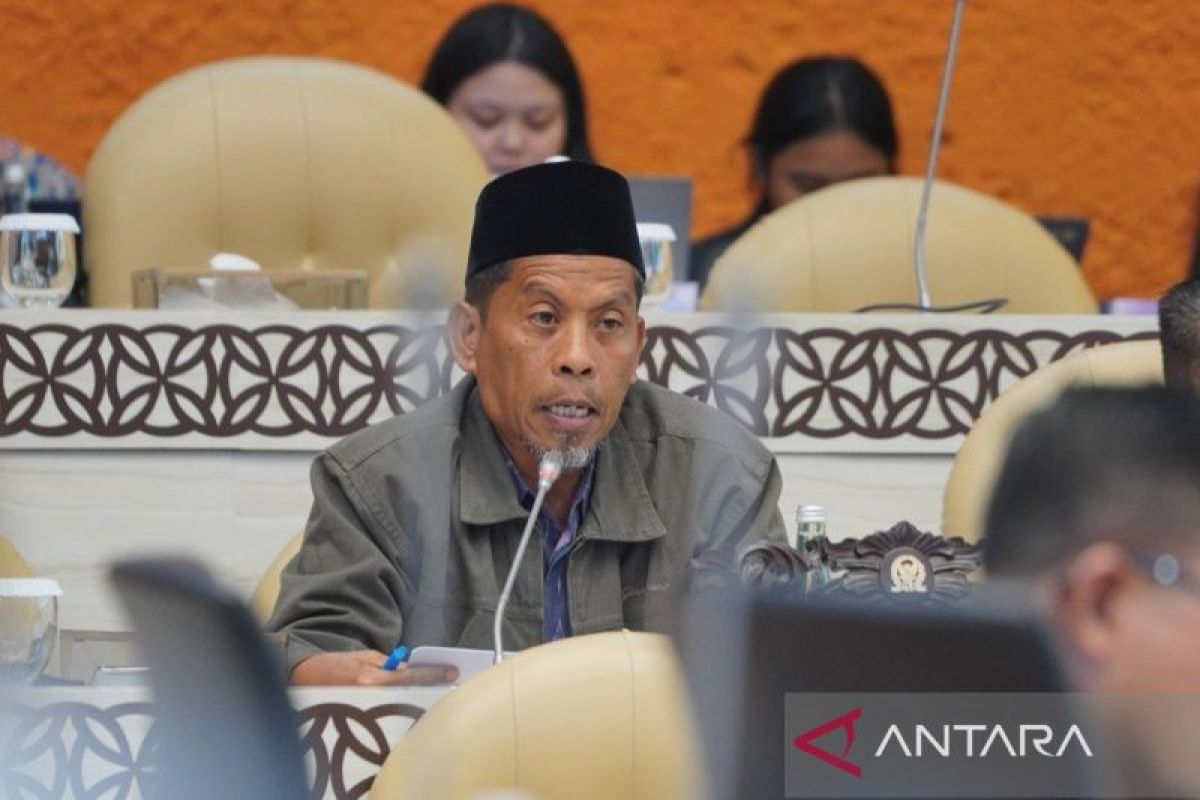
Jakarta (ANTARA) - Abdul Hadi, a member of Commission V of the Indonesian House of Representatives (DPR RI), has urged an evaluation of the train safety system following the collision between the Argo Bromo Anggrek train and the Electric Rail Train (KRL) at Bekasi Timur Station in West Java on Monday (27/4) night.
In a statement received in Jakarta on Tuesday, Abdul said the incident serves as an alarm for the national railway safety system and should not be viewed as an ordinary occurrence.
The DPR member, who focuses on transportation matters, stressed the need for a comprehensive evaluation, particularly regarding signalling aspects, train journey protection, and level crossing safeguards.
“This event underscores that public transportation safety must be the top priority. This is not merely an accident, but a signal of potential systemic issues that must be addressed immediately,” he stated.
He pressed the Ministry of Transportation (Kemenhub), along with the National Transportation Safety Committee (KNKT), to conduct a thorough, transparent investigation based on all aspects, including human factors, technical elements, and operational systems.
It is known that, based on initial information, the accident is suspected to have started with a green electric taxi that was stuck to the KRL at the Direct Track Crossing (JPL) or level crossing number 85.
The incident triggered a chain of subsequent events. Another KRL was held up behind the KRL stuck to the electric taxi. Then, the long-distance train from Gambir to Surabaya Pasar Turi collided with the rear of the held-up KRL.
Abdul highlighted this chain of events. According to him, the sequence must be thoroughly examined.
“The fact that a KRL was held up should have been detected by the system. Signalling should have provided a clear warning to the train behind that the track was not yet safe. This must be investigated: whether there was a system failure, procedural lapse, or coordination issue?” he said.
Furthermore, he reminded that level crossings remain the most vulnerable points in the national railway system. Commission V, he continued, has found that level crossings are still scattered across various regions, and some are not optimally guarded.
“Vehicles entering the tracks, causing the KRL to stop, is a serious problem. This indicates that level crossing security is still weak and highly risky. There must be a total evaluation, from infrastructure and supervision to road user discipline,” he said.
As a forward step, Abdul urged the closure of high-risk level crossings, the acceleration of flyover and underpass construction in dense corridors, and the strengthening of law enforcement through electronic ticketing systems and strict sanctions for violators.
Additionally, he emphasised the importance of accelerating the implementation of safety technologies such as the Automatic Train Protection (ATP) system to ensure trains can stop automatically in the event of potential hazards.
“Safety cannot depend on a single factor. There must be a robust layered system, from technology and infrastructure to user discipline,” he stated.
Abdul Hadi also expressed deep condolences over the incident.
“I convey my sympathy, empathy, and deepest condolences to the victims and the families left behind. I also request that all injured victims receive maximum care from PT KAI and healthcare facilities, without compromise,” he said.