
DPR Member Urges KUR Reform to Focus on Financing Quality
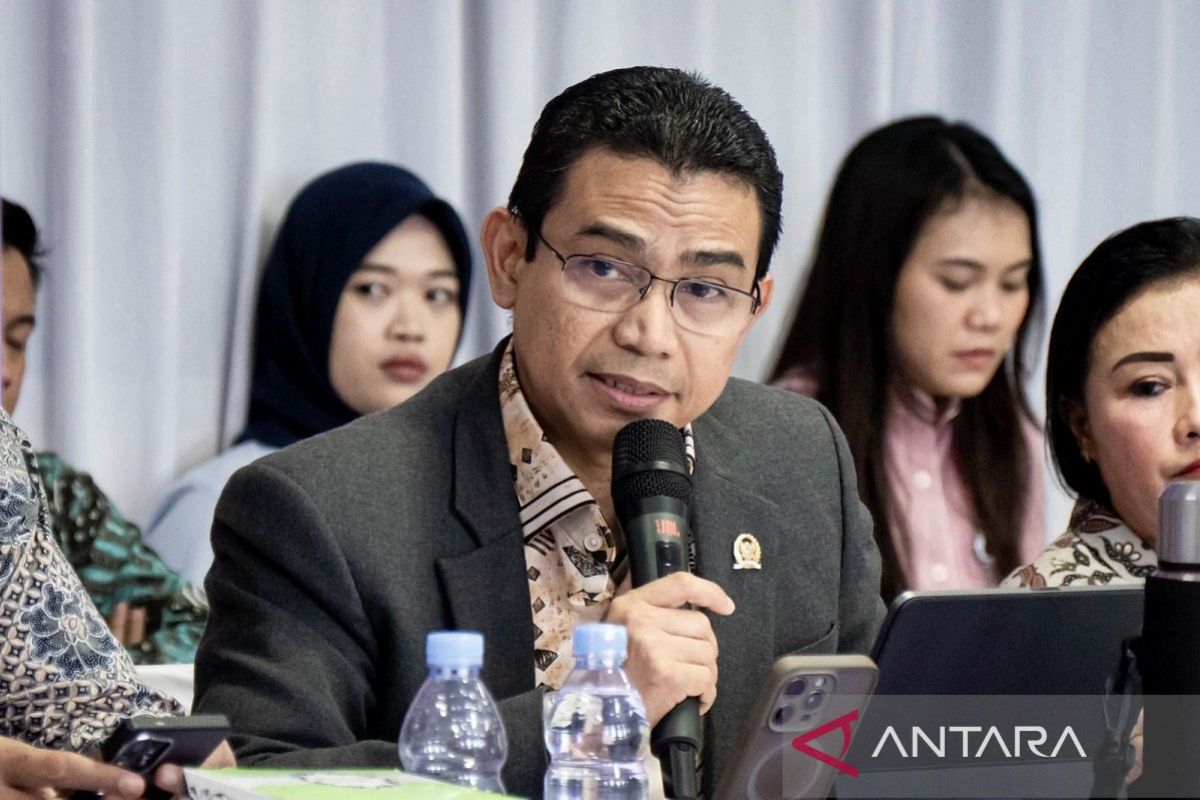
Jakarta (ANTARA) - Hendry Munief, a member of Commission VII of the Indonesian House of Representatives (DPR RI), is urging the government to reform the management of the People’s Business Credit (KUR) to ensure that the programme’s success is measured not only by the scale of disbursement but also by its impact on the growth of recipient businesses.
“Do not measure the success of KUR from the bank’s desk. Measure it from the entrepreneur’s desk,” Hendry stated in a briefing in Jakarta on Friday.
During a working visit by Commission VII to Depok, West Java, on Thursday (10/9), Hendry noted that a change in paradigm is required—moving from simply chasing disbursement targets and budget absorption to ensuring targeted distribution, equitable access, financing quality, and the growth of KUR recipients.
During the visit, Commission VII conducted oversight by comparing banking and government data with the actual experiences of debtors and field findings.
According to Hendry, one of the obstacles to KUR access that still needs addressing is the issue of collateral, particularly for micro-entrepreneurs who do not yet possess physical assets. He emphasised that KUR disbursements under Rp100 million should not be burdened by physical collateral requirements.
Consequently, the implementation of this policy must be monitored to ensure that field requirements do not hinder MSMEs from obtaining financing. “MSMEs absorb approximately 97 per cent of the national workforce and contribute more than 60 per cent to Indonesia’s GDP. Therefore, ensuring access to financing for MSMEs is not merely a banking matter, but a part of the national economic strategy,” said Hendry.
Hendry also encouraged the development of intellectual property-based financing (IP-based financing) as an alternative for creative economy actors. He noted that creative economy participants may possess valuable assets through copyrights, trademarks, designs, software, and other forms of intellectual property, yet lack the land or buildings required for traditional collateral.
In addition to expanding financing schemes, he stated that KUR reform needs to be supported by the integration of government and banking data, alongside stronger mentorship. Such integration is necessary so that the government can identify business groups that have yet to receive financing and determine more precise interventions.
He expressed hope that the oversight conducted by Commission VII in Depok would result in recommendations to improve KUR governance on a national scale. “The measure of KUR’s success is not just how much is disbursed, but how many people’s businesses grow after receiving financing,” Hendry concluded.