
DPR Member Urges Archipelago Bill to be Based on Geographical Justice
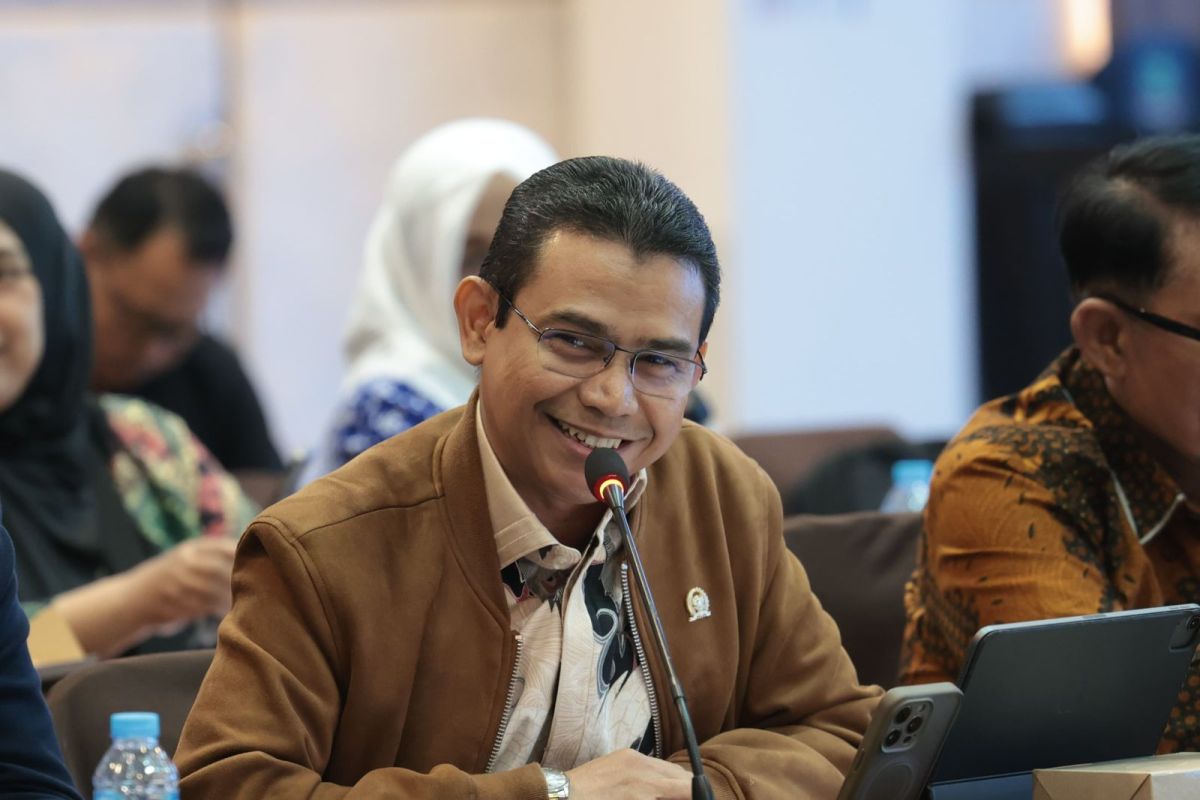
Jakarta (ANTARA) - Hendry Munief, a member of Commission VII of the Indonesian House of Representatives (DPR RI), is pushing for the Archipelago Region Bill (RUU Daerah Kepulauan) to be drafted based on geographical conditions and the actual needs of island communities to ensure fairer development policies.
Speaking in Jakarta on Sunday, Hendry shared these views during a working visit by the Special Committee (Pansus) for the Archipelago Region Bill to the Bangka Belitung Islands Province on 28-29 August 2026.
According to him, regions with territories scattered across many islands face different development and public service burdens compared to mainland areas.
“We are not asking for special treatment. We are asking the state to calculate development costs based on actual geographical realities,” he stated.
He noted that the geographical character of archipelagos needs to be translated into fiscal policy, infrastructure development, connectivity, public services, and marine resource management. This is because communities on islands require higher service costs due to the separation of territories by sea.
“If the population is spread across hundreds of islands, the cost of providing state services is also different. We cannot use the same metrics as regions where all settlement centres are connected via land roads,” said Hendry.
This condition impacts logistics costs, infrastructure development, and public service operations, which can be two to three times more expensive than in mainland areas.
“If continental cost standards are simply applied to archipelago regions, the state is essentially calculating needs using inaccurate measures. As a result, service disparities may persist,” Hendry added.
Therefore, he is encouraging an archipelago policy formula that incorporates variables such as the cost index, number of islands, maritime area, inter-island distance, and the level of isolation.
Hendry also requested that a Special Archipelago Fund (Dana Khusus Kepulauan - DKK) be designed as additional funding to cover costs arising from geographical characteristics.
“If the state recognises that there is an additional cost due to geographical conditions, then there must be additional funding. The DKK should not merely be a redistribution of existing budgets. There must be additional funding with a clear and measurable formula,” he said.
Beyond fiscal aspects, Hendry highlighted the marine economic potential of Bangka Belitung, which studies estimate at approximately 6.2 million tonnes per year. He argued that this potential must provide added value for coastal communities through downstreaming, processing industries, cold chains, cooperatives, and MSMEs.
“The question is not just how much fish can be caught. What is more important is how much economic value is left behind in the region and enjoyed by coastal communities,” he remarked.
“Maritime authority must be clear. There should be no overlap between the central and regional governments. At the same time, coastal communities must receive protection for their living spaces and livelihoods,” he added.
Regarding public services, he encouraged adaptive models such as floating health services, ‘sailing teachers’, and mobile administrative services to ensure the state can reach communities on small islands.
“The state must be present even for those living on small islands. If geographical conditions make it difficult for them to reach service centres, then the services must move to reach them,” said Hendry.
He emphasised that the Archipelago Region Bill should not rely solely on administrative status as a basis for policy, but must consider geographical conditions and actual service costs.
“We must not only look at administrative labels. What must be calculated is the geographical reality and the actual costs incurred to serve the community. That is the essence of geographical justice,” he concluded.