
DPR Member: PPPK Should Not Be Laid Off
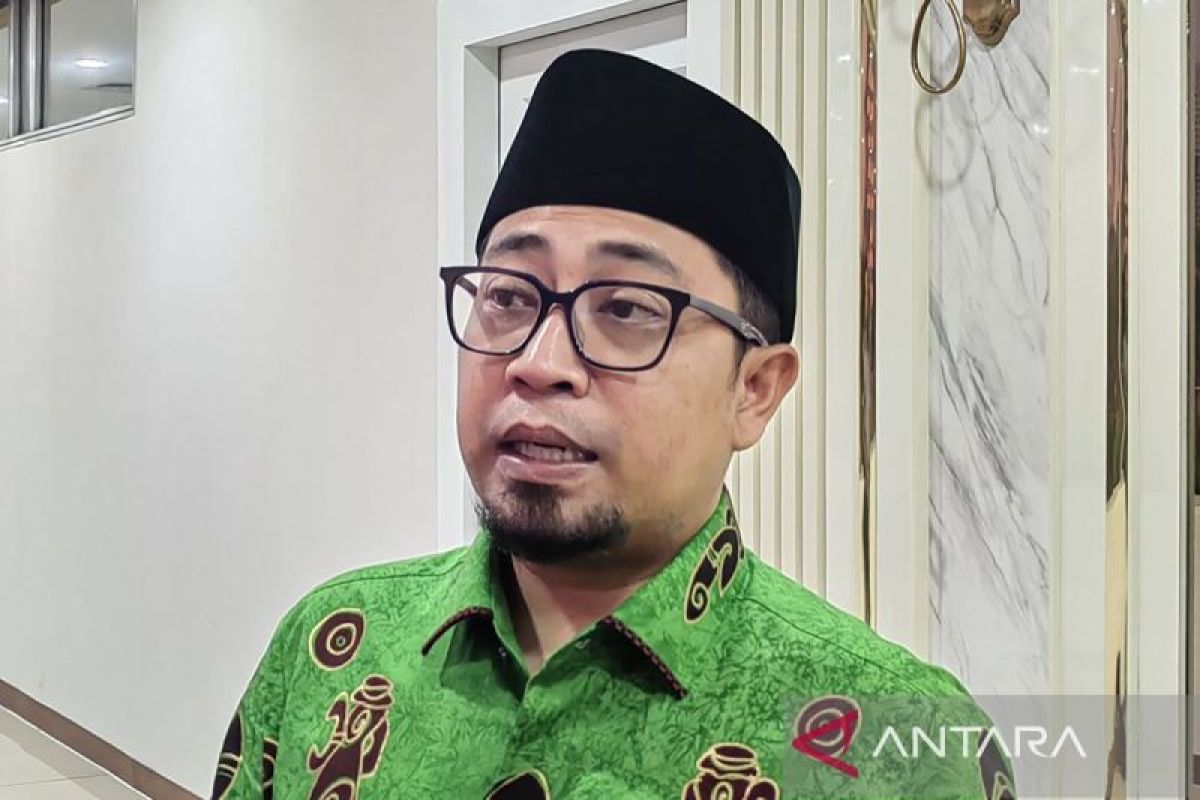
A member of the House of Representatives (DPR) Commission II, Muhammad Khozin, stated that government employees with work agreements (PPPK) should not be laid off. “If the regional fiscal situation is indeed difficult, efficiency should be achieved not by laying off PPPK, but by cutting non-essential operational spending and ceremonial activities,” he said in a statement in Jakarta on Tuesday. Responding to reports that PPPK workers are threatened with layoffs due to budget efficiency measures, he said local governments should have planned their staffing structures from the outset. The addition of PPPK must align with needs and fiscal capacity. According to him, the addition of PPPK should be based on job analysis, workload, public service needs, and medium-term fiscal capacity. If one component is not calculated, the appointment of non-civil servant workers could instead become a crisis. He said local governments should be able to find solutions so that budget efficiency does not impact employees, one of which is by reducing expenditure on programmes that do not directly affect the community. “For example, reducing official travel and seminars that can be postponed, as well as eliminating other ceremonial agendas,” he said. As a legislator dealing with regional autonomy, Khozin encouraged the Ministry of Administrative and Bureaucratic Reform, the National Civil Service Agency, and the Ministry of Home Affairs to conduct a national audit of PPPK formations and financing. He requested that the audit be carried out comprehensively, not only counting the number of employees but also mapping the placement agencies, the service functions performed, contract periods, real needs, and the composition of personnel expenditure. “Including examining the ability of the Regional Budget (APBD) to finance employees until the end of the work agreement period,” he added. “The central government must not approve formations based solely on the number of non-civil servant workers that need to be managed without ensuring the sustainability of their financing,” he said. The government is also considered to need to prepare a classification of regions based on personnel fiscal risk. He said regions with low locally-generated revenue (PAD), high dependence on central transfers, and a large ratio of personnel spending need special supervision before being given additional formations. He added that the DPR has pushed for a national mapping of high-risk regions so that similar problems do not recur. Commission II also requested that the rights and status of PPPK not be treated as a short-term budget adjustment variable. He stressed that the structuring of the state apparatus must produce a professional bureaucracy and better services, not create a group of employees who remain in constant uncertainty. “If the government decides on an appointment, there must be certainty regarding the source of salary, performance evaluation, contract extension, and competency development pathways,” said Khozin.