
DPR Member: Digital ID Must Simplify, Not Hinder Social Assistance Recipients
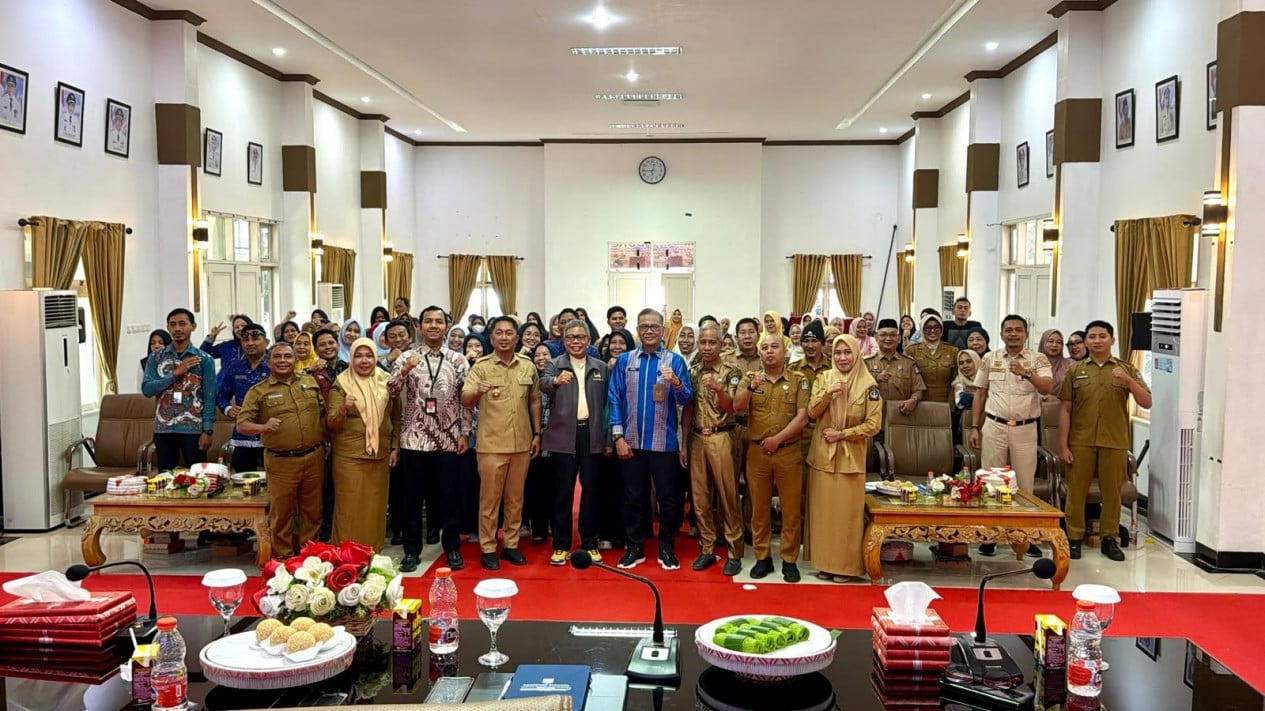
Jakarta – Member of House Commission II, Taufan Pawe, has stressed the importance of ensuring that the digitalisation of population administration through the Digital Population Identity (IKD) does not become an obstacle for the public in obtaining services and social protection programmes.
He made the remarks during a rebranding event for population administration and civil registration services, along with facilitation of population registration through outreach services, combined with a discussion on digital verification of social protection through IKD by the Directorate General of Population and Civil Registration (Dukcapil) of the Ministry of Home Affairs, held at Lateya Riduni Hall, the official residence of the Bone Regent, South Sulawesi, on Tuesday, 11 August 2026.
According to Taufan, digitalisation must be positioned as an instrument to make things easier for the public, not as a requirement that indirectly closes citizens’ access to government assistance.
This is because not all social assistance recipients have smartphones, stable internet connections, digital literacy, or the ability to perform authentication independently.
“The Digital Population Identity must facilitate, not become a hindrance,” said Taufan.
Taufan explained that digital channels and offline services must run in tandem. The digital route can utilise IKD, system verification, and self-authentication. Meanwhile, the offline route remains necessary through electronic ID cards (KTP-el)/NIK, face-to-face services, assisted verification, and outreach services.
He assessed that this approach is important because the accuracy of social protection distribution is determined not only by the size of the budget allocation, but also by the system’s ability to answer fundamental questions: whether the person is genuine, whether that person is indeed entitled, and whether the assistance is truly received by the entitled person.
“The accuracy of social assistance begins with accurate data and verifiable identities,” he explained.
Taufan also highlighted the large social protection budget whose targeting accuracy must be safeguarded. Therefore, the use of the National Socio-Economic Single Data (DTSEN) needs to be continuously strengthened so that government programmes can reach people who genuinely need them.
According to him, identity digitalisation cannot stand alone without updating socio-economic data. Changes in people’s circumstances occur continuously, from changes of domicile, family members passing away, changes in family composition, to changes in economic conditions.
“The government actually already has a lot of data. The next challenge is ensuring that inter-agency data can speak to one another and continuously follow changes in people’s circumstances,” he said.