
DPR Member Demands Fortified Rice Nutritional Content Matches Claims for Consumer Protection
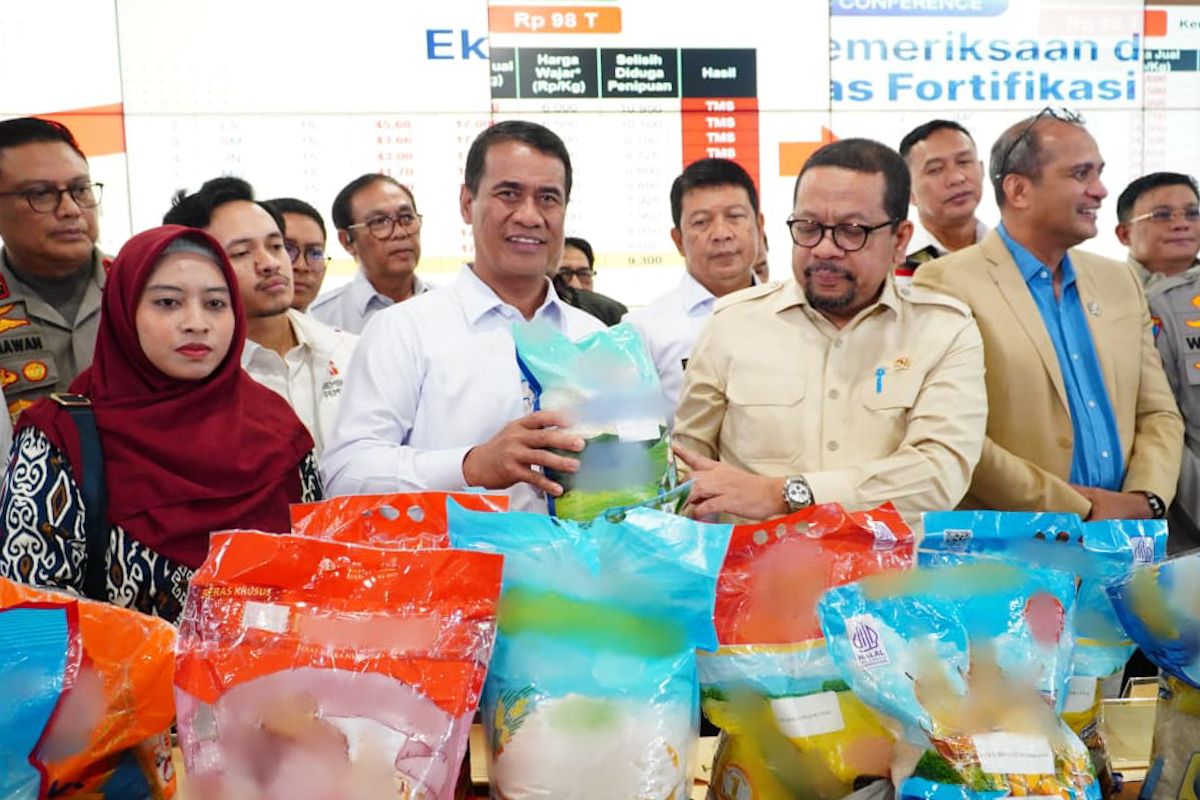
Ajbar, a member of Commission IV of the Indonesian House of Representatives (DPR RI), has urged businesses to ensure that the nutritional content of fortified rice aligns with the claims on its packaging to guarantee consumer rights and maintain public trust in these nutritious food products.
“The hope is that the fortified rice purchased by the public truly contains the specified nutrients. This naturally involves different production processes. We hope that the richness of the fortification is directly proportional to the actual nutrient content of the rice,” Ajbar confirmed in Jakarta on Saturday.
He emphasised that businesses must ensure the nutritional content of fortified rice matches the claims on the packaging, as well as meeting production process regulations and product information requirements before being marketed to the public.
Ajbar explained that fortified rice is a product enriched with specific nutrients, meaning the composition listed on the packaging must reflect the actual content. He noted that the presence of fortified rice is intended to prepare high-quality rice through various vitamin enrichment mechanisms.
According to Ajbar, businesses need to ensure that the production process, nutritional content, and packaging information are consistent with the product’s actual state so that consumers receive exactly what is promised.
“I hope all our colleagues—milling entrepreneurs and rice businessmen—take the commitment seriously that what is stated on the packaging truly matches the content,” he added.
In addition to quality and nutrition, Ajbar noted that the price of fortified rice must remain affordable. He requested that pricing be determined by reasonably considering production costs and the fortification process.
“I hope the price of this fortified rice can be balanced with production costs and the impact of adding various vitamins through fortification,” said Ajbar.
This push aligns with the need to ensure fortified rice develops as a nutritious food product accessible to the public. Prices should reflect the production process and the actual nutritional content so that consumers receive benefits commensurate with the price paid.
“There should be a balance, and I hope there is no sporadic exploitation where prices suddenly become limitless just because a product has certain nutrients,” he said.
Previously, the Head of the National Food Agency (Bapanas) and Minister of Agriculture, Andi Amran Sulaiman, announced findings that 25 brands of fortified rice were allegedly non-compliant with standards and labels, potentially causing losses to consumers amounting to Rp89 trillion.
Twenty-five brands of fortified rice failed to meet the nutritional and quality requirements of SNI 9314:2024 for fortified rice kernels and SNI 9374:2025 for fortified rice.
The brands suspected of violations include WFO, TKS, IMF, NUR, TKL, HOK, BRV, IMR, IHJ, IAK, PBK, GNB, DTR, TKR, WJK, PLK, MKY, IMC, PTK, ARP, ARN, SKM, GNM, TAR, and CMS.
Following these findings, the government has taken firm action, ordering the withdrawal of products from circulation, the revocation of permits, and legal proceedings against those suspected of involvement.
Amran emphasised that there is no room for businesses to manipulate fortified rice. Oversight is being tightened, and violations will be penalised, including the revocation of licences for products proven to be non-compliant.
“Regarding fortified rice, those who manipulate it will be dealt with firmly and given the heaviest possible punishment. It is being monitored. I have instructed the Secretary General and the newly appointed Deputy of Bapanas to oversee and take action,