
DPR member considers SMK Go Global strategic for producing competitive human resources
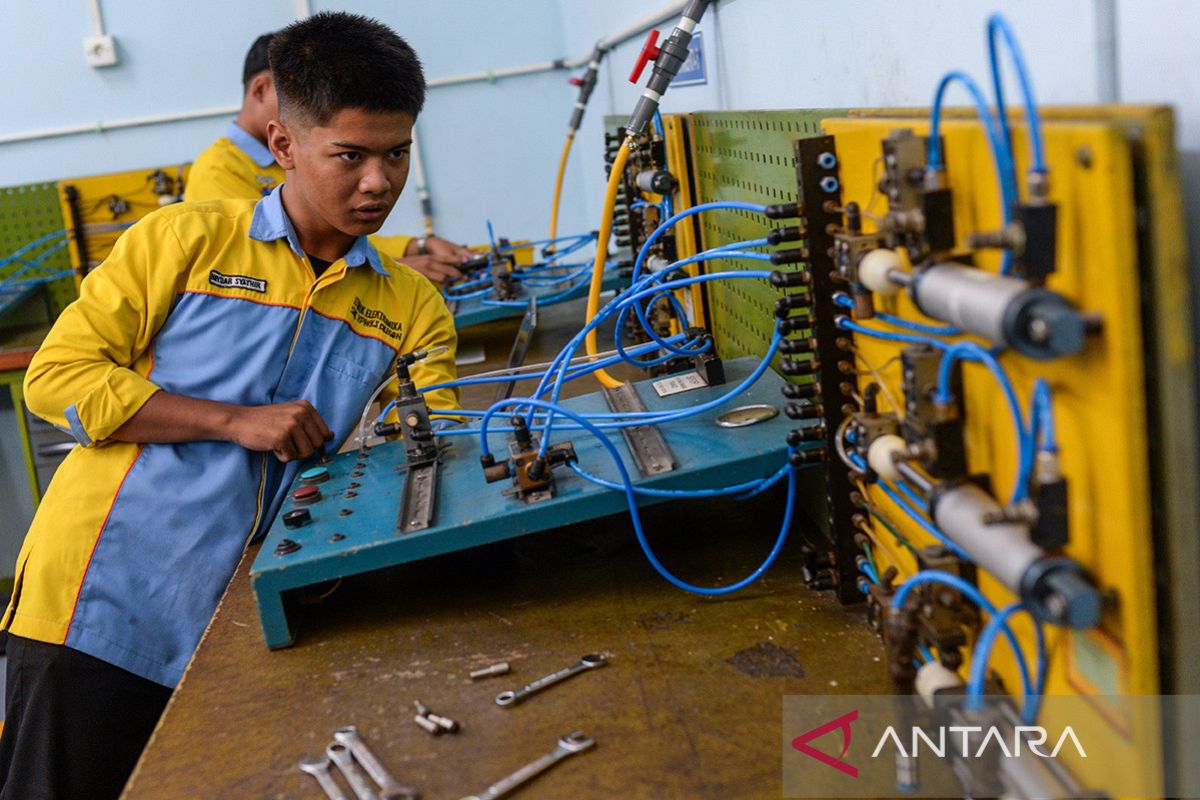
Vocational school graduates need to be equipped with skills that match the needs of the international labour market, including foreign language proficiency, international certification and relevant work experience.
Member of Commission IX of the Indonesian House of Representatives (DPR RI) Muh Haris has welcomed the implementation of the SMK Go Global programme initiated by the Ministry for the Protection of Indonesian Migrant Workers (KP2MI/BP2MI), describing it as a strategic government move to produce Indonesian human resources with global competitiveness.
According to Haris, the programme is a strategic government step in preparing Indonesian human resources with global competence while strengthening the protection of Indonesian migrant workers (PMI).
“We want more young Indonesians to work abroad not out of necessity, but because their competence is recognised by the world. In this way, Indonesian migrant workers truly become professional, dignified ambassadors of the nation, capable of bringing prosperity to their families and contributing to national development,” he said.
Haris further assessed that the growing demand for labour in the international market needs to be addressed by improving the quality of human resources, particularly through vocational education and training integrated with the needs of global industry.
According to him, vocational school graduates need to be equipped with skills that match the needs of the international labour market, including foreign language proficiency, international certification and relevant work experience.
Haris believes that strengthening these competencies is important so that Indonesian migrant workers are no longer viewed as low-wage labour, but as professional workers with expertise capable of competing with workers from other countries.
“The state must ensure they depart procedurally, are protected, and obtain decent work,” he said.
The SMK Go Global programme is a follow-up to the President’s directive to prepare for the need for up to 500,000 workers in a number of priority sectors, including health, services, manufacturing, transport, construction, agriculture and marine-based work.
For the 2026 fiscal year, the government is targeting training for 40,000 participants, consisting of 24,000 graduates of vocational schools, senior high schools and polytechnics, and 16,000 members of the general public. These participants will be prepared to work in a number of destination countries, such as Japan, Germany, South Korea, Malaysia, Taiwan, Singapore, Australia, and countries in Europe.
Haris considers the focus on the health and services sectors to be the right step given the high demand for labour in these two sectors in various destination countries.
However, he cautioned that the success of the programme should not be measured solely by the number of participants attending training, but also by the number of graduates successfully placed legally and obtaining decent work.