
DPR Member Assesses Indonesia-Singapore Relations Entering New Economic Phase
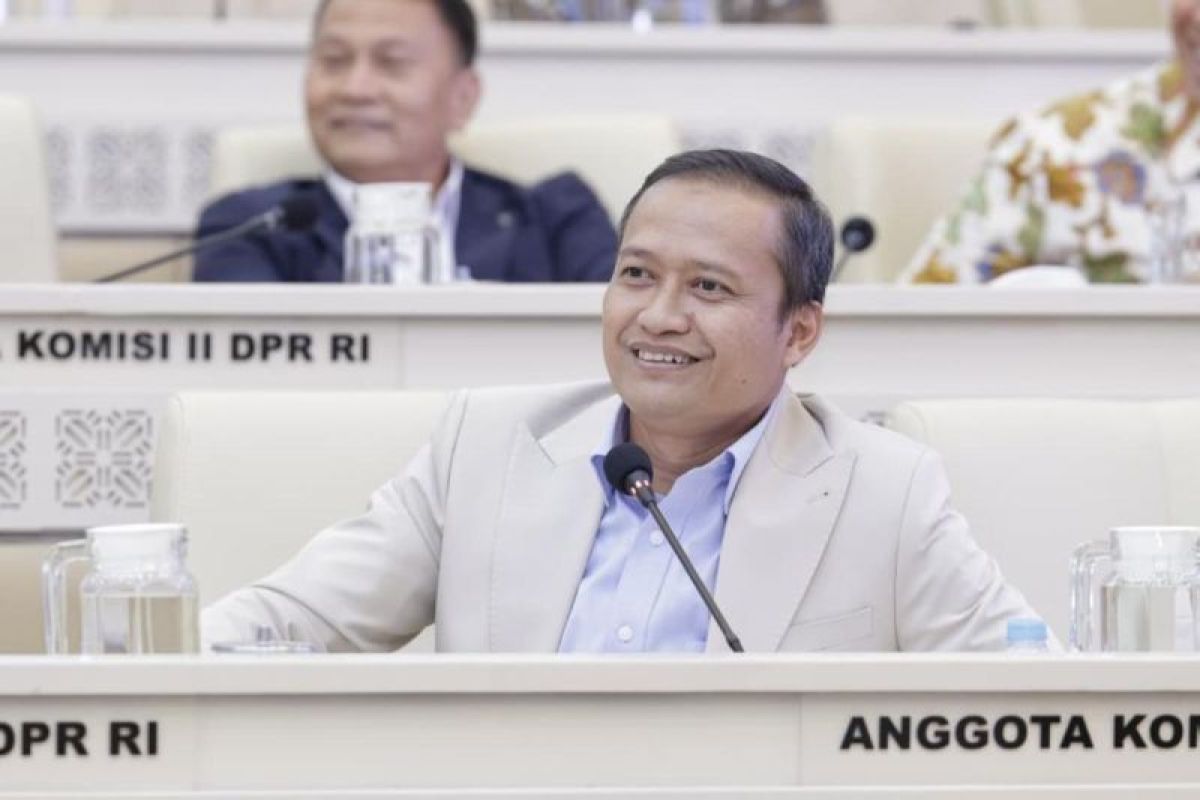
Jakarta (ANTARA) - Member of the Indonesian House of Representatives (DPR) from the Gerindra Party faction, Azis Subekti, has assessed that the relationship between Indonesia and Singapore is entering a new phase, in line with Indonesia’s efforts to strengthen industrial downstreaming, deepen domestic financial markets, and increase national economic value added.
According to Azis, the relationship between the two countries is not only built on trade and investment, but also on long-standing historical, cultural, and geographical ties in the Malacca Strait region.
“Indonesia and Singapore are neighbours not only because of geography, but also because of history and the destiny of the region. Only a narrow strait separates them, but this relationship is far older than modern state boundaries,” Azis said in a statement in Jakarta on Friday.
He explained that Indonesia and Singapore have so far developed with complementary roles. Indonesia possesses a large market, natural resources, and a strategic geopolitical position, while Singapore has developed as a centre for finance, trade, logistics, and international services.
Nevertheless, Azis believes that the economic transformation currently being undertaken by Indonesia raises several issues that need attention, including investment flows through Singapore, the use of holding companies in the country by Indonesian businesses, and the potential for profit shifting and cross-border trade value manipulation.
“This is not merely a legal or taxation issue, but touches on a more fundamental question: to what extent does the value generated from Indonesia truly return to Indonesia,” he said.
According to him, allegations of export value manipulation or state revenue leakage must be proven through applicable legal mechanisms. However, if proven, such conditions could reduce the fiscal space needed by the government to finance education, health, infrastructure, and social protection.
Azis stressed that various government policies, such as mineral downstreaming, the development of the battery and electric vehicle industry, strengthening export supervision, and improving fiscal governance, are part of efforts to reinforce the national economic foundation.
“Indonesia no longer wants to just sell nickel, but wants to sell batteries. Indonesia no longer wants to just sell crude palm oil, but wants to sell its derivative products. Indonesia no longer wants to be merely a production site, but a growth centre,” he said.
He assessed that this change in economic structure will shape a new, more balanced pattern of relations between Indonesia and Singapore. According to him, a stronger Indonesian economy will not diminish the importance of bilateral relations, but can reduce Indonesia’s dependence on several economic functions currently performed by Singapore.
“This is not a relationship between a large country and a small country, nor is it a relationship between winners and losers. This is a relationship between two countries that must both adapt to the region’s new economic structure,” he said.
Azis expressed hope that future relations between Indonesia and Singapore will continue to be built on the principles of mutual trust and cooperation that support regional growth.
“A strong Indonesia will not be a threat to Singapore. Conversely, a wise Singapore will understand that a prosperous, confident neighbour standing on its own feet is the best guarantee for regional stability,” Azis concluded.