
DPR Member: Additional Law Enforcement Budget Must Benefit the People
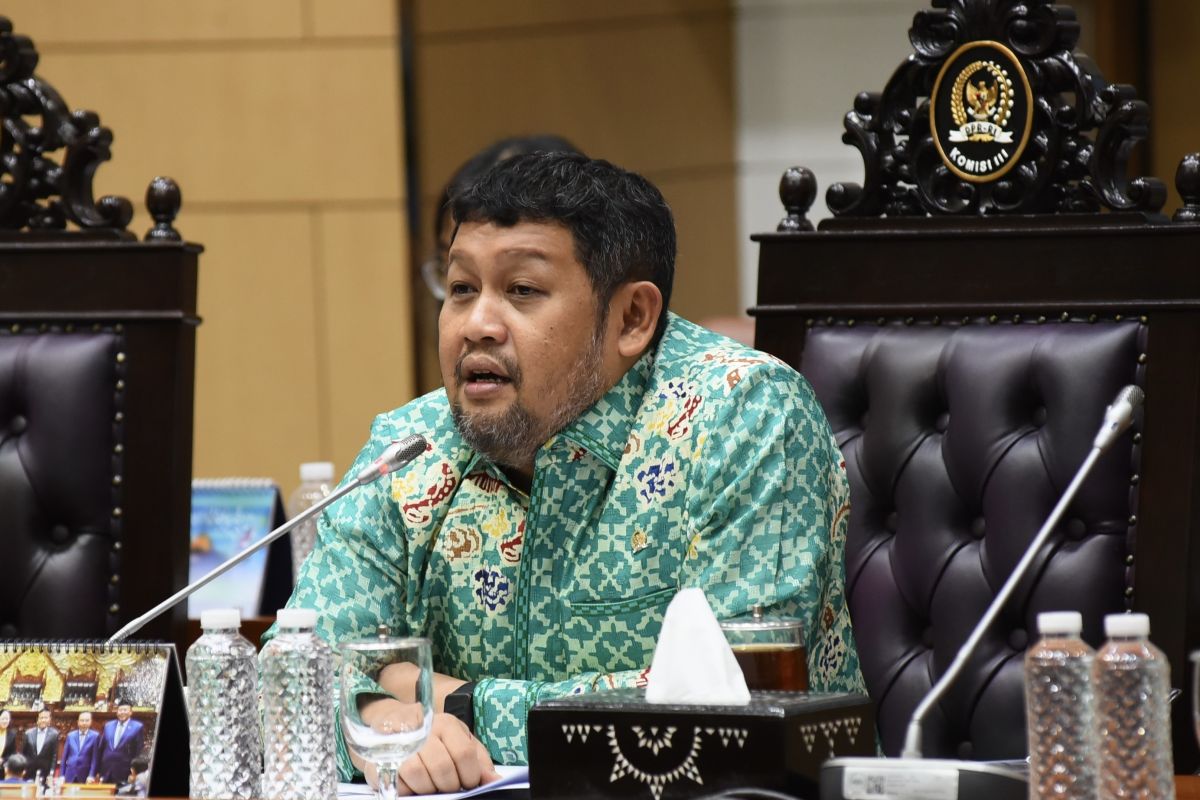
Jakarta (ANTARA) - Abdullah, a member of Commission III of the Indonesian House of Representatives (DPR RI), has requested that every proposal for additional budget submitted by several law enforcement agencies (APH) must provide real benefits to the people.
He stated that all budgets managed by state institutions must return to the public in the form of service, protection, and justice. “Not a single rupiah of state money should be used without a clear benefit to the community,” Abdullah said in Jakarta on Thursday.
In the 2027 budget proposals submitted to Commission III of the DPR RI, he noted that the National Police (Polri) has proposed an additional budget of Rp66.1 trillion, the Financial Transaction Reports and Analysis Centre (PPATK) sebesar Rp516.4 billion, the Corruption Eradication Commission (KPK) sebesar Rp989.3 billion, and the National Narcotics Board (BNN) sebesar Rp5.05 trillion.
These proposals, he said, were submitted to support various programmes for strengthening law enforcement, eradicating corruption, preventing money laundering, handling cybercrime, eradicating narcotics, and improving public services.
“What must be ensured is that every additional budget used by state institutions is truly directed towards delivering law enforcement that sides with the community,” he said.
He added that budget increases should not be measured solely by the scale of expenditure or the number of programmes implemented, but must also measure the impact and benefits felt by the public.
Therefore, he requested that the use of budgets by Polri, PPATting, KPK, and BNN must be able to strengthen public services, increase the effectiveness of crime eradication, narrow the scope for corruption, combat online gambling, and dismantle narcotics distribution networks.
“The metric is simple: whether crime rates decrease and whether public reports are handled more quickly,” he said.
According to him, the large budgets managed by state agencies must also be accompanied by increased transparency and accountability. Consequently, he encouraged every institution to build reporting systems that are easily accessible to the public so that citizens can participate in monitoring the use of state funds.
“Transparency must not stop at administrative reports. The public must also be able to know how the budget is used and what results have been achieved,” he said.