
DPR Legislative Committee Outlines Key Points of Agrarian Reform Bill for the Public
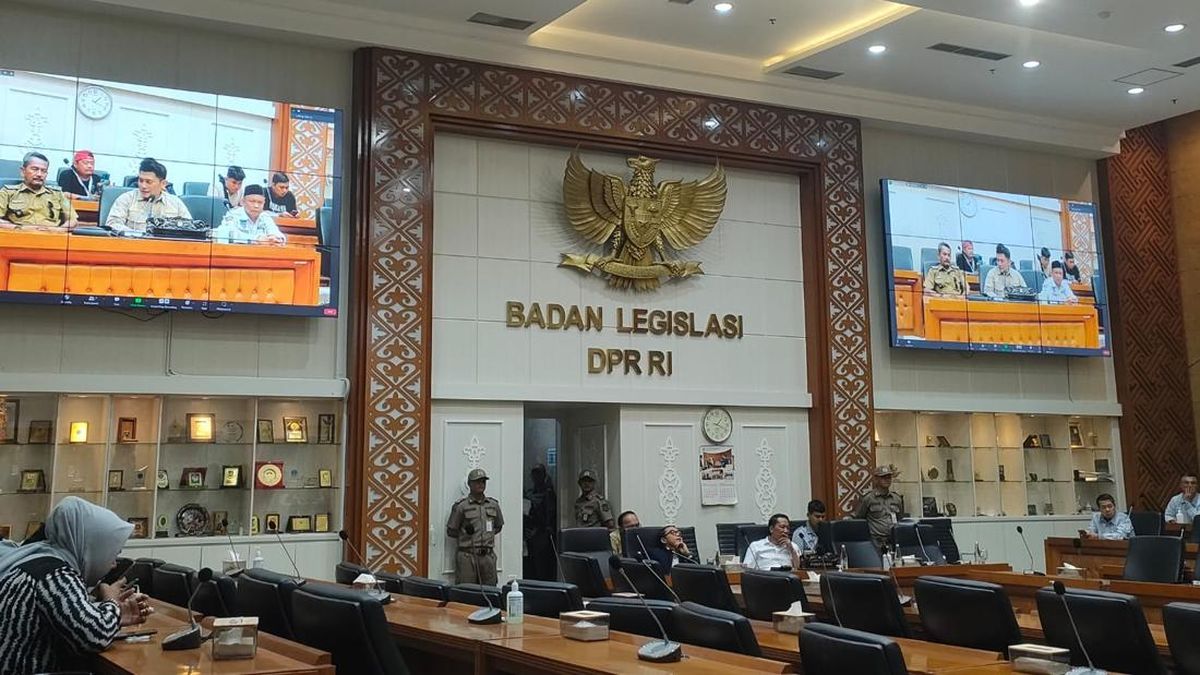
The House of Representatives’ Legislative Committee (Baleg DPR) has revealed several key points regarding the Draft Law (RUU) on the Regulation of Agrarian Reform. This announcement follows two days of meetings with various civil society groups and organisations to discuss the bill, which was officially approved as a DPR initiative earlier this week.
Baleg DPR member Muhammad Khozin stated that the bill is intended to regulate several critical issues, such as reducing land ownership inequality, resolving structural agrarian disputes or conflicts through a comprehensive legal mechanism, and protecting land rights for tenant farmers, agricultural labourers, fishermen, indigenous peoples, women, and other marginalised groups.
Furthermore, he added that the bill will focus on the redistribution of land to landless individuals, the rehabilitation of land rights, and ensuring that recipients of land redistribution receive economic support and access to development. It also aims to provide tangible benefits, including the protection of customary (ulayat) lands from unilateral seizure by local governments.
Khozin also noted that the Agrarian Reform Bill will serve as a foundation for addressing land ownership issues that have long triggered conflicts. “The Agrarian Reform Bill will provide the basis to correct decisions and ownership structures that are sources of conflict,” Khozin said on Friday (11/9).
The PKB politician assessed that agrarian issues can be triggered by various factors, ranging from state policies and overlapping permits to large-scale land ownership, the failure of concession holders to meet their obligations, and the lack of recognition for indigenous territories.
Therefore, he stated that if passed, the regulation will provide the government with the authority to review problematic rights or permits, return land to rightful owners, restructure ownership, and restore the livelihoods of those affected.
“Structural agrarian conflicts will not be resolved simply by bringing the parties together. The state must be brave enough to correct policies, permits, and ownership that have proven to create injustice,” Khozin emphasised.
In addition to resolving structural agrarian conflicts, a member of the Agrarian Reform Bill Working Group revealed that the bill will provide protection for smallholder farmers. “The Agrarian Reform Bill will address the issues facing smallholder farmers more fundamentally, because the legalisation of overly small plots of land does not automatically lift farmers out of poverty,” he explained.
According to Khozin, the Agrarian Reform Bill can prevent land distribution from falling into the hands of non-cultivators, speculators, intermediaries, or groups that already control large amounts of land. “Agrarian reform land must be given to the people who live and work on the land, rather than becoming a new object for asset hunting. Every plot distributed must strengthen the livelihoods of its recipients,” said Kholar.
Khozin also stated that the Agrarian Reform Bill includes measures to prevent the re-accumulation of land by certain parties. The government will be required to monitor various forms of land transfers resulting from redistribution, including ownership through affiliated parties, the splitting of business entities, or indirect control used to circumvent restrictions.
“Priority recipients must include landless farmers, smallholder farmers, agricultural labourers, indigenous peoples, female heads of households, fishermen in need of livelihoods, and communities who have lost land due to agrarian conflicts,” he explained. “Smallholder farmers must also achieve a more viable scale of business, see increased income, see conflicts end, and ensure that land remains under the control of the community after distribution,” Khozin added.
Previously, the 5th Plenary Session of the first session of the 2026-2027 period established the Agrarian Reform Regulation Bill as a DPR initiative on Tuesday (8/9). The bill includes the formation of a National Agrarian Reform Agency (BRAN), which would be directly responsible to the President. BRAN will be the agency responsible for implementing agrarian reform from the planning stage through to evaluation, overseen by a BRAN Supervisory Board.
Additionally, the bill regulates the arrangement, control, and limitation of land ownership and possession through the establishment of minimum and maximum limits.
One day after the approval in the plenary session, the DPR Legislative Committee held marathon Public Hearing Meetings (RDPU) over the last two days with various academics, civil society organisations, and related institutions. On Wednesday (9/9), hearings were held between the Committee and several academics from various Indonesian universities, including experts in agrarian law, land politics, and farmer movements. On Thursday (10/9), the Committee held further hearings with the Secretary of the Supreme Court, the Head of the National Law Development Agency, the Chairperson of the Indonesian Judges Association, and the advocacy coordinator of the Urban Poor Consortium.
Source: jawawa.id (https://jawawa.id/newsitem/dpr-legislative-committee-outlines-key-points-of-agrarian-reform-bill-for-the-public-1789113731)
Originally published by CNN Indonesia (https://www.cnnindonesia.com/nasional/20260911133546-32-1402791/baleg-dpr-beber-poin-penting-ruu-agraria-bagi-masyarakat), translated from Indonesian