
DPR Legislative Body States Law Enforcement Regarding State Losses Must Be Certain and Just
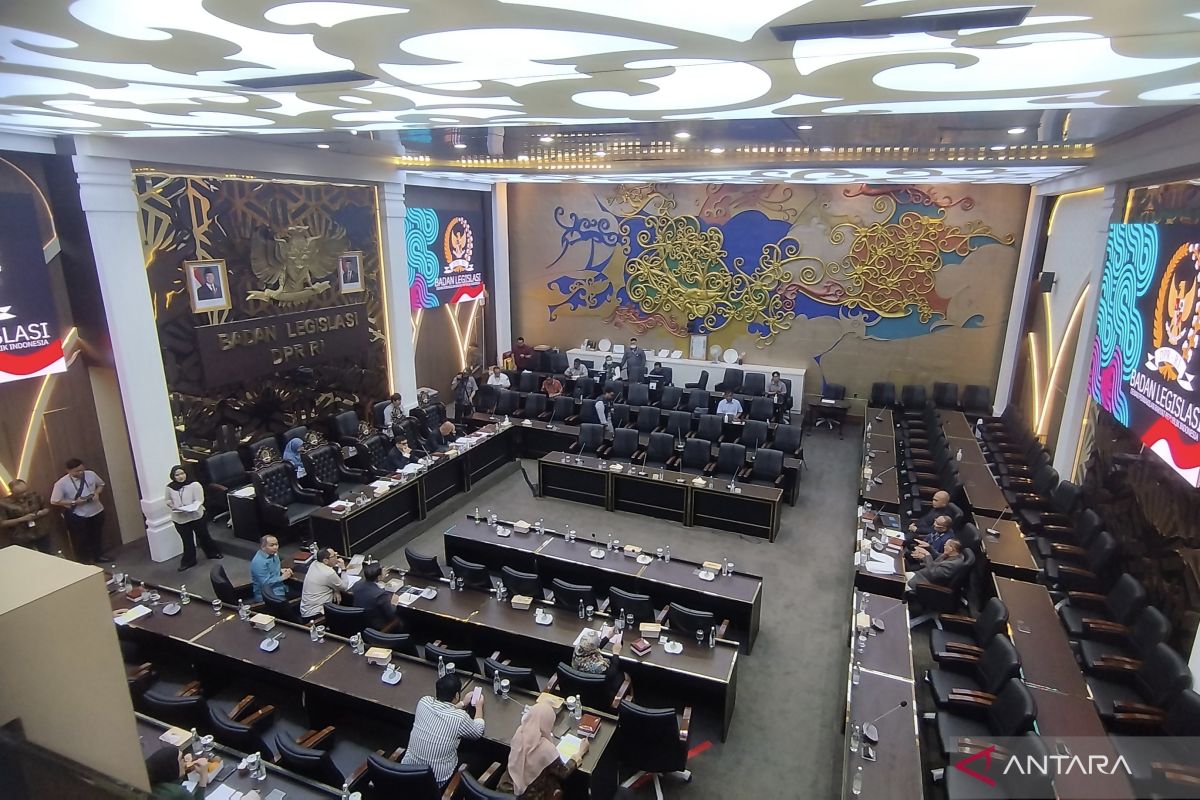
Jakarta (ANTARA) - The Chairman of the Indonesian House of Representatives (DPR) Legislative Body, Bob Hasan, stated that law enforcement regarding state losses must provide legal certainty and satisfy the sense of justice. He noted that the issue of state losses in the context of law enforcement is currently a subject of significant discourse, particularly following the Constitutional Court Decision Number 28/PUU-XXIV/2026 concerning the institutions authorised to calculate state losses.
“Beyond the fact that the state must enforce the law, the legal regulations themselves must truly be present to satisfy the sense of justice and legal certainty,” Bob said at the parliamentary complex, Jakarta, on Monday. He noted that the spirit of Articles 603-604 of the new Criminal Code (KUHP) emphasises that state losses refer to advantages gained by individuals or the reduction of the state’s economy or finances.
In this regard, he believes that the enforcement of laws concerning state losses remains a matter of interest for all parties, including the DPR, the Indonesian National Police, the Attorney General’s Office, the Supreme Court, and others. Consequently, the Legislative Body has invited Professor Dr Romli Atmasasmita, a Professor of Law at Padjadjaran University, to analyse the dualism and disparity in legal interpretation between Articles 2 and 3 of the Anti-Corruption Law and Articles 603 and 604 of the new Criminal Code.
He further noted that Constitutional Court Decision Number 28 has led to the issuance of a Circular Letter from the Attorney General’s Office, which emphasises that auditors of state losses are not limited to the Audit Board of Indonesia (BPK). Meanwhile, the explanation in Article 603 of the Criminal Code suggests that the calculation of state losses must be performed exclusively by state institutions. “This is a dispute in my view; from any angle or perspective, it cannot be used as a reason for multiple interpretations,” he said. To address this, he stated that input from various academics is necessary to provide a comprehensive analysis for formulating recommendations for regulatory harmonisation or a limited revision of the Anti-Corruption Law.