
DPR Legislative Body Reviews Limited Revision of Anti-Corruption Law Following Constitutional Court Ruling on State Losses
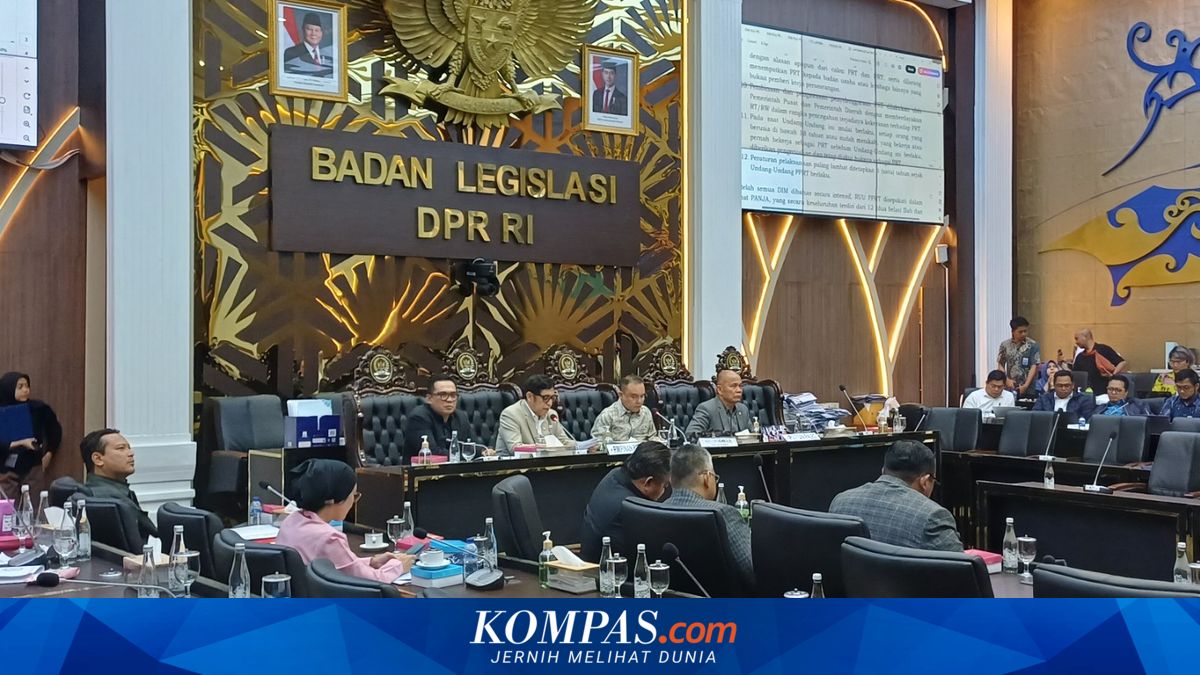
The Legislative Body (Baleg) of the Indonesian House of Representatives (DPR RI) is examining the possibility of a limited revision to the Anti-Corruption Law (UU Tipikor) following the issuance of Constitutional Court Decision Number 28/PUU-XXIV/2026 regarding the authority to calculate and determine state losses.
The Chairman of Baleg DPR RI, Bob Hasan, stated that the body has intentionally invited legal experts, including Padjadjaran University Law Professor Romli Atmasasmita, former KPK leader Amin Sunaryadi, and legal expert Firman Wijaya, to dissect the dual interpretation between Articles 2 and 3 of the Anti-Corruption Law and Articles 603 and 604 of the National Criminal Code (KUHP).
“The combined expertise of these three figures will provide a comprehensive analysis for the DPR Legislative Body in formulating recommendations for regulatory harmonisation or a limited revision of the Anti-Corruption Law,” Bob said during a public hearing with academics on Monday (18/5/2026).
According to Bob, these discussions have become crucial following Constitutional Court Decision Number 28, which asserts that there must be no ambiguity regarding the institution authorised to calculate state losses. “Decision Number 28 also states that there should be no multiple interpretations regarding the institution calculating state losses; there must be a single authority,” he said.
He noted that the explanation in Article 603 of the Criminal Code emphasises that the calculation of state losses must be conducted by a state institution. However, he identified a dispute in this area, noting that the provisions in the Audit Board Law (UU BPK) still designate the Audit Board of Indonesia (BPK) as the sole institution authorised to determine state losses resulting from unlawful acts.
In addition to discussing regulatory harmonisation, Baleg DPR is also highlighting the impact of these differing legal interpretations on law enforcement and the bureaucracy. Bob emphasised that the proof of corruption cases must not trigger the criminalisation of administrative errors or cause officials to fear making decisions.
“Their insights are essential to analyse the impact of internal regulations, such as Circular Letters from the Supreme Court and the Attorney General’s Office, on legal certainty. We aim to formulate an ideal formula so that the evidentiary process in court does not lead to the criminalisation of administrative mistakes or ‘decisional paralysis’ within the bureaucracy,” Bob explained.
The legal considerations for this move are rooted in Constitutional Court Decision Number 28/PUU-XXIV/2026, which was read on Monday (9/2/2026). In the ruling, the Court referred to the explanation of Article 603 of Law Number 1 of 2023 regarding the Criminal Code and Article 23E paragraph (1) of the 1945 Constitution. The Court’s consideration stated that, based on the explanation of Article 603, the state institution authorised to audit state finances is the Audit Board of Indonesia (BPK). The Court also noted that Article 10 paragraph (1) of Law Number 15 of 2006 regarding the BPK grants the BPK the authority to assess and/or determine the amount of state losses resulting from unlawful acts.
Source: jawawa.id (https://jawawa.id/newsitem/dpr-legislative-body-reviews-limited-revision-of-anti-corruption-law-following-constitutional-court-ruling-on-1780914353)
Originally published by Kompas (https://nasional.kompas.com/read/2026/05/18/13341591/baleg-dpr-kaji-revisi-terbatas-uu-tipikor-usai-putusan-mk-soal-kerugian?utm_source=ABC&utm_medium=rss), translated from Indonesian