
DPR Legislative Body Member Backs Corruption Law Revision, Urges Broader Offences
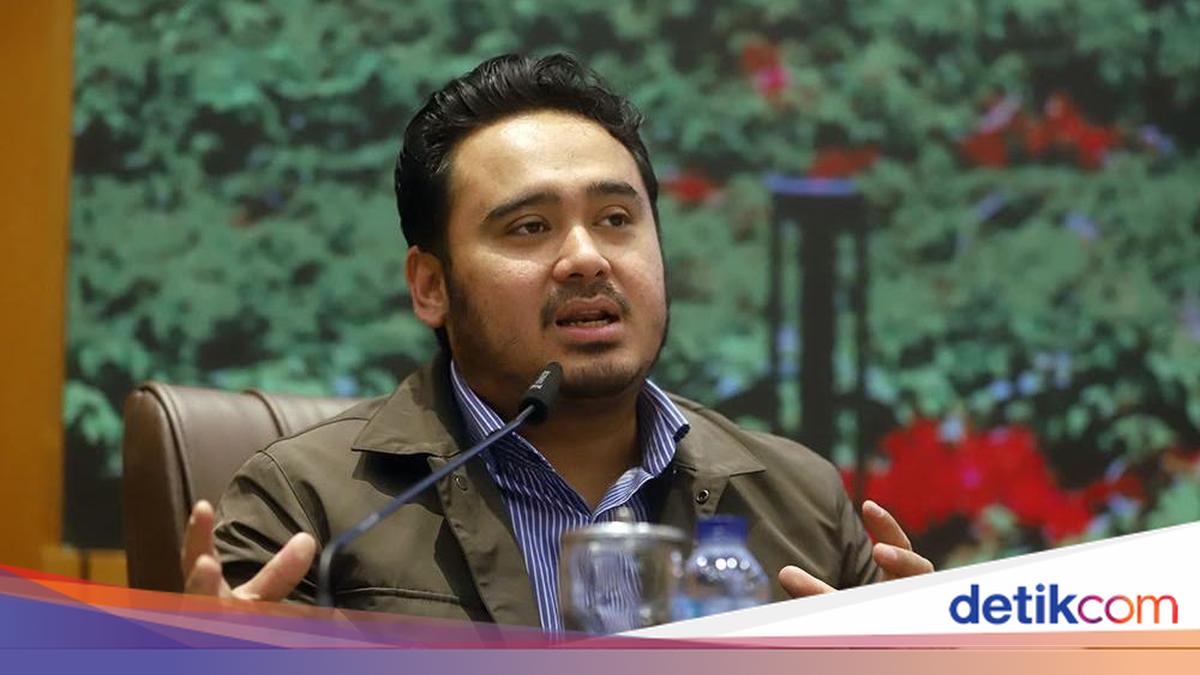
The government is planning to revise the Corruption Eradication Law to broaden the definition of corruption. Ahmad Irawan, a member of the House of Representatives’ Legislative Body (Baleg), supports the plan and has called for the range of offences to be expanded.
“The plan to revise the Corruption Eradication Law, as put forward by Coordinating Minister Professor Yusril and Mr Luhut, should be approached with an open and objective mind if we really need to update the law,” Irawan told reporters on Tuesday (27 October 2026).
Examples of offences that could be added, he said, include trading in influence, illicit enrichment and various other provisions found in international conventions.
“Of course, we must study these matters to assess whether the provisions are suitable and compatible with our national legal system,” he said.
Irawan added that the definition of corruption should also be broadened. He highlighted under-invoicing as conduct that could potentially cause losses to the state.
“Finally, corruption is a systemic crime. Any expansion of its definition must be examined and studied in depth, including the government’s proposal to include under-invoicing, which affects state revenue,” he said.
Irawan said the Corruption Eradication Law could not stand alone. Any revision, he said, should be accompanied by systemic reforms, including regulations on ease of doing business and amendments to tax, customs and fisheries laws.
He also said he had previously proposed revising the law during a meeting on the national legislative programme (Prolegnas) at the House’s Legislative Body. In his view, the law did not ensure justice in matters affecting the national economy.
“I proposed a revision then because, having read and observed how the Corruption Eradication Law is applied, particularly its provisions on state losses and losses to the national economy, I believe it does not provide fair legal protection to those suspected of committing corruption,” he said.
“To me, they are still human beings and citizens who must have their rights respected,” he added.
Earlier, Coordinating Minister for Law, Human Rights, Immigration and Corrections Yusril Ihza Mahendra called for the Corruption Eradication Law to be revised to broaden the definition of corruption. He stressed that the plan would not remove state losses as an element of corruption.
Yusril made the remarks after meeting National Economic Council (DEN) chair Luhut Binsar Pandjaitan in Central Jakarta on Tuesday (27 October 2026), when the council submitted its study on improving the law.
Yusril said the discussion continued earlier deliberations on Articles 2 and 3 of the law. At the heart of the offence, he said, is the unlawful enrichment of oneself, another person or a corporation, resulting in losses to state finances or the national economy.
“The central element of corruption is enriching oneself, another person or a corporation unlawfully, with the consequence of losses to state finances and the national economy,” Yusril said.
He described the provisions as broad in interpretation, likening them to a catch-all clause. They could cover almost any conduct involving state financial or economic losses and classify it as a single corruption offence, he said.
“This provision is interpreted very broadly, like a catch-all clause. It can cover almost every aspect; even a slight connection to state financial or economic losses can be categorised as a corruption offence,” he said.
Yusril stressed that the government had never intended to remove state losses from the definition of corruption. Instead, he said, the law needed to clarify what constitutes a loss to state finances.
“Previous discussions reached a shared understanding that we are not seeking to remove the element of state losses, which is now widely misunderstood by the public. Rather, we want to clarify what is meant by losses to state finances,” he said.
“There was no intention in those discussions to remove the words ‘causing losses to state finances’,” he added.
Source: jawawa.id (https://jawawa.id/newsitem/dpr-legislative-body-member-backs-corruption-law-revision-urges-broader-offences-1793127040)
Originally published by detikcom (https://news.detik.com/berita/d-8727092/anggota-baleg-dpr-dukung-revisi-uu-tipikor-dorong-perluasan-delik), translated from Indonesian