
DPR Legislative Body Invites Law Professors to Prevent Ambiguity in Calculating State Losses
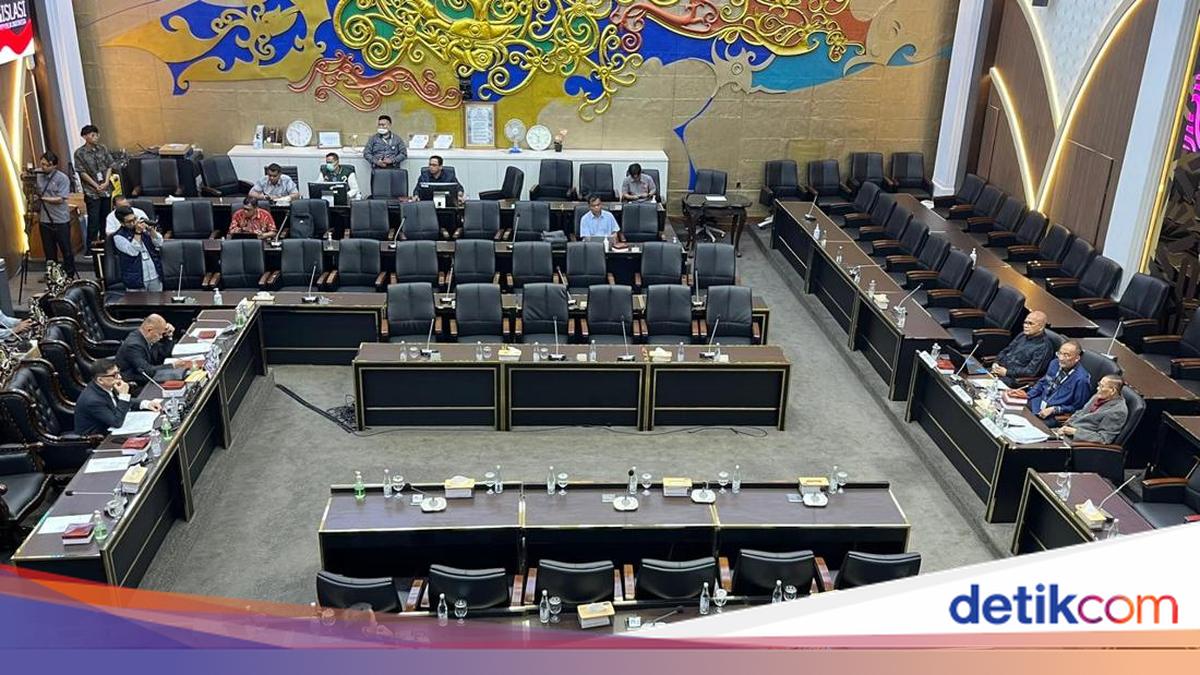
The Legislative Body (Baleg) of the House of Representatives (DPR) held a public hearing to monitor the Anti-Corruption Law following a decision by the Constitutional Court (MK). The Chairman of Baleg DPR, Bob Hasan, stated that discussing the calculation of state losses is essential to ensure legal certainty in the enforcement of corruption crimes.
‘This is very important because, lately, besides the state needing to enforce the law, the legal rules themselves must be present and meet the sense of justice and legal certainty,’ said Bob Hasan during the hearing with several experts at the parliamentary complex in Senayan, Jakarta, on Monday (10/5/2026).
‘When we discuss state losses, this is an issue of interest for everyone, including the DPR, law enforcement agencies such as the National Police, the Attorney General’s Office, the Supreme Court, and so on,’ he added.
Bob noted that the DPR is also reviewing the harmonisation of the new Criminal Code (KUHP), specifically the relationship between Articles 2 and 3 of the Anti-Corruption Law and Articles 603 and 604 of the KUHK. The Gerindra Party politician stated that they invited Professor Romli Atmasasmita from Padjadjaran University to provide insights into the dualism and disparity in legal interpretation.
Bob referenced Constitutional Court Decision Number 28/PUU-XXIV/2026, which has triggered debate regarding which institution is authorised to calculate state losses. He noted that the Criminal Code suggests state loss calculations should be conducted by state institutions.
‘It should be noted that MK Decision Number 28 has resulted in a circular letter from the Attorney General’s Office, signed by the Junior Attorney General for Special Crimes (Jampidsus), which emphasises that many institutions that are not state institutions can also calculate state losses,’ he explained.
‘Meanwhile, the explanation in Article 603 of the Criminal Code states that the calculation of state losses must be done by a state institution. In my view, there is a dispute here, and from any angle or perspective, this should not be an excuse for multiple interpretations,’ he continued.
Bob argued that Article 10, paragraph 1 of the BPK Law stipulates that the Audit Board of Indonesia (BPK) is the sole institution authorised to determine state losses resulting from unlawful acts. Therefore, he believes the material control over state loss calculations rests with the BPK.
‘There are no articles being changed yet, including those regarding the BPK; our constitution also determines that the BPK is a legitimate institution. We hope to receive constructive input on this,’ he said.
The Attorney General’s Office previously issued a circular letter regarding institutions capable of calculating state losses in response to the Constitutional Court ruling. In the circular, the Attorney General’s Office stated that state loss calculations can be performed by institutions other than the BPK.
Circular Number B-1391/F/Fjp 04/2026, signed by Jampidsus Febrie Adriansyah on behalf of the Attorney General and addressed to all Regional Prosecutors across Indonesia, was created to address the considerations of MK Decision Number 28/PUU-XXIV/2026, which states that the ‘state financial audit institution’ in Article 603 of the Criminal Code is the BPK.
In the circular, the Attorney General’s Office argued that the MK’s consideration does not mean the BPK is the only institution authorised to calculate state losses. The office noted that the MK ruling did not actually grant the petitioners’ request and argued that the ruling is not legally binding in that specific regard.
The Attorney General’s Office further cited other MK rulings and the Anti-Corruption Law, which suggest that state loss calculations can also be conducted by the BPKP (Finance and Development Supervisory Agency), Inspectorates General, or supervisory bodies within government agencies, as well as certified public accountants in coordination with experts, to prove losses outside of BPK or BPKP findings.
‘As long as it is not regulated in positive law as a binding norm, audits of state losses can still be conducted by authorised agencies or appointed public accountants, as per Constitutional Court Decision Number 31/PUU-X/2012 and the explanation of Article 32, paragraph (1) of the Law on the Eradication of Corruption,’ the circular stated.