
DPR Legislative Body Approves Agrarian Reform Bill for Plenary Session
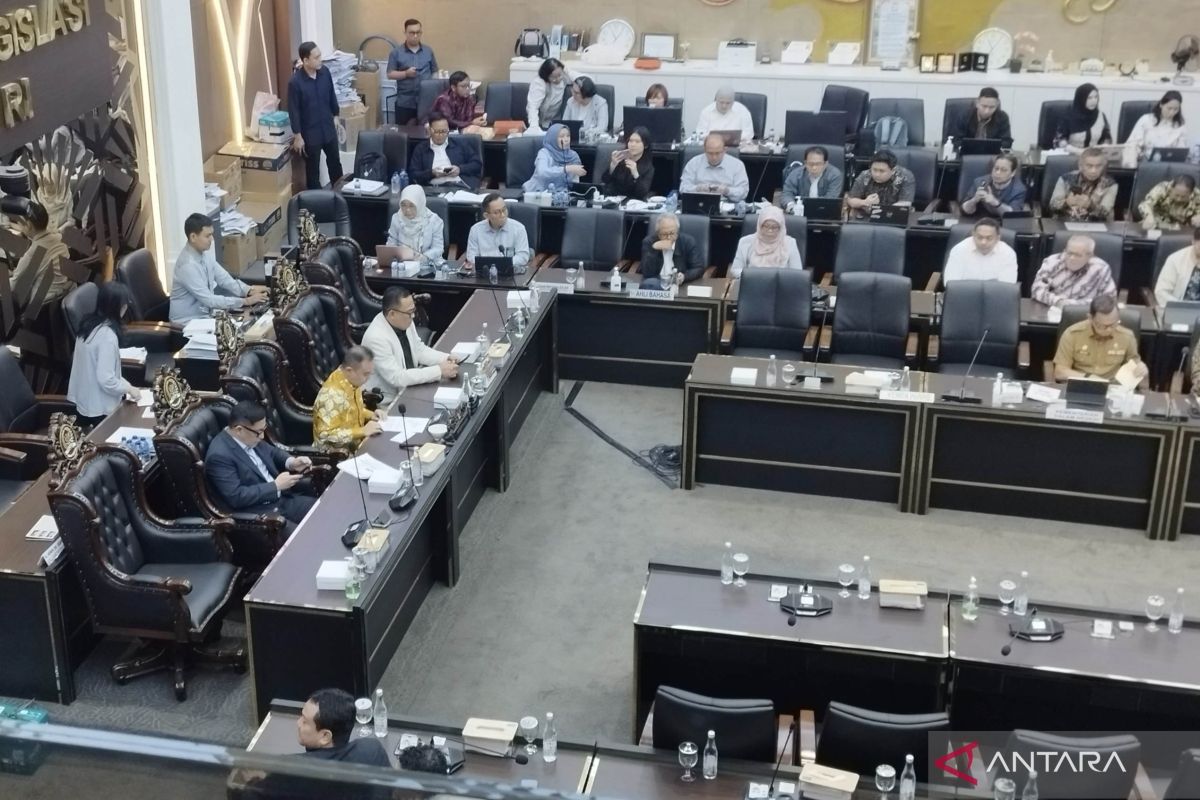
Jakarta (ANTARA) - The Legislative Body (Baleg) of the Indonesian House of Representatives (DPR RI) has approved the Draft Law (RUU) on Agrarian Reform Regulation to be brought to the next stage, namely the DPR RI Plenary Session, to subsequently be enacted into law.
Deputy Speaker of the DPR RI, Sufmi Dasco, who presided over the meeting, reached this decision after all members of the Legislative Body and all political party factions expressed their respective views and granted their approval.
“We request the meeting’s approval so that the results of the discussions on the Agrarian Reform Regulation Bill can be processed further in accordance with statutory regulations,” said Dasco, which was subsequently agreed upon by meeting participants at the parliamentary complex, Jakarta, on Monday.
Meanwhile, the Chairman of the Legislative Body’s Working Committee (Panja), Ahmad Iman Sukri, explained that the bill overall consists of 14 chapters and contains 53 articles. Based on previous discussions, he noted that both the government and the DPR share the same view regarding serious concern and attention towards resolving agrarian conflicts through the acceleration of agrarian reform.
The substance regulated in the bill includes the management of agrarian reform through the state’s right of control to ensure the fulfilment, restoration, and recognition of people’s rights over land and other agrarian resources, while prioritising their use for agrarian reform subjects.
The bill also mandates the establishment of an agrarian reform implementation agency, which will operate under and be responsible to the President, with authority over planning, implementation, supervision, and the resolution of agrarian conflicts.
In addition to the formation of the agency, the bill regulates the establishment of a supervisory board to ensure transparency, participation, accountability, and the effectiveness of agrarian reform implementation.
Furthermore, the bill outlines mechanisms for resolving conflicts effectively, transparently, and fairly, prioritising deliberation, the restoration of social relations, legal certainty, and the restoration of community rights.
“The Working Committee meeting involved constructive debate, which ultimately resulted in an agreement on normative formulations expected to serve as a solution to problems and conflicts related to the implementation of agrarian reform,” said Iman Sukri.