
DPR Legislative Body Agrees to Bring Agrarian Reform Bill to Plenary Session for Ratification
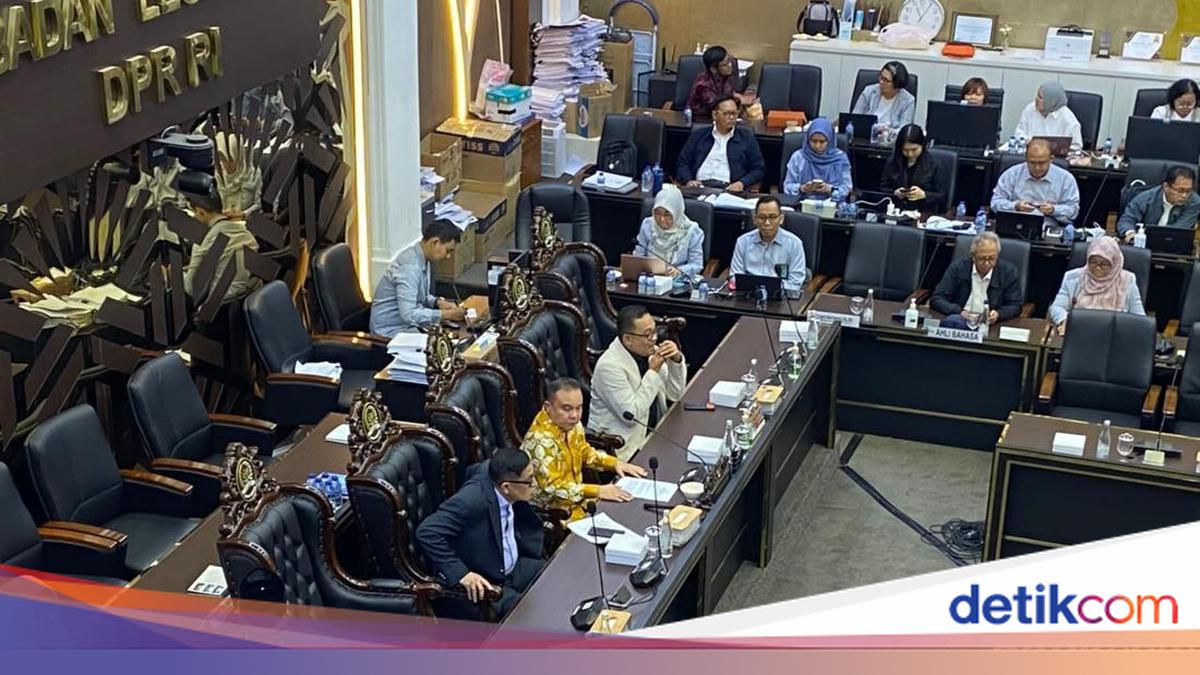
The Indonesian House of Representatives (DPR) Legislative Body, in collaboration with the government, has agreed to bring the Bill on Agrarian Reform Regulation to a plenary session for ratification into law. This decision was reached during a working meeting of the DPR Legislative Body.
The meeting was held at the DPR office in Senayan, Jakarta, on Monday (21/09/2026). The session was led by the Deputy Speaker of the DPR, Sufmi Dasco Ahmad, and attended by the Minister of ATR/BPN Nusron Wahid, Deputy Minister of Law Eddy Hiariej, and Deputy Minister of State Secretary Bambang Eko Suhariyanto.
The Chairman of the Working Group for the Agrarian Reform Regulation Bill, Iman Sukri, initially presented the substantive changes within the bill. He noted that the government submitted 596 items from the List of Problems (DIM) for joint discussion with the DPR.
“The composition of the DIM shows that the government shares the same view as the DPR, namely having serious concern and attention towards resolving agrarian conflicts through the acceleration of agrarian reform,” said Iman Sukri.
“The concern of both the DPR and the government is demonstrated by the seriousness in resolving the DIM through intensive discussions, while maintaining the principle of transparency and remaining open to input from various elements of society,” he added.
Following the presentation, each parliamentary faction expressed their views regarding the Bill. All factions agreed to advance the Bill to the second stage, or the plenary session, for ratification into law.
“I request the meeting’s approval if the discussions on the Agrarian Reform Regulation Bill can be processed further in accordance with the prevailing laws and regulations?” asked Dasco.
“Agreed,” the meeting participants responded in unison.
The following are the substantive points of the Agrarian Reform Regulation Bill presented by the Chairman of the Working Group:
A. Regulation of agrarian reform implementation through state control to guarantee the fulfilment, restoration, and recognition of people’s rights over land and other agrarian resources, prioritising use for agrarian reform subjects.
B. Regulation of agrarian reform planning through a roadmap containing policy direction, targets, stages, priorities, implementation strategies, and performance indicators.
C. Regulation of priority agrarian reform locations (LPRA) including criteria and establishment mechanisms, based on land ownership inequality, agrarian conflicts, abandoned land, poverty, absentee land, and holdings exceeding maximum limits.
D. Regulation of agrarian reform objects and subjects, including land from both conflict and non-conflict resolutions, and prioritised recipient groups such as farmers, labourers, fishermen, indigenous communities, women, and the poor.
E. Strengthening agrarian reform institutions through the formation of an agency under and responsible to the President, with authority over planning, implementation, supervision, and agrarian conflict resolution.
F. Establishment of a supervisory board to ensure transparency, participation, accountability, and the effectiveness of agrarian reform implementation.
G. Regulation of conflict resolution mechanisms that are effective, transparent, and just, prioritising deliberation, social relationship restoration, legal certainty, and the restoration of community rights.
H. Strengthening the restoration of land rights and land redistribution as instruments for asset restructuring, including returning land to rightful parties, providing substitute land where return is impossible, and ensuring legal certainty.
I. Regulation of the empowerment of agrarian reform subjects through the integration of asset restructuring with access restructuring, economic empowerment, regional development, and fair and sustainable partnerships.
J. Strengthening law enforcement and the prevention of new agrarian conflicts, including protection for reform subjects, community advocates, reporters, witnesses, and those defending land rights, as well as applying the principle of free, prior, and informed consent.
K. Regulation of the arrangement, control, and limitation of land holdings and ownership to prevent land concentration and re-concentration, ensuring equitable land distribution.
L. Strengthening meaningful community participation in resolving agrarian conflicts, restoring land rights, land redistribution, and empowering agrarian reform subjects.
M. Strengthening data systems, reporting, and accountability, including the integration of conflict resolution results and agrarian reform implementation into a single data system, with reports submitted to the President and DPR.
N. Regulation of funding, criminal provisions, and transitional provisions to ensure the sustainability, compliance, and effectiveness of agrarian reform implementation, including the integration of existing agrarian reform processes into the system established by this law.