
DPR Leadership Views Domestic Workers' Protection Bill as Ideological Victory for Female Housekeepers
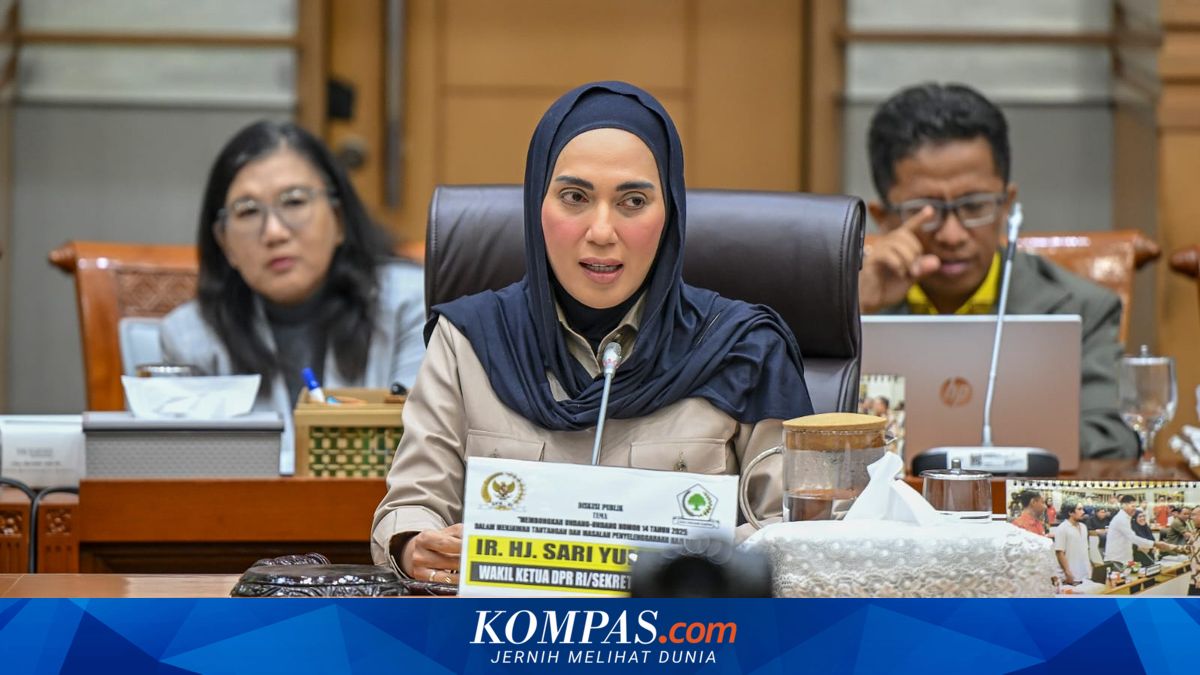
JAKARTA, KOMPAS.com - Deputy Speaker of the Indonesian House of Representatives (DPR RI), Sari Yuliati, views the ratification of the Domestic Workers’ Protection Bill (RUU PPRT) as an ideological victory for Indonesian women.
Sari emphasised that this ratification holds historic significance as it coincides with Kartini Day, a symbol of women’s struggle and emancipation.
“The ratification of the PPRT Law coinciding with Kartini Day serves as a strong symbol that the spirit of R.A. Kartini’s struggle continues to live on in the state’s efforts to deliver justice, particularly for domestic workers who are predominantly women,” Sari stated in her remarks on Tuesday (21/4/2026).
“Coinciding with Kartini Day, the state is giving a tangible gift in the form of legal certainty to those who have long worked in silence without protection,” she continued.
According to her, the ratification of the RUU PPRT also ends the long wait for justice among all female domestic workers in Indonesia.
Substantively, she said, the RUU PPRT represents a political step towards recognition, redistribution, and representation for domestic workers.
Through this new regulation, Sari added, the recruitment of domestic workers can be done directly or through domestic worker placement companies (P3RT) either offline or online, with official permission from the government.
Additionally, this regulation is seen as ensuring domestic workers’ rights to social security for health and employment, as well as access to education and vocational training for prospective workers.
Sari stressed that P3RT also prohibits any form of wage deductions.
“There should no longer be practices that harm and degrade the dignity of domestic workers. The state is present to ensure their rights are fully protected,” she asserted.
Furthermore, this law also continues to recognise the rights of workers who have been employed prior to its enactment and mandates the preparation of implementing regulations at the latest one year after it is promulgated.
For Sari, this Kartini Day momentum should serve as a reminder that the struggle for equality is not yet over.