
DPR Highlights Statute of Limitations as Key Issue in Asset Forfeiture Bill
A member of the DPR RI’s Commission III, Nasyirul Falah Amru (Gus Falah), has affirmed that Indonesia does not suffer from a legal vacuum regarding the procedures for forfeiting assets derived from criminal offences. However, there is no legal instrument governing the expiry period for asset prosecution.
He said the Supreme Court (MA) has issued a number of regulations governing the mechanism for handling assets in criminal cases.
Therefore, Gus Falah believes the drafting of the Asset Forfeiture Bill should focus on strengthening legal certainty, guaranteeing protection for third parties acting in good faith, and regulating the accountability of law enforcement officials.
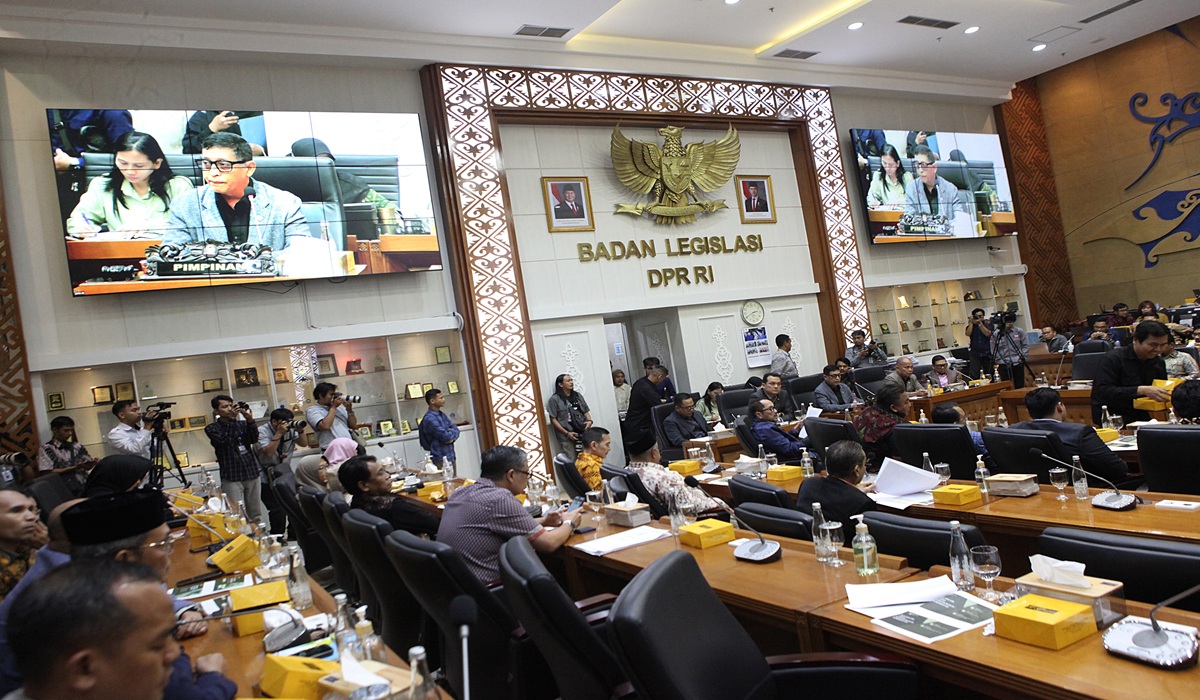
“In truth, there is no legal vacuum concerning the procedural process of asset forfeiture. There are already two Supreme Court Regulations governing that mechanism, even though they use the terminology of asset handling,” Gus Falah said during a Public Hearing (RDPU) at the Parliamentary Complex in Senayan, Jakarta, on Monday (3/8/2026).
Gus Falah referred to two Supreme Court Regulations (Perma): Perma Number 1 of 2013 on the Procedures for Resolving Applications for the Handling of Assets in Money Laundering Offences (TPPU), and Perma Number 2 of 2022 on the Procedures for Resolving Objections from Third Parties Acting in Good Faith in Corruption Cases.
The PDI Perjuangan politician also highlighted the need for clear rules on the expiry period for asset prosecution so as to avoid divergent interpretations in the future.
“The issue of the expiry period is very important. Whether it will follow the prevailing criminal law provisions or be formulated separately within this bill, so as to provide legal certainty in its implementation,” he explained.
Furthermore, Gus Falah emphasised the importance of the Asset Forfeiture Bill containing norms governing sanctions and the accountability of law enforcement officials in order to prevent abuse of power.
He explained that oversight and accountability mechanisms need to be regulated in the Asset Forfeiture Bill because they are crucial for anticipating potential wrongful seizures, the embezzlement of evidence, and actions by investigators that result in a decline in the economic value of forfeited assets.