
DPR Focuses on Governance Reform to Optimise Free Nutritious Meal Programme
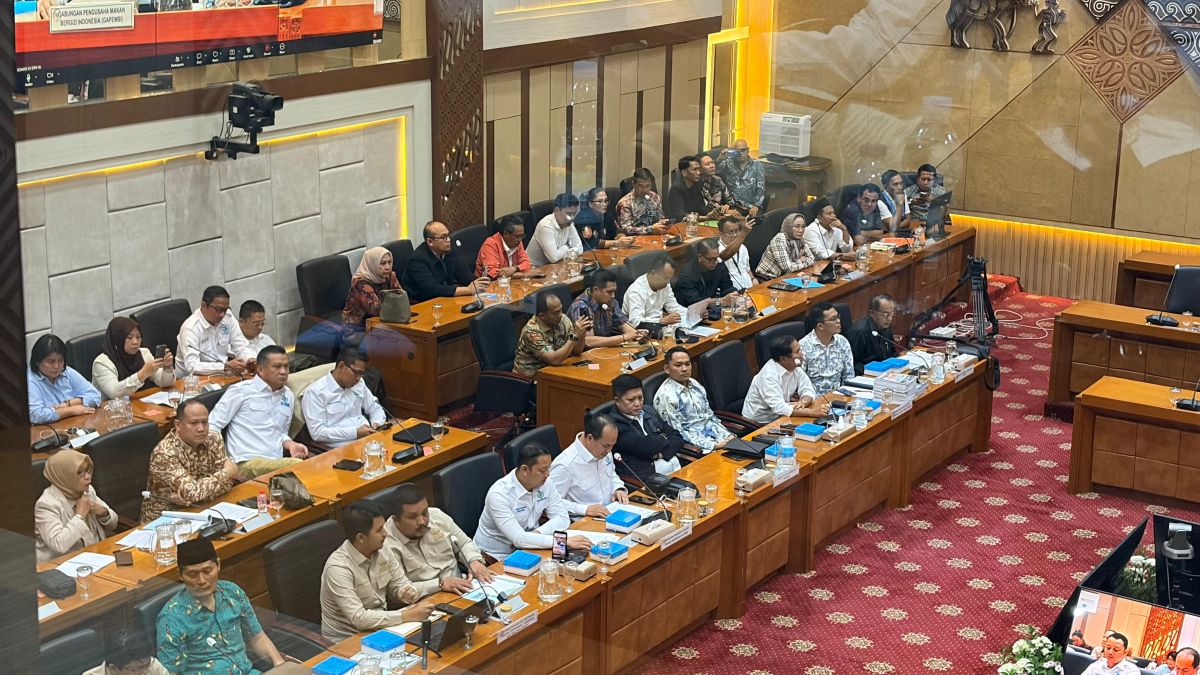
Commission IX of the Indonesian House of Representatives (DPR RI) has pledged to oversee the various issues faced by partners of the Free Nutritious Meal (MBG) Programme by bringing all their aspirations into a working meeting with the National Nutrition Agency (BGN). This commitment emerged during a Public Hearing Meeting (RDPU) between Commission IX and the MBG Partner Presidium at the Parliament Complex in Jakarta on Tuesday. The RDPU, chaired by Deputy Chairman of Commission IX Yahya Zaini, was attended by representatives of six BGN partner organisations, namely the Indonesian Nutritious Meal Entrepreneurs Association (Gapembi), the 3T Indonesian Nutrition Food Association (APGI 3T), the Golden Generation Kitchen Partners Association (HMD Gemas), the Indonesian National BGN Partners Association (AMBGNI), TKA NU, and the Indonesian Community Love Association (AMCI). During the forum, the partners conveyed various problems in the implementation of the MBG programme, ranging from the moratorium policy and regulatory uncertainty to investment losses experienced by implementers in the field. Gapembi Chairman Alven Stony emphasised that all partners fully support the MBG Programme as one of the strategic programmes of President Prabowo Subianto’s administration. However, he stated that the programme’s success must be supported by sound, transparent governance that provides legal certainty to partners. ‘We are not here to weaken the MBG Programme. On the contrary, we want to ensure this programme succeeds. Therefore, we request that Commission IX of the DPR oversee BGN to implement governance transparently, accountably, and provide legal certainty for all partners,’ Alven said. He explained that thousands of partners had invested their own funds to build Nutrition Fulfilment Service Unit (SPPG) kitchens, recruit workers, and build supply chains with farmers, breeders, fishermen, and MSMEs. However, various policy changes have left partners facing uncertainty. ‘Many partners mortgaged assets, borrowed from banks, and risked family savings because they trusted the government programme. After the kitchens were built, a moratorium and policy changes emerged, causing them to lose certainty,’ he said. According to Alven, the partners’ position has not been equal to that of the BGN. The government has the programme, while all operational risks are borne by the partners. ‘If payments are late, the partners bear the burden. If there are problems in the field, the partners are the first to be blamed. Yet we are here to help the state make this programme a success,’ he said. He hopes the results of the RDPU will be a momentum to improve the governance of the MBG programme without diminishing the government’s spirit to improve the quality of public nutrition. During the RDPU, the MBG Presidium submitted six points of aspiration to Commission IX of the DPR RI. These included requesting the DPR to strengthen oversight of the BGN, evaluate the moratorium policy, immediately operate kitchens that have passed verification and have an SPPG Head and virtual account, provide investment certainty, review the Circular Letter of the Head of BGN No. 12/2026, and ensure the implementation of the MBG Programme refers to Presidential Regulation No. 115 of 2025. APGI 3T Chairman Herwil J Harefa said the most severe problems were felt by partners in frontier, outermost, and disadvantaged (3T) regions. According to him, the cost of building kitchens in Papua, Mentawai, and other archipelagic areas is much higher than in urban areas due to high logistics costs. ‘In Papua, the price of one sack of cement can reach around IDR 1 million. In Mentawai, many investors have built kitchens, but until now they have not yet operated. They are the most disadvantaged because from the start they were willing to enter areas with little interest,’ he said. These aspirations received a positive response from members of Commission IX of the DPR. Almost all factions supported the continuation of the MBG Programme but assessed that its implementation governance needed immediate improvement so as not to harm the public and partners. Commission IX member from the PDI Perjuangan Faction, Charles Honoris, assessed that the various issues conveyed by the partners indicated many weaknesses in the MBG Programme’s governance. ‘The state must provide a solution because the public and partners must not be the ones harmed,’ Charles said. Commission IX member from the PKS Faction, Netty Prasetiyani Aher, said the MBG Programme is the government’s largest programme involving public participation. Therefore, she said, the solution taken by the government must accommodate all parties. Commission IX member Irma Suryani Chaniago encouraged the BGN to conduct a thorough evaluation of the MBG Programme’s governance, fight for the implementation of Presidential Regulation No. 115/2025, and ensure that no policy harms the public and partners. Similar commitments were conveyed by Commission IX members Obon Tabroni (Gerindra), Obet Rumbruren (PDI Perjuangan), and Zainul Munasichin (PKB). They ensured that all aspirations conveyed by the MBG Presidium would be discussed in a meeting with the BGN on Friday.