
DPR Fears Additional Excise Tariff Layer Could Shake Legal Industry and Burden Fiscal Position
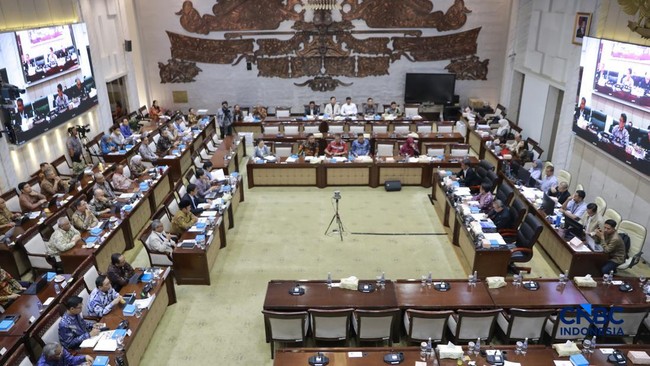
A number of politicians in parliament have expressed concerns about the risks arising from the government’s plan to add a new layer to the tobacco products excise tariff (CHT) aimed at drawing illegal cigarette producers into the legal tobacco industry (IHT) system. Harris Turino, a member of House Commission XI from the PDI Perjuangan faction, stated that any change to the excise structure must consider aspects comprehensively, from ensuring it does not reduce supervisory effectiveness and create new leakage gaps for state revenue, to not causing new distortions for the IHT that has been operating legally. “The most important thing is not merely adding or reducing layers, but ensuring the policy design is truly effective, measurable, and does not open up new distortionary space in the IHT,” he stressed. From the state revenue perspective, Harris cautioned that an overly complex tariff structure could actually trigger a shift in production to segments with lower tariffs, known as downtrading. He believes this shift has the potential to reduce state revenue. “In the IHT, a tariff structure that is too complicated sometimes actually encourages a production shift to lower tariff segments. If this is not anticipated, state revenue could be eroded,” he said. Meanwhile, from the industry side, he considers that excise policy changes which do not consider business climate stability will suppress industry resilience and instead foster the circulation of illegal cigarettes. “We must also learn that overly aggressive tariff increases or structural changes in recent years have contributed to pressure on the legal industry and provided room for the illegal market to grow,” he stated. “So the balance must be maintained. The state needs revenue, but the legal industry that has been compliant should not lose its resilience,” Harris said. To resolve the circulation of illegal cigarettes, Harris assessed that the crucial elements are a strong supervisory ecosystem, consistent law enforcement, and a rational tariff structure so that business actors see entering the legal system as more profitable and sustainable. “Otherwise, this policy risks merely shifting the problem without truly solving the root cause,” Harris remarked. Echoing Harris, fellow Commission XI member Thoriq Majiddanor from the NasDem faction stated that changes to the tariff structure should adhere to the principles of administrative simplicity and supervisory effectiveness. He added that the main objective of excise policy must also maintain a balance between health aspects, business sustainability and fairness, labour protection, and state revenue. Thoriq believes that the effectiveness of supervision and law enforcement remains the primary factor in reducing the circulation of illegal products, rather than relying on tariff structure changes. “We view the government’s aim to narrow the space for illegal cigarettes as a positive step. However, its success certainly does not depend solely on the tariff structure, but also on supervisory effectiveness, law enforcement, ease of compliance, and guidance for business actors,” he said. Furthermore, Thoriq stressed that the new CHT policy must not harm the sustainability of businesses that have been fulfilling their obligations and absorbing a large workforce. “The DPR will push for every transitional policy to be implemented in a measured, data-based manner, taking into account the real conditions of the industry and the workers dependent on the tobacco sector,” Thoriq asserted. He also reminded that any policy change should not create profit opportunities for illegal manufacturers or certain business groups alone. “We understand the concerns of some industry players. Clearly, Commission XI is of the view that fiscal policy must be able to create a healthy and fair business climate. Industries that have been compliant must continue to receive business certainty, while the state must strengthen efforts to eradicate illegal cigarettes,” he said. Previously, Finance Minister Purbaya Yudhi Sadewa insisted on establishing a new CHT layer aimed at bringing illegal cigarette producers into legality. He confirmed that an in-depth study would be conducted before submitting the new cigarette excise layer proposal to the DPR, in line with the council members’ suggestions. According to him, the Ministry of Finance has not yet held a consultation meeting for the establishment of the new cigarette excise layer with the DPR, as the study involving all stakeholders is still ongoing. “We haven’t gone to the DPR yet. So if we are asked to study it, we certainly will,” Purbaya said. Nonetheless, Purbaya emphasised that this new layer is needed to accommodate small cigarette producers who have been operating illegally to become legal producers, as they have not yet entered the domestic excise system. “Most of them are illegal producers. We must find a way to give them room to become legal,” he said. If the government does not provide space for illegal cigarette producers to enter the legal business system, he believes an injustice would arise, especially if the government simply eradicates their businesses. “To just shut down all illegal operations now, without giving them a chance to become legal, that wouldn’t be very fair to them,” Purbaya stressed. Purbaya said this new excise layer policy will certainly not be perfect immediately. However, he believes the new CHT structure will effectively eradicate the circulation of illegal cigarettes. “Even if it’s not perfect, it will surely be better than the current system, where illegal products are circulating too widely,” Purbaya said.