
DPR Expert Body Opens Space for Public Participation in Traditional Market Bill at Unej
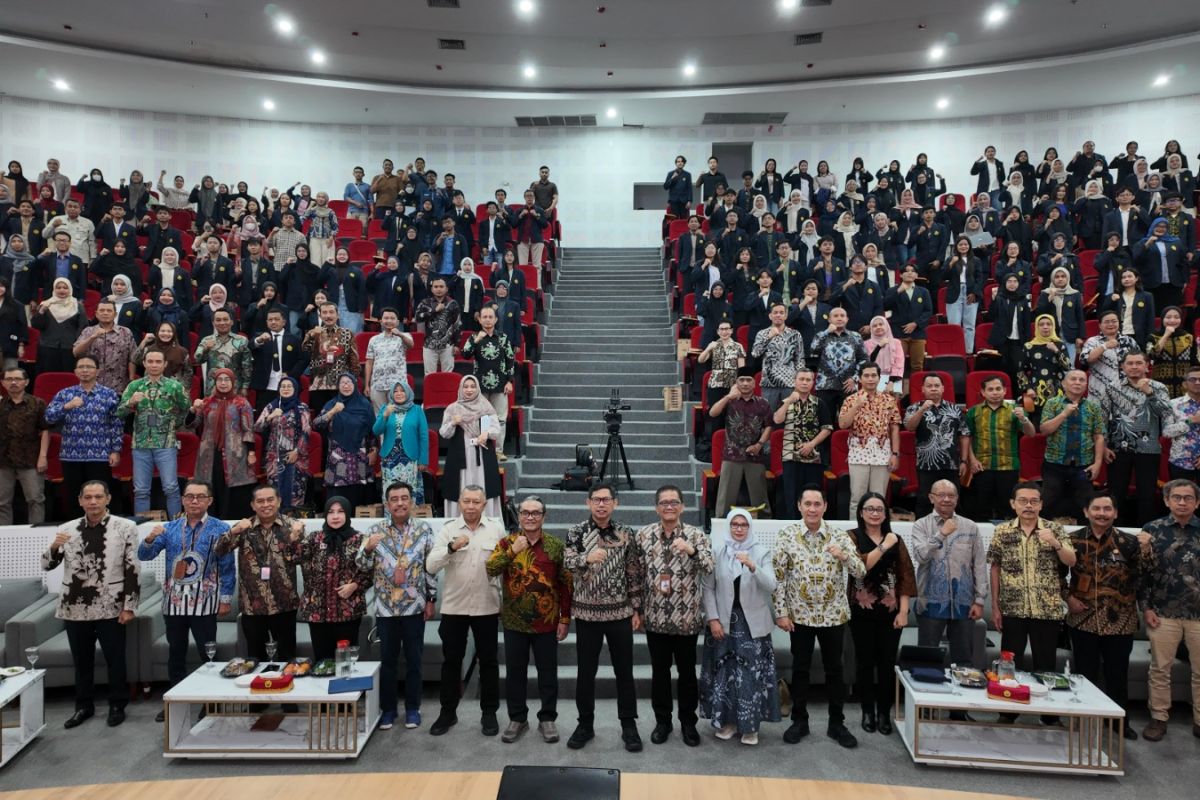
Jember, East Java — The Expert Body of the Indonesian House of Representatives (DPR RI) has opened a platform for public participation in the drafting of the Bill on the Protection and Empowerment of Traditional Markets at the University of Jember (Unej), East Java, on Friday.
This public participation space was presented in a national seminar titled “Increasing Meaningful Public Participation in the Drafting of the Bill on the Protection and Empowerment of Traditional Markets.” The seminar was driven by the crucial urgency to involve all elements of society, particularly grassroots economic actors, to ensure that the regulations produced by Parliament truly reflect real-world needs.
The Rector of Unej, Iwan Taruna, stated that the concept of meaningful public participation is a vital foundation for producing high-quality legislation, as the public should not merely be spectators but active participants in the policy-making process. “The public has the right to know, provide views, and most importantly, receive explanations on how their aspirations are considered within the legislative process,” he said.
He added that universities have a strategic role that extends beyond producing graduates and academic publications; they must support legislative studies, human resource development, and the strengthening of a culture of evidence-based policymaking. “By its nature, traditional markets are spaces for the people’s economy that bring together all components, from farmers and MSMEs to consumers. Protecting all business actors within them is a necessity,” he noted.
To analyse the urgency of the Bill, Unej brought together regulatory authorities, academics, and the All-Indonesia Market Traders Association (APPSI) of Jember Regency to voice the direct aspirations of traditional traders.
In his address, the Regent of Jember, Muhammad Fawait, remarked that traditional markets represent a robust informal economic strength that many other countries do not possess. “The key to Indonesia’s resilience against various global crisis threats has been the high domestic demand driven by the informal sector, including traditional traders,” he said.
The Head of the DPR Expert Body, Bayu Dwi Anggono, expressed appreciation for the reception and highlighted the immense potential of Unej, stating his commitment to bringing the university’s expertise to the national stage. He explained that this strategic partnership is an update of the 2021 cooperation agreement, noting that Unej has been heavily involved in national legislative work for the past decade, with many academics from the Faculty of Law participating in drafting academic papers and bills.
“This year alone, there have been nearly 20 to 25 individuals from various faculties at Unej actively involved in formulating academic papers, bills, and other legislative tasks, including those related to traditional markets,” he said.
Bayu, who also served two terms as the Dean of the Faculty of Law at Unej, committed to ensuring that scientific knowledge exerts a strong influence on national policymaking. During the event, a Memorandum of Understanding (MoU) was signed between the DPR Expert Body and the University of Jember.
Throughout 2025, the DPR Expert Body has produced 143 academic papers and bills, 284 concepts for DPR statements in the Constitutional Court, 1,491 published articles, 29 books, and 12 editions of journals and other publications, all involving thousands of interdisciplinary academics. The DPR, the Government, and the Regional Representative Council (DPD) have agreed on 67 bills to be included in the 2026 Priority National Legislative Program (Prolegnas), one of which is the Bill on the Protection and Empowerment of Traditional Markets.