
DPR expert assesses whether soldiers may hold civil posts under the TNI Law as constitutional
The TNI Law, as a regulation of a special nature, sets out the subjects and limitations on appointments. The subjects are TNI soldiers, and the limitations specify that they may occupy only 14 ministries or central government agencies.
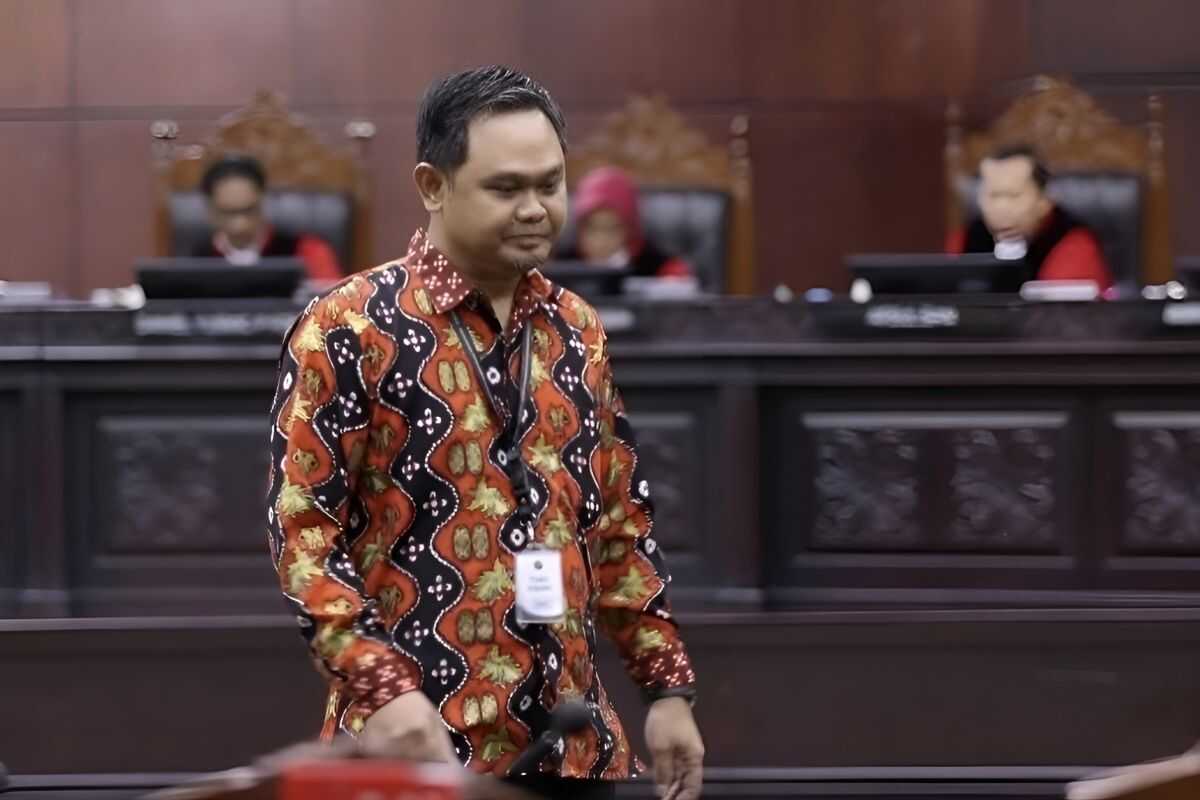
Jakarta (ANTARA) - A DPR expert involved in testing the TNI Law, Professor Tedi Sudrajat, a lecturer at the Faculty of Law, Jenderal Soedirman University, assessed whether the clause on filling certain civil posts by soldiers is constitutional or not in conflict with the Constitution.
Tedi, as quoted by the Constitutional Court website from Jakarta, on Wednesday, explained that filling certain civil posts by TNI soldiers has been built into a legal construct that integrates the 1945 Constitution, the Law on State Civil Apparatus (ASN Law), and the TNI Law.
In the ASN Law, the object of regulation is certain civil state posts within central government agencies that may be filled by TNI soldiers using a meritocracy system. The TNI Law, however, goes further in regulating the subject and the limits of its appointments.
“The TNI Law, as a regulation with a special nature, emphasises the subject and the limitation on appointments. The subject is the TNI soldier, and the limitation is that they may fill only 14 ministries or central government agencies,” he stated.
According to Tedi, the designation of the ministries or agencies is a state political decision involving complex political, security, and social considerations by the institution with democratic legitimacy, namely the President and the DPR.
“It can be interpreted that there is an entry of government affairs as a strategic node of the state that refers to a specific institution that plays a critical role in ensuring national stability and security and that has a high vulnerability to security threats,” he said.
“For that reason, there exists the supremacy of the law in the Constitution, Article 1(3), Article 30(3), Article 19 and Article 20 of the ASN Law and Article 47(1) and (2) of the TNI Law,” he added.
In the case numbered 238/PUU-XXIII/2025, several lawyers and civil servants are testing Article 47(1) and (2) of Law No. 3/2025 amending Law No. 34/2004 on the Indonesian National Armed Forces.
Article 47(1) reads, “Soldiers may hold posts in ministries/agencies that oversee the political and state security field, state defence including the National Defence Council, the state secretariat handling the presidency’s secretariat affairs and the president’s military secretariat, state intelligence, cyber and/or state cipher, the National Resilience Agency, search and rescue, national narcotics, border management, disaster management, counter-terrorism, maritime security, the Prosecutor’s Office of Indonesia, and the Supreme Court.”
Article 47(2) reads, “In addition to holding posts in the ministries/agencies referred to in paragraph (1), soldiers may hold other civilian posts after resigning or retiring from active service in the military.”
Tedi views that the phrase “may hold a position” in both provisions indicates that soldiers have a choice to hold or not hold a post, while still meeting the stipulated requirements.
The requirements, he added, refer to provisions in Law No. 30 of 2014 on Administrative Governance, which regulate the authority, procedures, and substance.
Therefore, he says, Article 47 of the TNI Law must be interpreted holistically to ensure the validity of civilian posts by the TNI.
The subsequent hearing with DPR expert testimony was held in the MK Plenary Courtroom, Jakarta, on Tuesday (3/3). Next, the Court scheduled hearings to hear the applicants’ expert testimony, to be determined later.
The applicants in this case include, among others, Syamsul Jahidin, Ria Merryanti, Ratih Mutiara Louk Fanggi, Marina Ria Aritonang, Yosephine Chrisan Eclesia Tamba, Achmad Azhari, and Edy Rudyanto.
They argued that Article 47 of the TNI Law has been misused by placing active TNI soldiers in several strategic civil posts. Such practices are deemed not in line with civil supremacy and could undermine the 1998 Reform aspirations.
The applicants also referred to MPR Decree No. VI/MPR/2000, which emphasises that the military’s socio-political role in the past caused democratic distortions.
Furthermore, they argued that MK verdict No. 114/PUU-XXIII/2025, which granted the petition concerning the ban on police officers occupying civil posts, should also apply to the TNI.
Therefore, the applicants urged the Court to interpret Article 47(1) of the TNI Law as only applicable to ministries or agencies responsible for defence and state security.
Meanwhile, Article 47(2) is requested to be interpreted as meaning that TNI soldiers may only occupy civilian posts after resigning or retiring from active service.
Source: jawawa.id (https://jawawa.id/newsitem/dpr-expert-assesses-whether-soldiers-may-hold-civil-posts-under-the-tni-law-as-constitutional-1772596747)
Originally published by Antara (Indonesian) (https://www.antaranews.com/berita/5451243/ahli-dpr-di-uji-uu-tni-nilai-prajurit-di-jabatan-sipil-konstitusional), translated from Indonesian