
DPR Debates ‘Illicit Enrichment’ in Asset Forfeiture Bill, with Some Opposing Its Inclusion
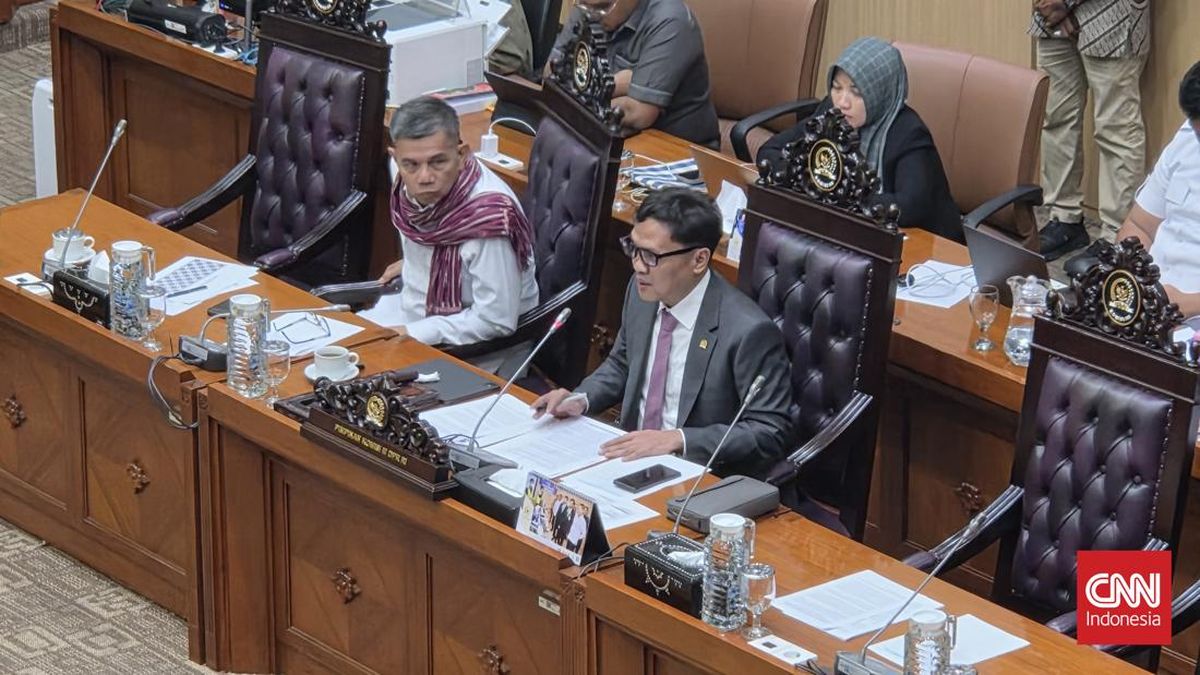
Civil society groups and researchers invited by House of Representatives Commission III say that disproportionate or unexplained wealth, known as illicit enrichment, should not be included in the Asset Forfeiture Bill.
They made the argument at public hearings held by Commission III on Monday (26 October) and Tuesday (27 October) as part of discussions on drafting the bill.
Hasanuddin University law professor Said Karim, from Makassar, South Sulawesi, rejected the proposal to include illicit enrichment. He said the concept belongs to substantive criminal law, whereas the Asset Forfeiture Bill concerns criminal procedure.
Illicit enrichment refers to an unlawful, unexplained or disproportionate increase in wealth. It describes a situation in which someone, particularly a public official, accumulates a significant amount of wealth that is not commensurate with their lawful income.
In his presentation to the Commission III hearing, Said outlined several reasons for opposing its inclusion in the bill.
“Forgive me if some people disagree, but I state firmly that it is not necessary. Once again, I say it is not necessary,” Said said at the hearing on Monday.
He argued that illicit enrichment falls under substantive criminal law, while the Asset Forfeiture Bill is part of criminal procedure.
“It is therefore impossible to draft legislation by conflating the two,” Said said.
He added that a person’s possession of substantial wealth does not automatically constitute illicit enrichment. He also said the concept’s inclusion in the United Nations Convention against Corruption (UNCAC) is a recommendation, not a mandatory requirement.
“It does not absolutely require participating states to make illicit enrichment a criminal offence,” he said.
Said also cited what he described as the limited success of illicit enrichment provisions in asset forfeiture laws in other countries, including Nigeria, Sri Lanka, Bangladesh, Ukraine and Uganda.
“Experience in countries such as Nigeria, Sri Lanka, Bangladesh, Ukraine and Uganda, which incorporated illicit enrichment into their asset forfeiture laws, shows that the results have not been very successful in practice,” he said.
Another reason, Said said, is that Indonesia currently has no specific criminal penalty for illicit enrichment.
“Penalties for disproportionate wealth can generally only be imposed when another criminal offence, such as corruption or money laundering, is also involved or can be proven,” he said.
He stressed the need for caution in drafting the bill to prevent abuses during its implementation, saying law enforcement officials must be professional.
Said also said the range of offences covered by the bill should not be expanded too far.
“Not every type of criminal offence should be included. Otherwise, the powers of law enforcement agencies will become excessively broad,” he said.
He called for clear and stricter criteria on which assets can and cannot be seized, as well as an independent body to manage and oversee the process, with both internal and external oversight.
Previously, a civil society coalition comprising organisations including Indonesia Corruption Watch (ICW), Auriga, PSKH and Transparency International Indonesia (TII) identified at least three substantive concerns in the circulated House draft dated 10 July 2026, compared with the government’s draft.
One of the three concerns was the suspected removal by the House of provisions on illicit enrichment.
The coalition believes the House removed a provision concerning unlawful increases in wealth. Article 5(2) of the government’s 2023 draft provided for the seizure of assets that were disproportionate to a person’s income and whose lawful origins could not be proven.
That provision is believed to have been removed from the House version of the draft.
The instrument could target public officials whose wealth is not commensurate with their official income. In several corruption cases, suspects arrested by law enforcement have been found to have wealth that appeared disproportionate to the assets they reported to the Corruption Eradication Commission (KPK) in their State Officials’ Wealth Reports (LHKPN).
The House of Representatives has pledged to pass the Asset Forfeiture Bill on 15 December 2026. The pledge was made as members of the Pati United People’s Alliance (AMPB) and others demonstrated outside the House building in Jakarta on Thursday (27 August), demanding the bill’s passage.
To speed up its passage, the House formed a working committee for the Asset Forfeiture Bill, chaired by Habiburokhman of the Gerindra Party faction and represented by Soedeson Tandra of the Golkar Party faction.
Source: jawawa.id (https://jawawa.id/newsitem/dpr-debates-illicit-enrichment-in-asset-forfeiture-bill-with-some-opposing-its-inclusion-1793109145)
Originally published by CNN Indonesia (https://www.cnnindonesia.com/nasional/20261027141945-32-1420144/dpr-bahas-illicit-enrichment-di-ruu-perampasan-aset-ada-yang-kontra), translated from Indonesian