
DPR: Constitutional Court's 30% Women Quota for Legislative Candidates Strengthens Democracy
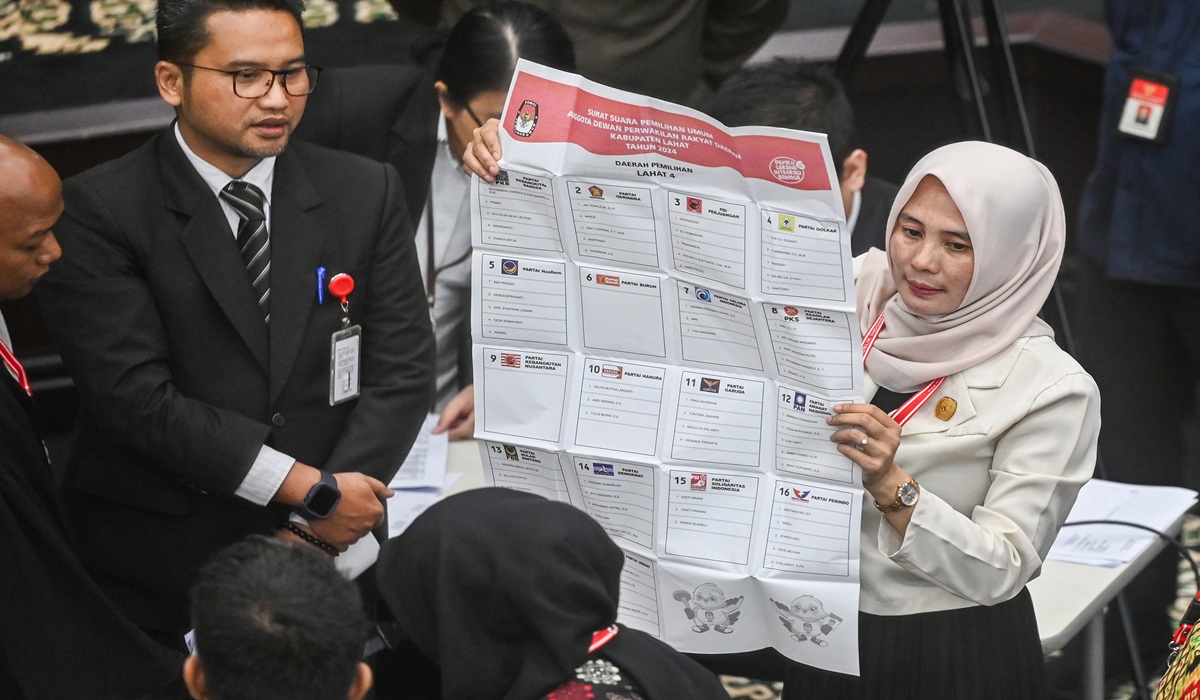
The Constitutional Court’s decision requiring political parties to meet a 30% female quota for legislative candidates is seen as strengthening the protection of women’s political rights within Indonesia’s electoral system. ‘The ruling provides constitutional protection for women’s political rights, particularly in candidate nominations,’ said Rifqinizamy Karsayuda, Chairman of the DPR’s Commission II, on Tuesday (26 May). Rifqi explained that the 30% female candidate quota was already stipulated in the 2017 Election Law, but the latest ruling reinforces its implementation with stricter penalties for non-compliant parties. ‘The 30% female candidate quota has long been a requirement under Law No. 7 of 2017. The latest ruling clarifies this by adding strict sanctions for non-compliance,’ he added. He believes the ruling will positively shape the national electoral system towards greater gender equality and women’s political representation. ‘This is positive for our future electoral blueprint, which is more pro-gender and supportive of feminist issues in politics,’ Rifqi stated. Previously, the Constitutional Court ruled that political parties failing to meet the minimum 30% female candidate quota for DPR and regional legislative seats could be disqualified in the relevant electoral districts. The ruling was announced during a plenary hearing of case No. 128/PUU-XXIV/2026 at the Constitutional Court building in Jakarta on Monday (25 May). Constitutional Court Chief Justice Suhartoyo stressed that election commissions at all levels must disqualify parties not meeting the female quota. ‘If the minimum 30% female representation requirement is not met, the General Election Commission (KPU), Provincial KPU, and Regency/City KPU must disqualify or exclude the political party from the relevant electoral district,’ Suhartoyo said in the ruling. The Court confirmed the 30% female quota is mandatory, not optional. Constitutional Justice Guntur Hamzah explained that the provision was initially facultative in the 2003 Election Law due to the word ‘can’ (dapat), but became mandatory from the 2009 election onwards. Strict sanctions are necessary to ensure the spirit of Article 28H(2) of the 1945 Constitution is realised, not merely a formality on paper. The female quota policy is a constitutionally valid affirmative action measure providing special treatment.