
DPR Commission XII Reveals Crucial Points in Oil and Gas Law Revision
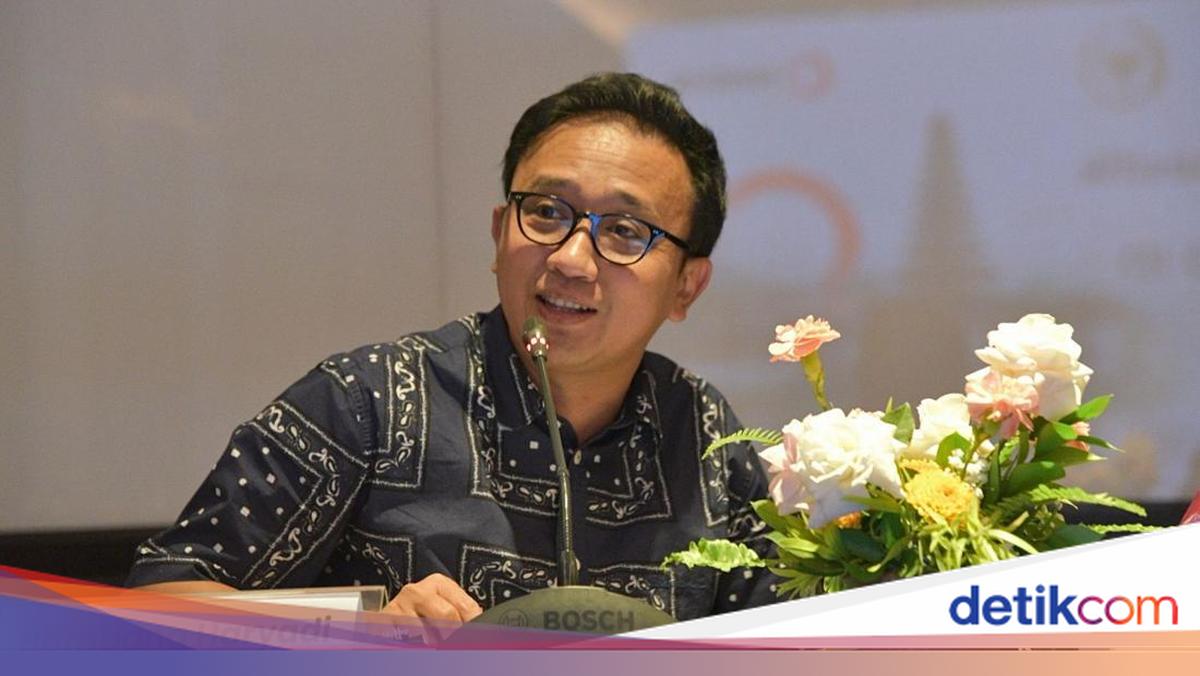
The Vice Chairman of Commission XII of the DPR, Bambang Haryadi, has explained several crucial points within the draft revision of the Oil and Gas Bill (RUU Migas) currently being deliberated by the House. The draft includes provisions regarding the formation and authority of a Special Business Entity (BUK) for Oil and Gas.
Bambang emphasised that the BUK will be directly accountable to the President, a provision stipulated in Article 5, paragraph (3) of the draft bill. “In the draft Oil and Gas Bill submitted to the government, it is emphasised in Article 5, paragraph (3) that the BUK is responsible to the President, and thankfully, the provision we proposed regarding the position of the BUK has been agreed upon by the government,” he stated.
Bambang also noted a proposed change to the Domestic Market Obligation (DMO) regulations. The draft proposes changing the phrasing from “at most 25%” to “at least 25%” regarding the obligation to meet domestic oil and gas needs. According to Bambang, this is a vital point to align with the 2003 Constitutional Court ruling on Law No. 22 of 2001.
“Previously, under Law No. 22 of 2001, the DMO for domestic interests was set at ‘at most 25%,’ which is being changed in the Oil and Gas Bill to ‘at least 25%.’ This is one of the crucial elements to comply with the Constitutional Court ruling,” Bambang said in a statement received on Sunday.
A second key point is that the Special Business Entity for Oil and Gas (BUK Migas) will be granted specific authority that takes precedence over other sectoral regulations. This includes regulations concerning oil and gas reserves in forest, marine, and agricultural areas.
“The BUK will be granted authority that can be prioritised over other regulations, as stipulated in Article 52, paragraph (3) of the Oil and Gas Bill,” he explained.
Furthermore, the substance of the bill suggests that all oil and gas working areas will be under the control of the BUK. Bambang noted that even when working with the private sector, licensing must be authorised by the BUK.
“All working areas will be controlled by the BUK. They must be managed by the BUK. When there are areas that cannot be managed independently, the BUK may offer cooperation with Business Entities or Permanent Business Entities, but not by relinquishing control. More accurately, the BUK will enter into Joint Operating Contracts (KSO) with these entities for working areas it cannot manage alone,” said Bambang.
“Investors will receive ready-to-use permits; they can proceed directly to operations. Even under a cooperation scheme, all licensing administration will be handled by the BUK,” he added.
These provisions are included in the bill to provide comfort to investors regarding licensing, which will be fully managed by the BUK, thereby ensuring investment certainty, comfort, and security.
Additionally, Chapter XV regarding the Oil and Gas Fund stipulates Article 85 regarding a petroleum fund, which will be gathered to finance exploration, research, and the development of oil and gas reserves in working areas and open areas, so as not to burden the state budget,” said the Secretary of the Gerindra Faction.
He noted that the concept is similar to oil and gas management practices in Malaysia and Saudi Arabia.
“In principle, our draft law concept shares similarities with the Malaysia Petroleum Development Act 1974, and Malaysia itself adopted Law No. 8 of 1971. Therefore, in this Oil and Gas Bill, the BUK is granted full authority of control and management on behalf of the state, acting and being directly responsible to the President. Without such changes, our lifting levels will never increase,” he concluded.