
DPR Commission XI Proposes Evaluation of 3% Budget Deficit Limit
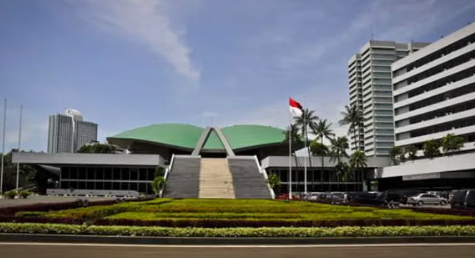
Commission XI of the Indonesian House of Representatives (DPR RI) has opened a discussion regarding the evaluation of the 3% budget deficit limit relative to Gross Domestic Product (GDP). Misbakhun, a member of Commission XI, stated that the 3% deficit figure is not directly established as an absolute norm within the Law.
He noted that this provision has primarily been understood through explanations regarding State Budget (APBN) management. This was conveyed during a Public Hearing on the State Finance Bill on Thursday (1arg/9). “People say 3% deficit, but I ask, in which article? No one can name it. This deficit limitation is not a norm,” said Misbakhun.
He explained that provisions regarding the State Budget are contained in Article 12 of Law Number 17 of 2003 concerning State Finance. This article contains several provisions regarding APBN planning, its basis for preparation, and financing methods in the event of a deficit.
According to Misbakhun, the first paragraph of Article 12 stipulates that the APBN is prepared based on the needs of state administration. Meanwhile, subsequent paragraphs regulate the basis for preparing the APBN and financing steps when the budget experiences a deficit. “If the APBN experiences a deficit, a debt financing plan is prepared. If there is a surplus, its usage is also prepared,” he said.
Misbakhun noted that the 3% deficit figure and the 60% debt-to-GDP ratio became widely known through the explanations within that law. Therefore, he believes both figures should be viewed in a broader context and not considered an unchangeable limit. “The question is, is 3% sacred? What happens when a situation requires intervention?” the Golkar politician asked.
He assessed that the need to pursue economic growth must be a consideration in determining fiscal policy. In his view, Indonesia currently possesses the momentum to drive the population out of the middle-income group towards becoming a high-income nation. “To escape the middle-income trap, we need growth expansion. How can we achieve this if we are always locked at the 3% figure?” he remarked.
Misbakhun also noted that discussions regarding the deficit have focused too much on the figure as a consequence, rather than the factors causing the deficit. A deficit, he said, is the result of the relationship between state revenue and expenditure. “A deficit is the result of an equation. Our revenue is inadequate compared to our expenditure, thus a deficit is born,” he said.
Consequently, he urged that discussions on the deficit limit should not stop at the 3% figure. The Government and the DPR need to re-examine the historical reasons and economic conditions that formed the basis for this limit. “Let us formulate it. Speaking of the history of 3%, where is this coming from?” said Misbakhun.
He then linked the deficit limit to the Maastricht Agreement in Europe. In his view, the discussion regarding deficit limits emerged from the conditions of European nations after World War II, which required significant financing to rebuild their economies and infrastructure.
Misbakhun stated that European nations at that time experienced quite high deficits because they were conducting expansion for post-war recovery. This financing was supported, among other things, by debt instruments and assistance programmes from the United States through the Marshall Plan.
In his view, these conditions demonstrate that fiscal policy must consider the context and needs of each individual country. Therefore, the application of a specific limit should not be detached from economic conditions and the development goals to be achieved. “Indonesia also has a luxurious time, which is when we receive a demographic bonus to lift this country out of the middle-income trap,” he said.
He assessed that the momentum of the demographic bonus should be utilised through development policies capable of increasing public welfare. He believes that fiscal space is one of the factors that must be considered to ensure the state can perform its welfare functions optimally. “This is the people’s right. The welfare state must be delivered. This is what we must discuss,” said Misbakhun.
Misbakhun believes that the debate regarding the deficit should be placed within the framework of national interest and the state’s ability to provide welfare to the people. In his view, the deficit figure should not be the sole measure in determining the direction of fiscal policy.
Source: jawawa.id (https://jawawa.id/newsitem/dpr-commission-xi-proposes-evaluation-of-3-budget-deficit-limit-1789639000)
Originally published by Media Indonesia (https://mediaindonesia.com/ekonomi/934476/komisi-xi-dpr-buka-wacana-evaluasi-batas-defisit-3-persen), translated from Indonesian